This article examines claims of a 'two-tier' policing system in Israel that critics say leaves Palestinian-majority towns under-policed while Jewish areas receive stronger enforcement. Reported statistics show the murder rate in Palestinian communities rose from 4.9 per 100,000 in 2020 to 11 per 100,000, compared with about 0.6 per 100,000 in Israel's Jewish population. Analysts point to chronic underinvestment, budget cuts to development programs, limited police presence and the influence of hard-right ministers as contributing factors. Experts call for both immediate security measures and long-term investment to address root causes.
Two-Tier Policing and a Rising Crime Wave in Israel’s Palestinian-Majority Towns
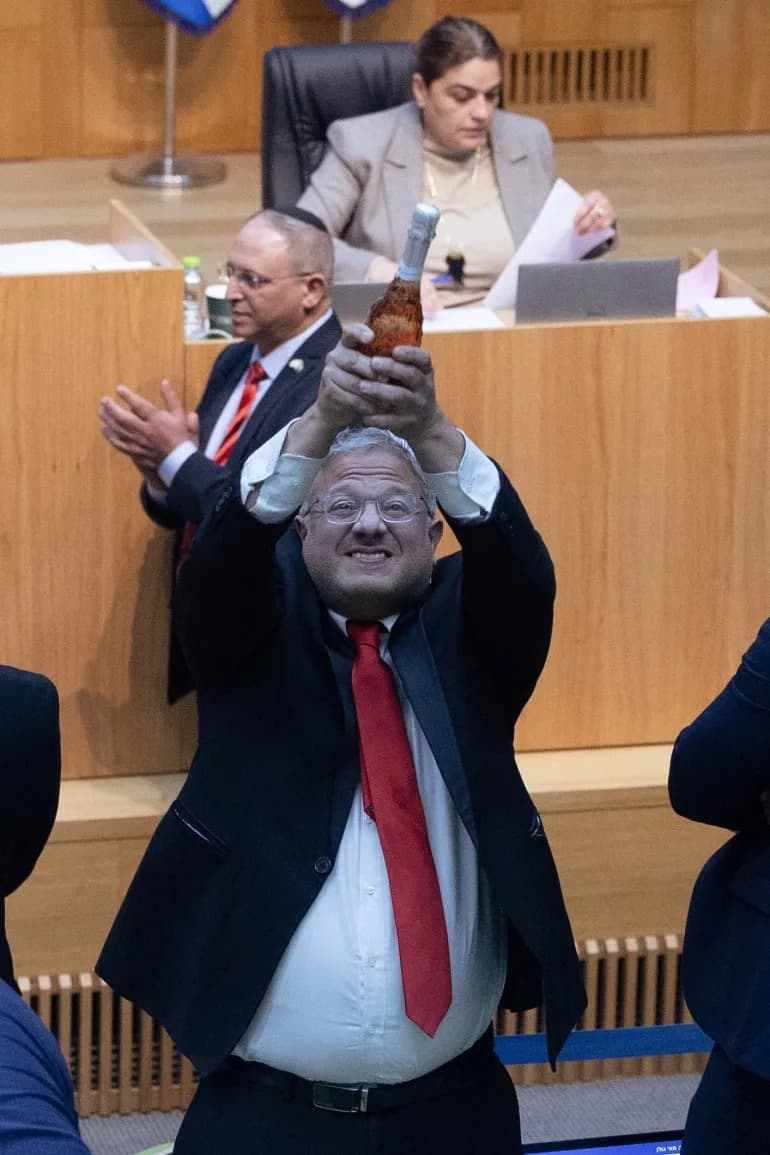
Israel’s far-right National Security Minister Itamar Ben-Gvir celebrates after Israel’s parliament passed a law making the death penalty a default sentence for Palestinians convicted in military courts of deadly attacks [Oren Ben Hakoon/Reuters]
After the killing of 21-year-old former Israeli soldier Yemanu Binyamin Zalka, National Security Minister Itamar Ben-Gvir vowed a forceful response. Speaking to reporters, he declared the measures would be 'a total war' on youth violence and promised to 'restore security to the streets and calm to parents.' The swift, victim-focused reaction highlighted a contrast critics say exists in how Israeli authorities address violence in Palestinian-majority towns and villages inside Israel.
Disparities In Policing
Observers and community leaders long have accused Israeli police of operating a 'two-tier' system that provides more robust presence and resources in Jewish-majority areas than in Palestinian-majority communities. Critics say that imbalance has deepened since the current government, led by Prime Minister Benjamin Netanyahu and including hard-right ministers such as Itamar Ben-Gvir and Bezalel Smotrich, assumed office in late 2022.
What The Numbers Show
Media reports and analysts point to sharp increases in lethal violence within Palestinian townships: according to reporting in Haaretz, the murder rate in these communities rose from 4.9 per 100,000 people in 2020 to 11 per 100,000 in recent years—a level comparable to conflict-affected countries. By contrast, the murder rate in Israel's Jewish population is reported at roughly 0.6 per 100,000. Israel's finance ministry has estimated that the crisis imposes an economic cost of up to $6.7 billion a year.
Root Causes And Policy Choices
Advocates and analysts identify multiple, overlapping causes: chronic underinvestment in housing and services, high unemployment, restricted access to jobs in the occupied West Bank after October 2023, and limited police presence. Official figures for 2024 show 37.6% of Palestinian households in Israel lived below the poverty line.
One controversial decision deepened tensions: in December the government approved cutting $68.5 million from an economic development program for Palestinian communities and reallocating it to policing. While many agree police need more resources, critics argue diverting funds from programs designed to address poverty, housing and employment undermines long-term solutions.
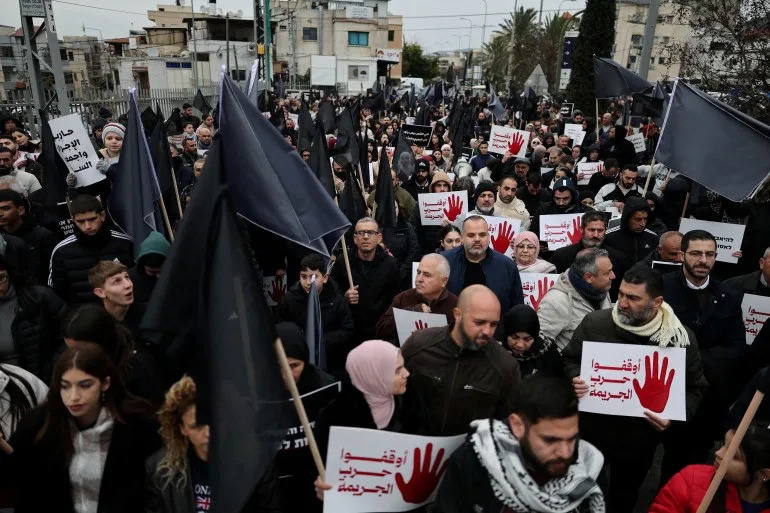
Palestinian Israelis protest in January against the wave of crime and killings within Arab communities [Fie: Ammar Awad/Reuters]
Organized Crime And Community Impact
Local criminal networks in some Palestinian towns have expanded and, according to analysts, sometimes resemble mafia-style groups that exert wide control. Scholars such as Daniel Bar-Tal of Tel Aviv University suggest that authorities have at times tolerated or even exploited disorder—arguing it can be used politically to stigmatize communities or to elicit cooperation with informants—though such claims are disputed by officials.
Political Debate And Legal Pushback
Critics contend the government composition and rhetoric matter: some say hard-right ministers have fostered an atmosphere in which Palestinian citizens receive less protection. Ben-Gvir rejects accusations of racism and says his focus is on protecting Israelis from those who commit violence.
Domestically, concerns about political interference in policing rose to the High Court, which recently urged Ben-Gvir and Attorney General Gali Baharav-Miara to reach an accommodation after the attorney general publicly criticized the minister for alleged attempts to influence police work.
Voices From The Community
'They really don't mind that Palestinians are killing each other, as they've been left to do for years,' said lawmaker Aida Touma-Suleiman, reflecting a widespread feeling in many Arab towns that police presence and public services are lacking.
Analysts and community leaders call for a combined approach: immediate policing improvements to reduce violence and restore safety, paired with sustained investment in housing, employment, education and local services to tackle the social and economic drivers of crime.
Conclusion
The debate over policing in Palestinian-majority towns is both a security and a political issue. Numbers show rising lethal violence and stark disparities in policing resources, while policy choices—budget shifts, political appointments and public rhetoric—shape how communities experience state protection. Many experts say that addressing immediate safety needs without rebuilding social and economic infrastructure will leave the underlying crisis unresolved.
Help us improve.