A bipartisan package of bills would restrict federal funding for universities that operate branch campuses in or accept certain funds from countries labeled as adversaries. Key measures include the No Branch Campuses in Hostile Countries Act and the Defending American Research Act, which would impose a five-year ban on federal research dollars for violators. Sponsors — including Rep. Elise Stefanik, Sen. Rick Scott and Rep. Josh Gottheimer — say the reforms aim to protect national security and curb foreign efforts to access sensitive research or influence campus life.
Congressional Push Would Cut Federal Funding to Universities With Ties to Adversarial States
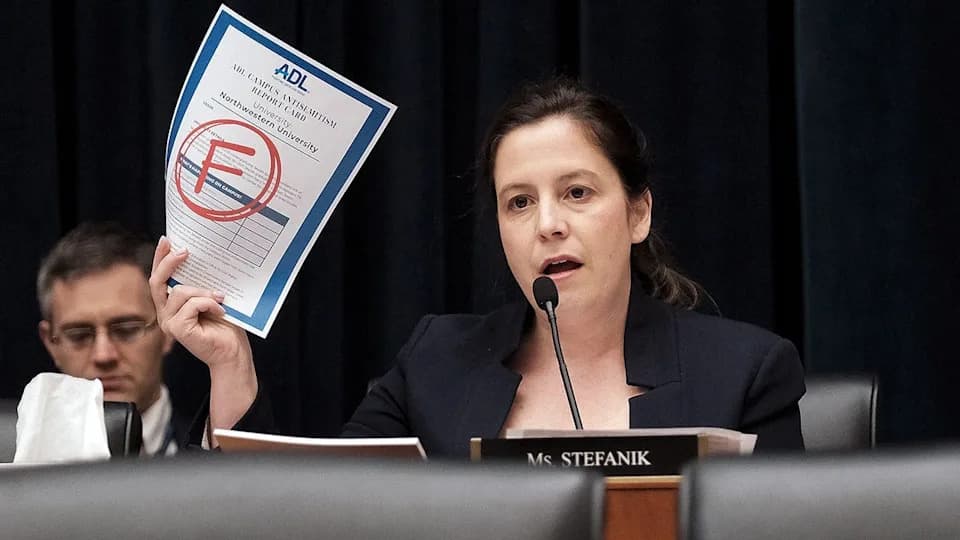
Rep. Elise Stefanik, R-NY, creates a viral moment during an education hearing.(Getty Images)
A bipartisan group of U.S. lawmakers has introduced legislation designed to limit foreign influence in American higher education by threatening federal funding for colleges that maintain institutional or financial ties to countries deemed adversarial. The package centers on two proposals that target branch campuses abroad and the acceptance of foreign research funds in sensitive technologies.
What The Bills Propose
The No Branch Campuses in Hostile Countries Act would prohibit federal funding to institutions that operate formal branch campuses in countries identified as hostile. The Defending American Research Act would bar an institution from receiving federal research grants for five years if it accepts funding from certain named foreign governments. The proposals focus on strategically sensitive fields such as artificial intelligence, biotechnology and quantum computing.
Who Is Behind The Effort
Representative Elise Stefanik (R-N.Y.) is a lead sponsor, joined by Senator Rick Scott (R-Fla.) and Representative Josh Gottheimer (D-N.J.) in a bicameral, bipartisan effort. Stefanik has framed the legislation as part of a broader higher-education reform agenda that also addresses campus antisemitism and what she describes as foreign efforts to sow discord on campuses.

A Chinese flag flies near the Capitol dome in Washington, D.C., amid new legislation targeting lobbying by former government officials for China.
"I introduced the No Branch Campuses in Hostile Countries Act with Senator Rick Scott, and this is part of the broader higher education reform effort that I have been leading in Congress," Stefanik said in an interview.
"Countries like Communist China and terror-supporting Qatar should not be able to use America’s colleges and universities as outposts to spy on us, steal sensitive research, and spread anti-American propaganda," Sen. Rick Scott said.
Countries Named And Rationale
The bills identify a range of countries as adversarial, including China, Qatar, Venezuela, Turkey, North Korea, Iran, Russia and Cuba. Sponsors argue that funding and institutional relationships with those states can enable espionage, intellectual-property theft and the spread of hostile or extremist views on campus. Supporters cite previous actions — such as the bipartisan removal of Confucius Institutes from many campuses and language restricting them in the national defense bill — as precedent for targeted measures.
Potential Impacts And Debate
Sponsors say the funding penalties provide leverage to persuade universities to sever risky foreign ties or face significant financial consequences. Critics may argue that the measures could hinder international research collaboration, academic freedom, or penalize institutions for complex partnerships. The bills are meant to sharpen oversight of foreign funding and institutional partnerships that lawmakers say have at times given adversarial governments access to sensitive research and influence over campus discourse.
The proposals are likely to spur debate among lawmakers, university leaders and national-security experts about how to balance academic openness with safeguarding sensitive research and protecting campuses from foreign political influence.
Help us improve.