The study argues that the Trump administration's 2025 actions against U.S. universities — freezing billions in research funding, investigating 75 institutions and canceling a $4 million Princeton climate grant — build on decades of fossil-fuel and donor influence. Institutional autonomy has dropped sharply, and researchers report self-censorship on climate topics. The authors call for transparency, faculty review rights over major gifts, and policy models (such as UnKoch) to protect academic freedom and restore public trust.
Decades of Fossil-Fuel and Donor Influence Paved Way for Trump Administration's 2025 Assault on University Research, Study Finds
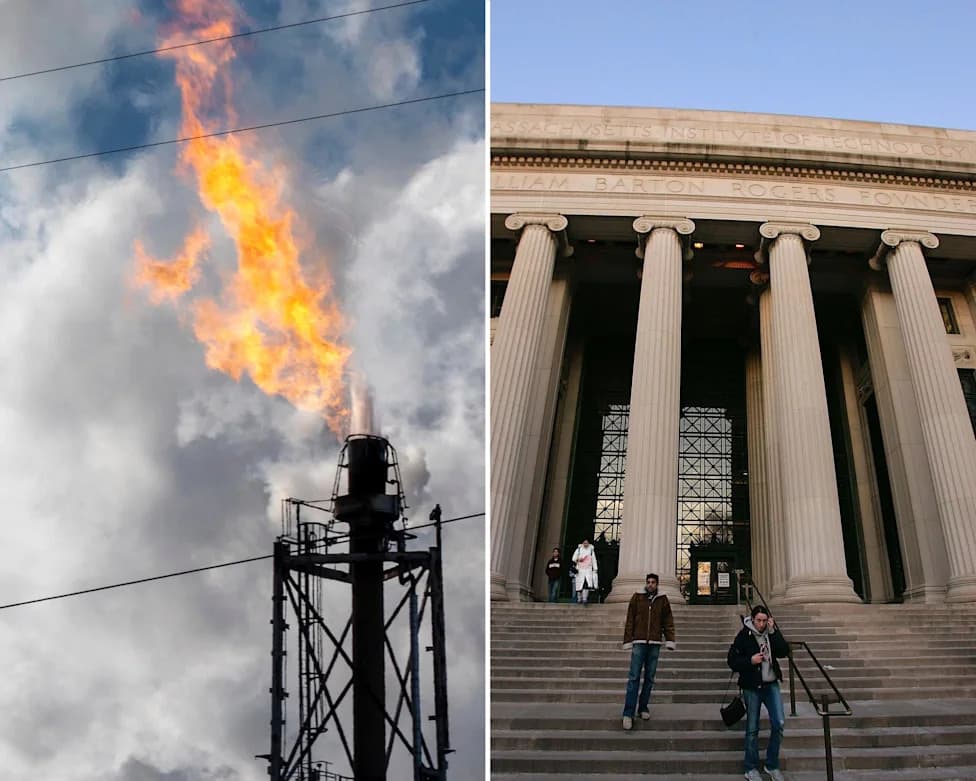
The erosion of university autonomy under Trump has left colleges more vulnerable to corporate fossil fuel interests, the authors of the study argue.Photograph: Getty Images
Recent actions by the Trump administration against U.S. universities build on decades of sustained influence from fossil-fuel companies, libertarian donor networks and conservative think tanks, a new perspective article in Energy Research & Social Science argues. The paper traces how long-term funding and governance changes have eroded institutional autonomy and left colleges vulnerable — especially on climate and energy research.
What Happened in 2025
In 2025 the federal government froze billions of dollars in research funding, opened investigations into 75 institutions, and pressured universities to sign agreements endorsing administration policies as a condition for receiving federal support. The administration also cancelled $4 million in climate research grants at Princeton University and publicly accused some scientists of promoting "climate anxiety."
"Climate policy is only as good as the evidence behind it. When the industry being regulated gets to shape the questions researchers ask, it ends up shaping the policy too," said Noel Healy of Salem State University, lead author of the study.
Historical Context
Outside influence on American higher education is not new. In the 1920s electric utilities collaborated with scholars to defend monopoly positions and resist regulation. In the 1950s fossil-fuel firms began funding research to cast doubt on health and environmental risks associated with their products. Internal industry documents show companies have long used academic research to gain credibility and shape public debate.
Corporate funding was only one mechanism. Libertarian donor networks affected program content, faculty hiring and governance. For example, industrialist David Koch donated more than $185 million to MIT and held lifetime status on the institute's highest governing body.
Scale and Mechanisms of Influence
Between 2010 and 2020, six major fossil-fuel companies donated more than $700 million to U.S. universities, funding work that often promoted industry-aligned solutions and undercut regulatory approaches. Some gifts included donor agreements that gave outsiders influence over decisions traditionally made by faculty, such as hiring and curricula.
State lawmakers also embedded donor-influence models into public policy. In 2016 Arizona established the first state-funded libertarian academic center; others have followed. Reporting indicates these centers are expected to receive about $50 million in public funds in the 2025–2026 school year. From 2021 to 2023, more than 150 state bills were introduced targeting tenure, faculty governance and diversity, equity and inclusion initiatives.
Consequences for Academic Freedom
The Academic Freedom Index — which measures how freely scholars and institutions can teach, research and speak without interference — reported a decline in U.S. institutional autonomy from 3.3 in 2019 to 1.7 in 2025 (on a 0–4 scale). The study's authors describe growing self-censorship: researchers deleting phrases like "climate change" from grant proposals, and universities preemptively closing programs to avoid becoming targets.
Recommendations
To rebuild trust and protect academic freedom, the study calls on university leaders to:
- Disclose major donor contributions and any conditions attached to gifts.
- Give faculty committees formal review and veto power over gifts that threaten academic independence or create conflicts of interest.
- Adopt clear gift-acceptance policies like the UnKoch My Campus model that make donor agreements public and set explicit grounds for rejecting conditioned gifts.
- Use union contracts and shared governance structures to strengthen faculty protections.
"Transparency lets you see the deal, but it doesn't let you stop it. Faculty need the power to review major gifts before they're accepted and to refuse the ones that threaten academic freedom," Healy said.
Wider Warnings and Responses
The authors warn that unchecked outside influence can erode university legitimacy and, in other countries, has preceded faculty purges, campus closures and centralized political control. Institutions such as MIT have defended their approach: MIT has said it will not divest its endowment from fossil-fuel companies and that industry funders do not control the content or findings of research supported through initiatives like the MIT Energy Initiative.
The paper urges universities to adopt stronger governance policies now to protect scientific inquiry and public trust before political pressures intensify.
Help us improve.