Summary: The article compares two 1975 assassination attempts on President Gerald Ford with a recent alleged attack on President Trump to show how many politically charged acts of violence resist simple explanations. Cole Tomas Allen's background and manifesto offer clues — advanced education, social isolation, moral rage — but no coherent motive. The author cautions against blaming rhetoric alone and cites research indicating that ideologically motivated killings are a relatively small, non‑increasing share of violence over time.
The Puzzle of Political Violence: From Ford’s Would-Be Assassins to the Alleged Trump Attacker
Donald Trump's Deeply Disappointing Would-Be Assassin
Attempts to kill sitting presidents often provoke a search for tidy explanations: ideologies, conspiracies, or clear grudges. But the record shows many such acts resist simple interpretation. Comparing two near-simultaneous attempts on Gerald Ford in 1975 with the recent alleged attack at the White House Correspondents' Dinner highlights how motives can remain muddled, personal, and sometimes incoherent.
1975: Two Near-Misses, Few Answers
On September 5, 1975, Lynette "Squeaky" Fromme, a follower of the Manson Family, stood within a few feet of President Gerald Ford in Sacramento, raised a pistol, and failed to fire. Less than three weeks later in San Francisco, Sara Jane Moore fired at Ford but missed and was subdued by a bystander. Neither woman appears to have harbored a focused political vendetta against Ford. Fromme's biographer reports she "had no personal feelings about [Ford] one way or another" and was motivated in part by environmental grievances. Moore's motives were likewise mixed: her life included stints as a suburban Republican, an FBI informant, and an association with radical activists; at sentencing she said she had come to see violence as "constructive."
Modern Echoes: The Case of Cole Tomas Allen
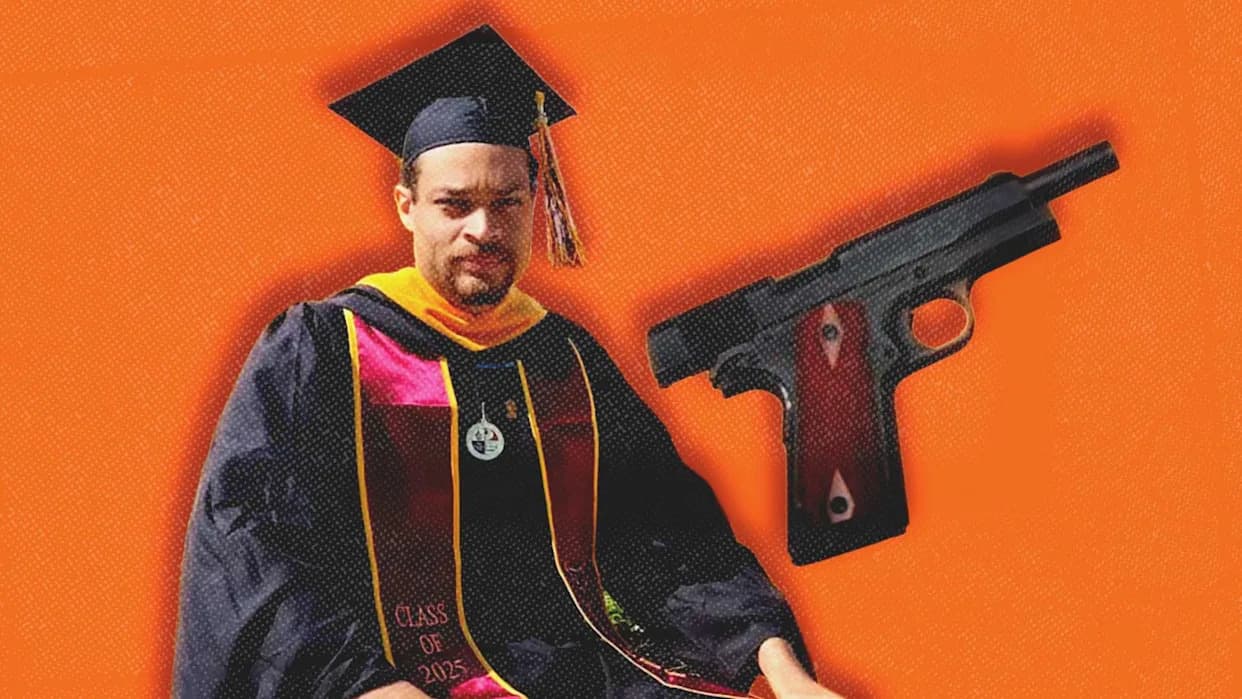
The recent alleged attacker, Cole Tomas Allen, is a different kind of profile: a 31-year-old with a strong academic record and a thin but contentious manifesto. Reported details include a 2017 engineering degree from the California Institute of Technology, a recent master's in computer science from California State University, Dominguez Hills, and employment as a tutor before his cross-country trip. Media accounts describe him as "highly intelligent, shy, [and] socially reclusive" and note a former religious commitment.
Allen's manifesto — a roughly thousand-word document that opens with "Hello everybody!" — shifts between moral denunciations and a Q&A-style "Rebuttals to objections." Lines such as "I am no longer willing to permit a pedophile, rapist, and traitor to coat my hands with his crimes" combine moral rage with personal grievance. The text alternates clinical tone and emotional outburst, includes self-justifying counterarguments (e.g., rejecting "turn the other cheek" as complicity), and ends with the incongruous admonition, "Stay in school, kids." The uneven structure and stray asides suggest a disturbed interior life rather than a coherent political program.
Rhetoric, Responsibility, and Statistics
When a politically charged attack occurs, it's natural for observers to point fingers at inflammatory rhetoric. Critics on the right argue that left-leaning rhetoric and cultural pressure create a "permission structure" for violence; critics on the left see similar dangers on the right. Indeed, heated language exists across the spectrum — for example, a presidential adviser describing a major party as a "domestic extremist organization" — but heated rhetoric does not, on its own, account for every act of violence.
Research cited by scholars such as Alex Nowrasteh of the Cato Institute suggests that politically motivated killings, while tragic, are a relatively small share of overall violence and show no clear, sustained upward trend in recent decades. Nowrasteh's review of ideological killings from 1975 to 2025 found "Islamism" to be the deadliest single motivating ideology in that period but concluded there isn't a statistically significant increase in victims over time; the deadliest three-year span was 2014–2016.
What These Cases Teach Us
The through-line from Fromme and Moore to the alleged attacker in 2026 is not ideological coherence but ambiguity. In many cases, assailants combine personal grievance, mental instability, and borrowed political language into acts that confound tidy explanations. That ambiguity frustrates our desire for narrative closure: we want villains with coherent backstories and motives we can parse. But often, the most accurate conclusion is that motivations are mixed, confused, or fundamentally opaque.
Understanding political violence requires distinguishing between broad social factors that can increase risk and the unpredictable mix of personal psychology and circumstance that leads an individual to act. Public debate should hold rhetoric to account while recognizing that most violent acts do not map neatly onto partisan scripts.
Source: This piece is adapted from an article first published on Reason.com.
Help us improve.