
The Supreme Court’s decision weakening a key provision of the Voting Rights Act has prompted Republican officials in several states to pursue new redistricting plans and prompted immediate litigation. Governors in Louisiana, Alabama, Florida, Tennessee and Mississippi have called special sessions or taken steps to redraw maps, and Louisiana has temporarily suspended its May 16 congressional primary amid multiple lawsuits. The ruling could reshape competitive House races this fall and will likely produce ongoing legal battles over the balance between racial protections and state mapmaking authority.
Supreme Court Ruling Triggers Redistricting Rush — Governors Call Sessions, Lawsuits Follow
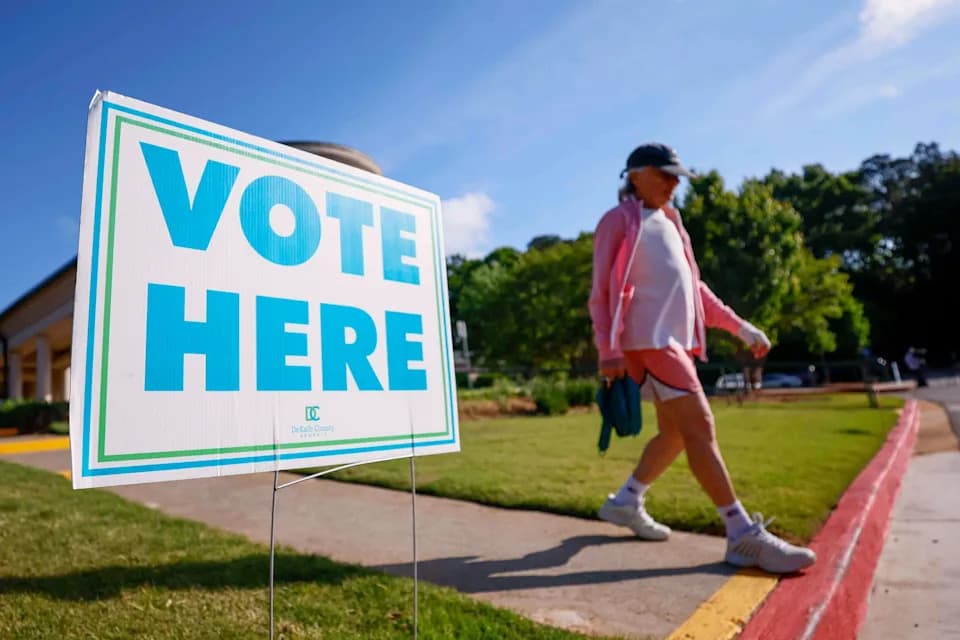
A person walks past a voting sign during the first day of early voting for the primary elections at the Dunwoody Library in Atlanta, Monday, April 27, 2026. (Miguel Martinez/Atlanta Journal-Constitution via AP)(ASSOCIATED PRESS)
The U.S. Supreme Court’s recent decision weakening a key provision of the Voting Rights Act has set off a nationwide scramble as Republican officials in several states move to redraw congressional and judicial maps ahead of the November midterms. Governors have called special legislative sessions, courts are weighing emergency filings, and voting schedules in some states have been paused as litigation intensifies.
What Happened
The high court’s ruling effectively removed a major legal constraint that had limited certain race-conscious districting. That change has emboldened state Republican leaders to pursue map changes they argue align districts with voter preferences, while Democrats and civil-rights groups argue the moves undermine minority representation and democratic norms. Several states that already enacted new lines earlier this cycle may see additional changes.
State-By-State Developments
Louisiana — Current House Map: Two Democrats, Four Republicans
Gov. Jeff Landry quickly postponed the May 16 congressional primary to give lawmakers time to redraw U.S. House districts; that move is now the subject of multiple federal and state lawsuits. Plaintiffs — including a Democratic candidate, voters who already returned absentee ballots, and civil-rights groups — argue Landry lacked authority to suspend the primary and that thousands of absentee ballots have already been cast. A three-judge federal panel earlier issued an order suspending the primary, and state legislative leaders say they are prepared to pass new maps and set a replacement date before the session ends.
Alabama — Current House Map: Two Democrats, Five Republicans
Alabama officials asked the Supreme Court for expedited consideration of an appeal that challenges a 2023 federal court order creating a near–majority-Black congressional district. That 2023 map produced a second Black member of Congress from Alabama and is under a court order to remain in effect through the 2030 census. Gov. Kay Ivey called a special session to prepare contingency plans — including the possibility of special primaries — should the Supreme Court permit the Legislature’s previously drawn map to be used this year.
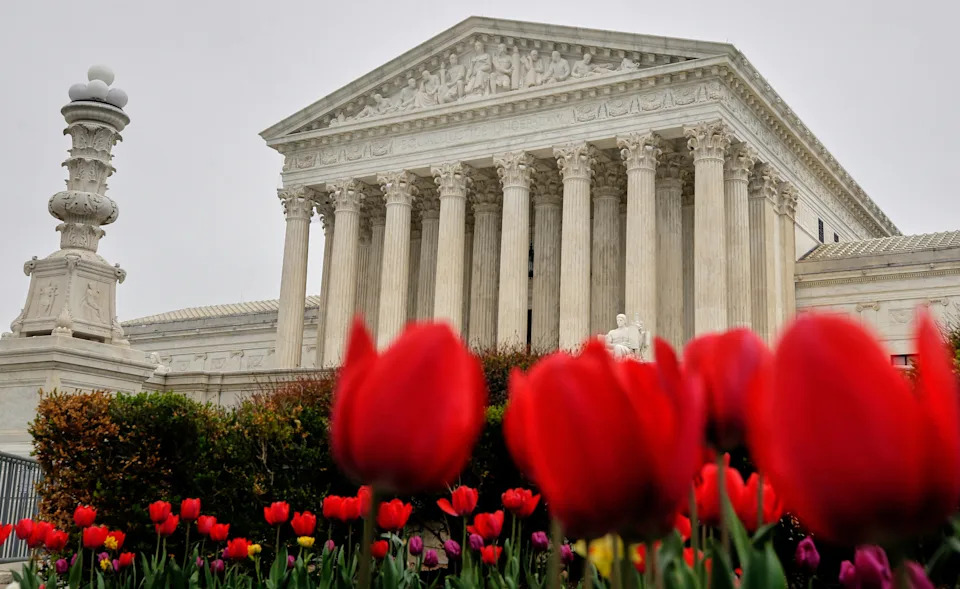
FILE - The U.S. Supreme Court is seen in Washington, Friday, April 3, 2026. (AP Photo/Rahmat Gul, File)(ASSOCIATED PRESS)
Florida — Current House Map: Eight Democrats, 20 Republicans
Within hours of the Supreme Court decision, Florida’s GOP-led Legislature approved new congressional districts that could give Republicans the opportunity to pick up several seats in November. Gov. Ron DeSantis had called a special session in anticipation of a favorable ruling and argued the new map corrects a district previously drawn to elect a Black representative to comply with the Voting Rights Act. Florida voters also approved a 2010 constitutional amendment banning maps that diminish minority voters’ ability to elect their preferred candidates, a provision DeSantis has said may conflict with the U.S. Constitution — a question likely to reach the courts.
Tennessee — Current House Map: One Democrat, Three Republicans
Gov. Bill Lee announced a special session after pressure from national Republicans, including former President Donald Trump, to redraw the 9th Congressional District anchored in majority-Black Memphis. Republicans have long sought to disperse Democratic voters in that district; the Voting Rights Act had been an obstacle to such plans. Candidate qualifying closed in March and the primary remains scheduled for Aug. 6, though Democrats point to prior state-court intervention in 2022 that blocked last-minute redistricting close to an election.
Mississippi — Current House Map: One Democrat, Three Republicans
Although Mississippi held congressional primaries in March, Gov. Tate Reeves has pledged to call a special session to redraw state Supreme Court districts roughly 21 days after the Supreme Court’s Louisiana ruling. A federal judge previously found Mississippi’s Supreme Court districts diluted Black voting power, and lawmakers had awaited the high court’s guidance before acting.
Georgia — Current House Map: Five Democrats, Nine Republicans
Gov. Brian Kemp said it is too late to change congressional maps for 2024 because early voting is already underway, but he indicated the Supreme Court’s rationale will require Georgia to adopt new electoral maps before the 2028 cycle. Early in-person voting began April 27 for the state’s May 19 primary.
National Implications
The decision increases legal uncertainty and could reshape competitive House races this fall, potentially influencing which party controls the narrowly divided U.S. House. Litigation is likely to continue in multiple jurisdictions, and redistricting battles are expected to remain a central feature of the 2024 elections. Advocates on both sides frame the issue as a choice between protecting minority representation and preventing race-based districting — a legal and political fight that will play out in courts and statehouses.
Note: This story is evolving. Details about court orders, primary dates and enacted maps may change as litigation proceeds and legislatures act.
Help us improve.





















