Summary: Black voters delivered decisive margins in 2020, yet the Democratic Party failed to translate that leverage into lasting protections. The Supreme Court’s recent 6–3 ruling narrowed Section 2 of the Voting Rights Act, and Congress did not pass the John Lewis Voting Rights Advancement Act — leaving no legislative backstop. States acted quickly: Florida adopted a GOP-favoring map and strict registration rules. The author confesses his own role and warns that Black voters are creditors, not a guaranteed base.
A Gutted Voting Rights Act Exposes Democrats’ Unpaid Debt To Black Voters
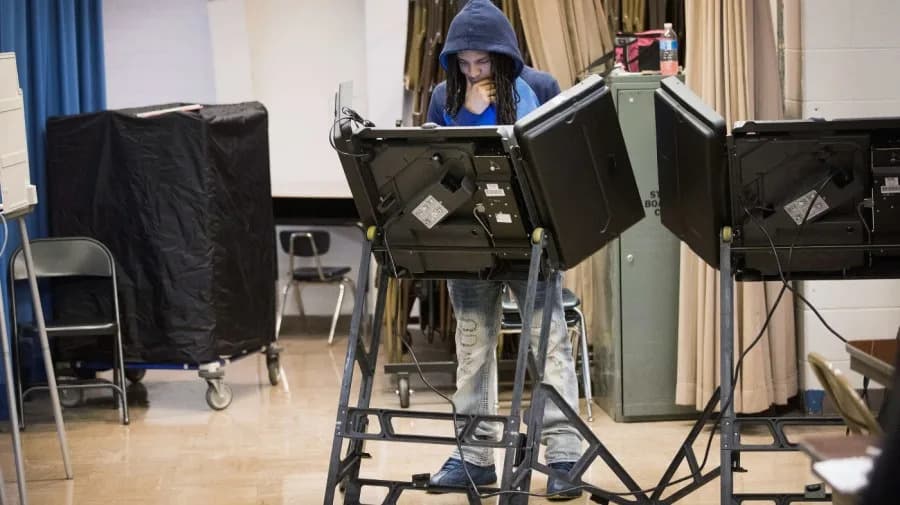
Democrats keep asking Black voters to do the same thing they have done every election cycle for six decades: turn out, carry the party, then accept gratitude expressed as a press release. I spent twenty years inside that arrangement, and the accounting is overdue.
Black voters effectively lent the Democratic Party a country in 2020 — and the party spent it on everything except the lender. My review of Federal Election Commission data from 2020 finds Georgia flipped to the Democrats by just under 12,000 votes, Pennsylvania by about 81,000, and Wisconsin by roughly 21,000. Nationally, Joe Biden captured 92 percent of Black voters. Put plainly: without that coalition, Donald Trump would have won.
By 2024, however, Trump’s share among Black men under 45 had roughly doubled to about 26 percent. Democrats called this a messaging problem. It was not. Black voters are not merely a base — we are creditors — and the party’s debt was long overdue.
How Voting Rights Protections Were Eroded
On Aug. 6, 1965, President Lyndon Johnson signed the Voting Rights Act. Five months earlier, John Lewis and roughly 600 marchers had been beaten on the Edmund Pettus Bridge in Selma while trying to register to vote. Before the law, Southern states ran overt systems of suppression — literacy tests, poll taxes and grandfather clauses — and met organized drives to register Black voters with routine violence.
In Mississippi in 1964, only 6.7 percent of eligible Black residents were registered to vote. Alabama’s Black registration rose from about 11 percent to 51 percent in the years after reforms. According to the ACLU, Georgia went from three Black elected officials to 495. The Voting Rights Act was not a courtesy; it was the enforcement of rights promised by the Constitution but denied for generations.
Then came Shelby County v. Holder (2013). The Supreme Court effectively neutered preclearance — the federal review of voting-law changes in jurisdictions with a history of discrimination. Within hours, Texas announced a new voter ID law. Since 2013, 15 states have restricted early voting, same-day registration or Sunday voting. Congress was expected to repair the coverage formula but did not.
The Bills That Could Have Helped — And Why They Failed
The Freedom to Vote Act and the John Lewis Voting Rights Advancement Act mattered because they would have rebuilt protections gutted by Shelby. Both reached the Senate floor in January 2022. Senate Democratic Leader Chuck Schumer had the votes at that time, but the effort collapsed when Senators Joe Manchin and Kyrsten Sinema joined all 50 Republicans in opposing the necessary change to filibuster rules. The bills died.
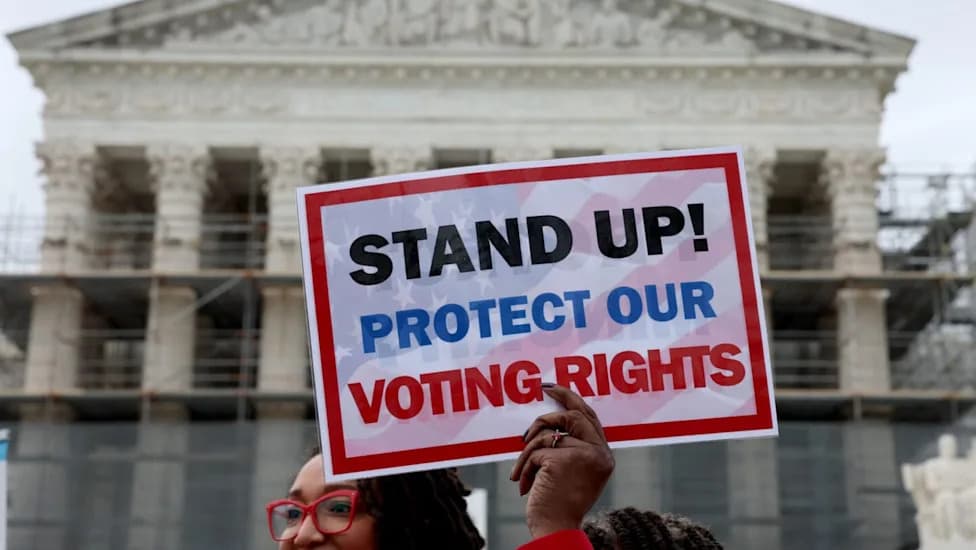
On Wednesday, the Supreme Court confirmed what that legislative failure cost. In a 6-3 decision, the Court narrowed Section 2 of the Voting Rights Act by making it harder for plaintiffs to challenge maps without proving intentional discrimination. Democracy Docket summarized the result bluntly: the decision smothers a key enforcement tool and greenlights a generation of racial gerrymanders. The John Lewis Act would have been the only meaningful backstop — and now there is none.
Immediate State Responses
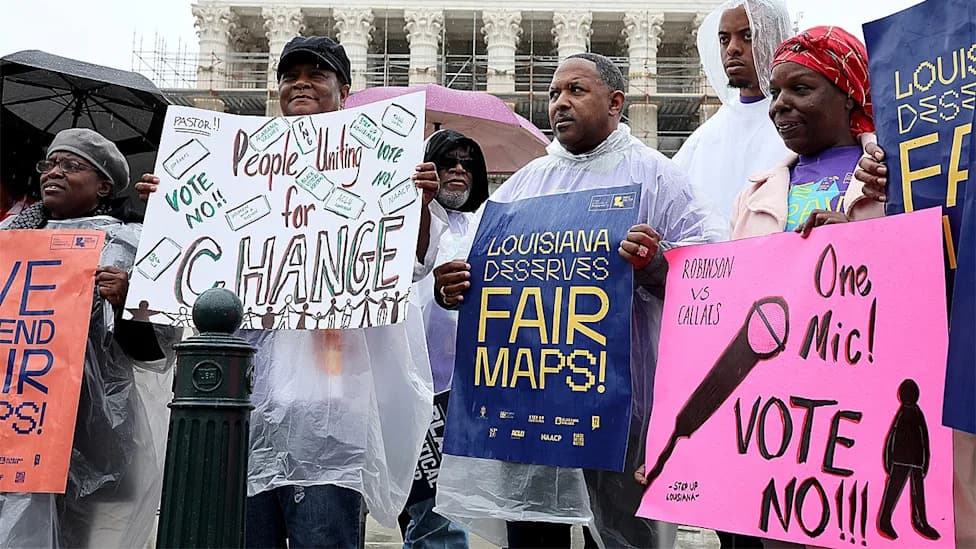
States that had been waiting to move acted quickly. Florida’s governor unveiled a congressional map engineered to give Republicans four additional House seats; both legislative chambers passed it within hours. He also signed a law requiring proof of citizenship to register to vote — a rule that will disproportionately burden students, the elderly and poor Black Floridians who often lack the required documents. When voting-rights groups protested, the governor rejected Florida’s 2010 Fair Districts amendment, which 63 percent of voters had approved.
Other promised reforms also stalled. The George Floyd Justice in Policing Act died in September 2021. In January 2023, Memphis police beat Tyre Nichols to death as he pleaded for his mother — yet the policing reforms named for George Floyd were never revived. In 2023, the Supreme Court curtailed student loan forgiveness, relief that would have primarily helped Black borrowers. Those measures never arrived.
A confession: The coalition produced results, but Schumer and the party did not secure the protections and policies that were owed. I share responsibility. I worked inside the system, collected the lines and counseled patience to Black voters. This is my confession.
Every two years, Black voters receive what amounts to an emergency alert. We respond, and two years later the same emergency returns. That pattern is not politics — it is a hustle. Fannie Lou Hamer told the 1964 Democratic National Convention the truth about Mississippi’s all-white delegation — the one seated instead of hers. She was right and unwelcome; the party moved on.
Black voters under 40 have watched Ferguson, Baltimore, Minneapolis and Memphis. They have seen the Supreme Court hollow out the law named for John Lewis and watched Florida’s leadership void a voter-protection amendment, daring anyone to stop them. The party will ask these voters to turn out in 2026 because it asks nicely. They are under no obligation to comply.
Democrats did not simply lose Black voters; they used them. Black voters understand the distinction. The party will call again, declare another emergency, and it will be right — but for the first time in sixty years, the terms are not the same.
Michael Starr Hopkins is the author of Burn the Playbook and a former senior congressional aide and presidential campaign spokesperson.
Help us improve.