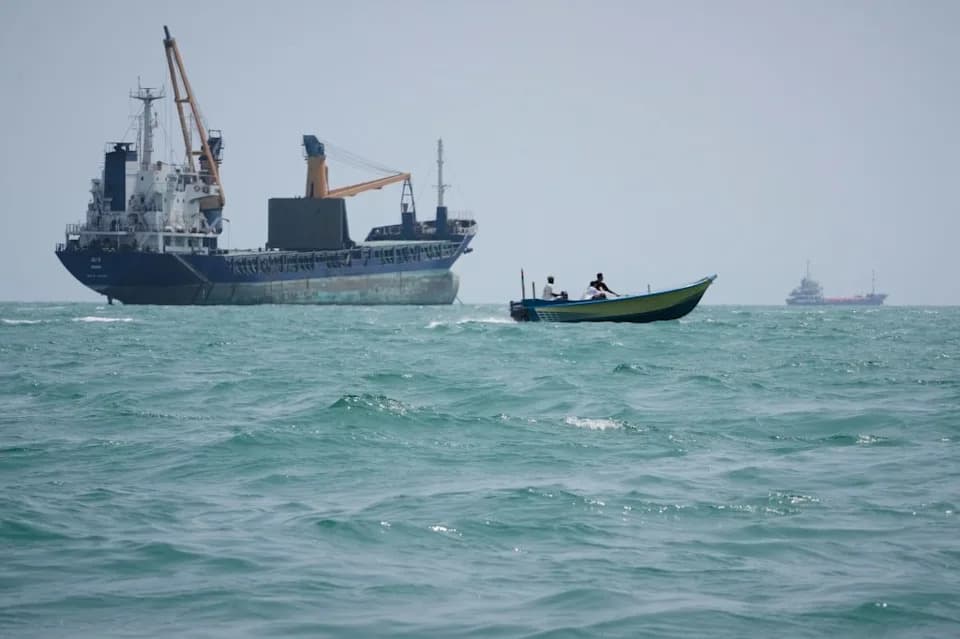
Maritime trade is under pressure. Recent incidents from the Strait of Hormuz to the South China Sea and allegations over Panama‑flagged vessels show the rules that long governed navigation are being tested. The result: higher costs from rerouting, rising insurance and war‑risk premiums, and growing uncertainty as states and non‑state actors use sea control as leverage. Experts warn this could set a precedent where access and safety are decided by power rather than consistent international law.
‘Turbulent and Dangerous’: How Shipping Has Become a Global Geopolitical Battleground
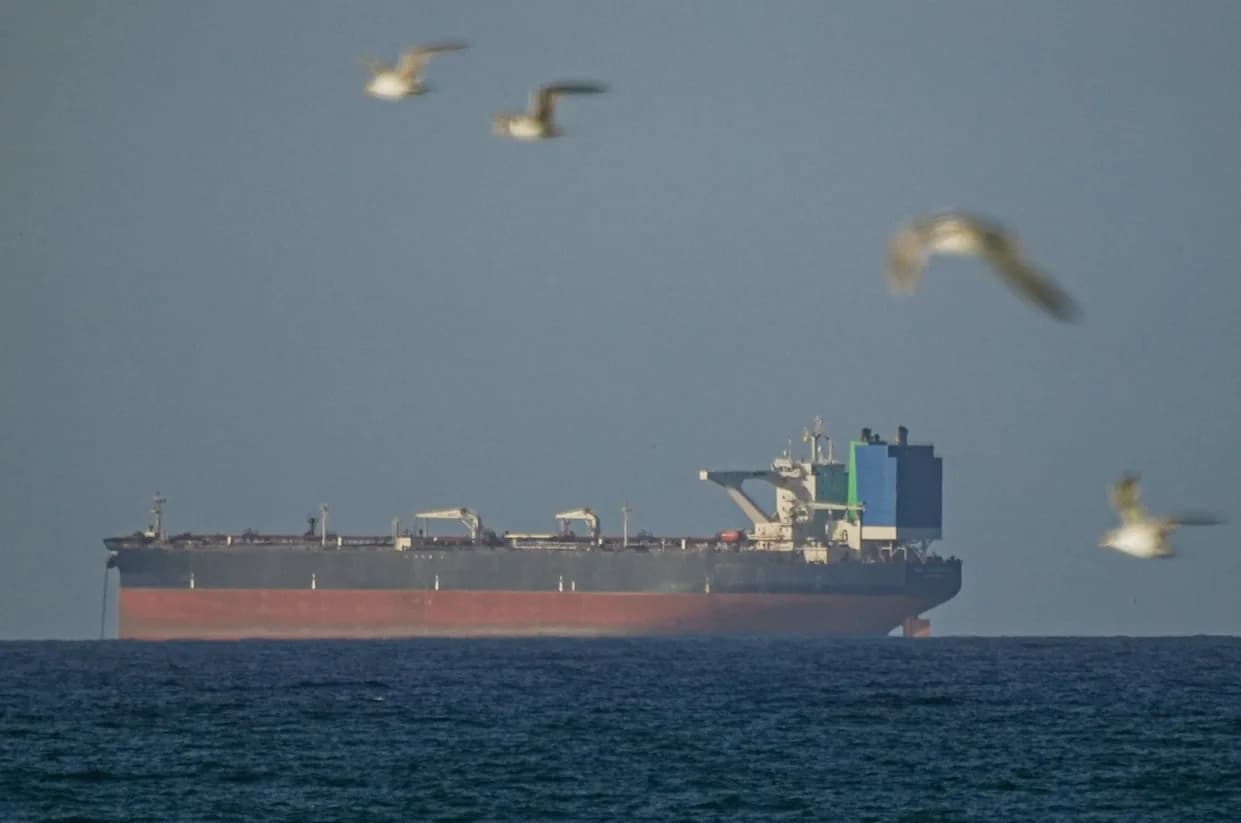
A ship waits to pass through the Strait of Hormuz following the two-week ceasefire between the US and Iran, which is conditional on the opening of the strait, in Oman [File: Shadi JH Alassar/Anadolu]
When Indonesia’s finance minister, Purbaya Yudhi Sadewa, last week floated the idea of charging a toll for vessels transiting the Strait of Malacca — reportedly inspired by Iran’s recent moves in the Strait of Hormuz — insurers and Asian importers sounded the alarm. Jakarta quickly walked the suggestion back, but analysts say the episode underlines a growing trend: the rules-based order that long governed maritime navigation is fraying, and navigation is becoming more politicised, costly and hazardous.
From Postwar Order To New Pressures
Shipping has always carried risks — piracy and robbery at sea are centuries‑old problems — but the expansion of international trade after World War II prompted states to build legal frameworks and agreements that made navigation more predictable. Maritime transport now moves more than 80 percent of traded goods globally, and those rules helped world trade grow from roughly $60 billion in the 1950s to over $25 trillion last year, according to the World Trade Organization.
High‑Profile Challenges
Recent actions by powerful states and non‑state actors, experts warn, are testing those norms. In the Strait of Hormuz, Iran restricted passage to many vessels after military confrontations in the region. On April 13, the United States announced a naval blockade targeting Iranian ships and ports. Since then, US forces have detained or boarded vessels they allege were carrying sanctioned Iranian oil, while Iran’s forces have detained ships they say transited without permission and have fired on some vessels. Such tit‑for‑tat incidents have amplified global energy market volatility, contributing to multiyear highs in oil and gas prices.
“Even short of a full shutdown, ‘permissioning’ and pressure can impose major costs and uncertainty,” said Jack Kennedy, head of MENA Country Risk at S&P Global Market Intelligence.
Kennedy noted a reported incident northeast of Oman in which a container ship’s bridge was heavily damaged after being fired on by a gunboat linked to Iran’s Islamic Revolutionary Guard Corps — a calibrated show of force intended to signal control without stopping all traffic.
Diplomatic Tensions and Port Disputes
This week the United States, together with several South American and Caribbean states, accused China of imposing “targeted economic pressure” by detaining Panama‑flagged vessels in Chinese ports — an accusation Beijing denied while accusing the US of hypocrisy and historic intervention in Panama. The diplomatic flare‑up follows Panama’s Supreme Court decision to cancel a longstanding concession held by a Hong Kong‑linked company to operate the Balboa and Cristobal ports, a move that came amid sustained US pressure to limit Chinese influence near the canal.
Other Theatres: Black Sea, South China Sea, Red Sea
Beyond Hormuz and Panama, naval measures have created strategic leverage elsewhere. Russia’s restrictions on Ukrainian exports from the Black Sea during the war helped trigger global food‑supply shocks. In the South China Sea, commercial operators report increased harassment tied to contested territorial claims, which Beijing rejects. Non‑state actors, including Houthi militants in the Red Sea, have forced many ships to reroute around the Cape of Good Hope, adding days and fuel costs to voyages.
The International Maritime Bureau reported that 2025 saw the highest number of piracy incidents in the past five years, underscoring how non‑state threats compound geopolitical risks.
Operational And Economic Consequences
The practical effects are concrete: rerouted ships burn more fuel and take longer to complete voyages, insurance and war‑risk premiums rise, and even brief inspections or detentions can cascade into missed schedules and broken cargo commitments. Operators are increasingly weighing route choices, flags of convenience, and port calls to minimise exposure to politically driven delays.
“The risk is the precedent that could be set once multiple states test boundaries — through de facto permissioning, selective enforcement, or threatening tolls or levies in international straits. Then outcomes become more contingent on bargaining and power,” said Kennedy.
Taken together, experts say these trends point to a shift away from predictable, universally applied maritime norms toward a system where access, cost and security are increasingly shaped by power and political calculation.
Help us improve.