President Donald J. Trump, allied Republicans in Congress, personally selected appointees and private supporters have pursued a wide-ranging effort to place Trump’s name, image and likeness on government property, official items and public programs funded by taxpayers. Many of these moves are tied to the U.S. 250th anniversary (the semiquincentennial) and have prompted legal questions, lawsuits and sharp political debate.
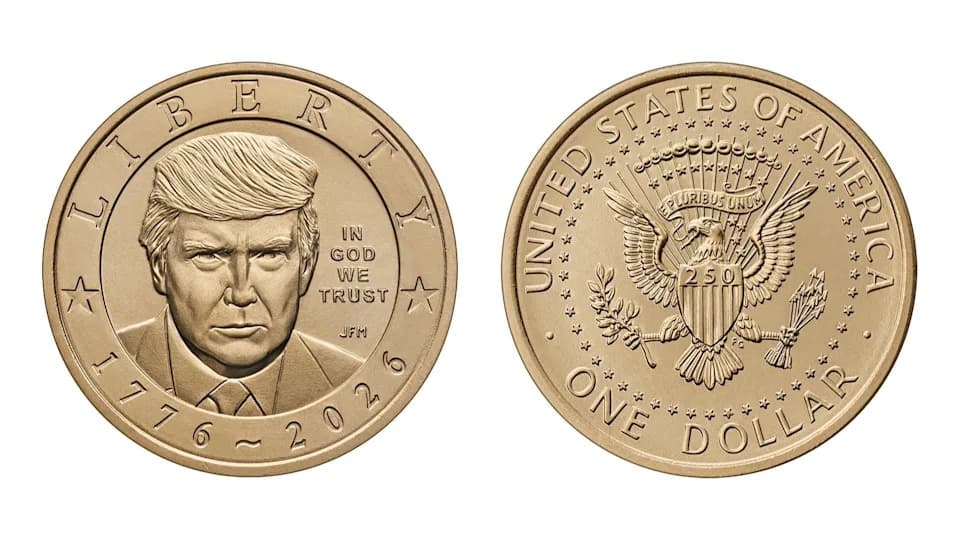
The design of the America 250 commemorative gold coin. - US Treasury
What’s Being Proposed and What’s Already Happened
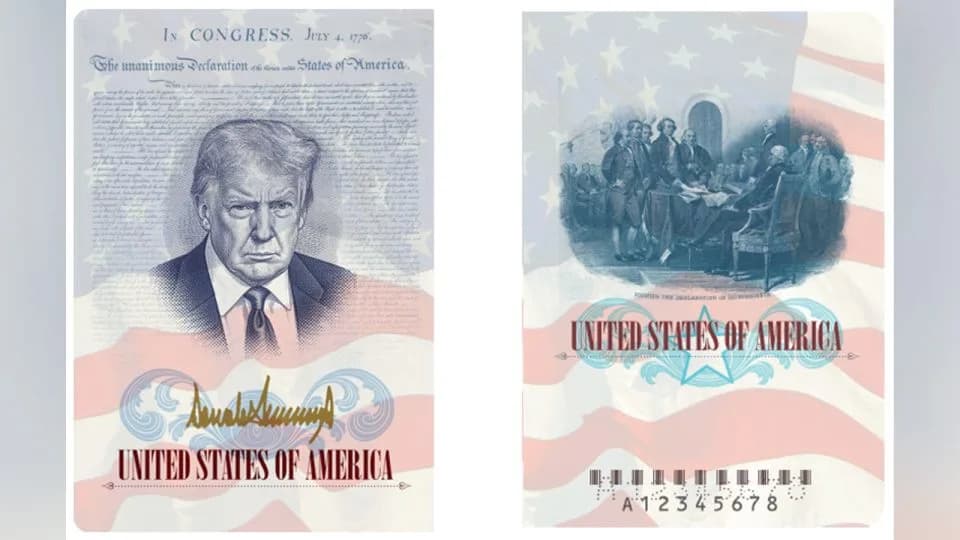
Passports and Commemorative Items: Official travel documents produced for the semiquincentennial will feature a presentation that places the president’s portrait above an image of the Declaration of Independence and opposite an illustration of the Founding Fathers. The State Department has said the design will be available from the Washington passport office, though total issuance is unclear.
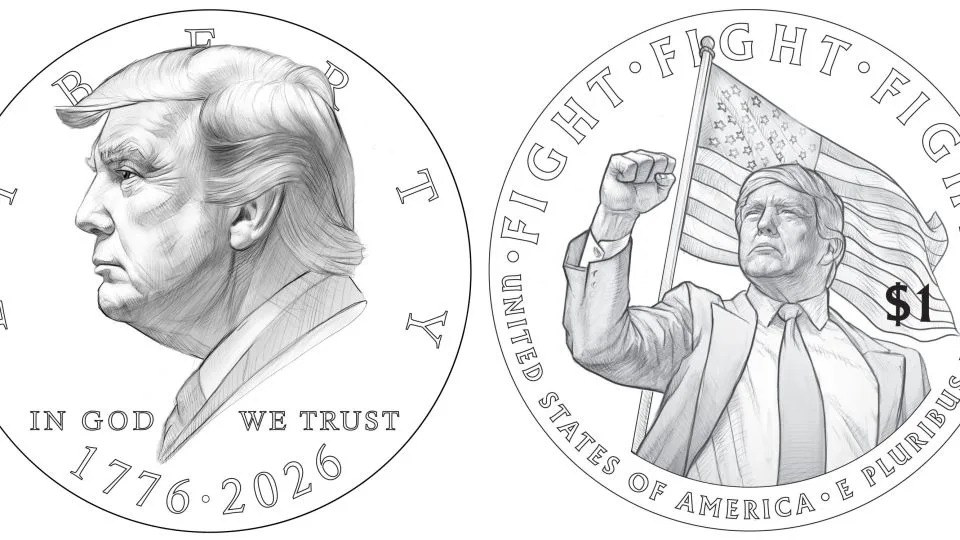
Proposed $1 coin. - From Steve Guest/X
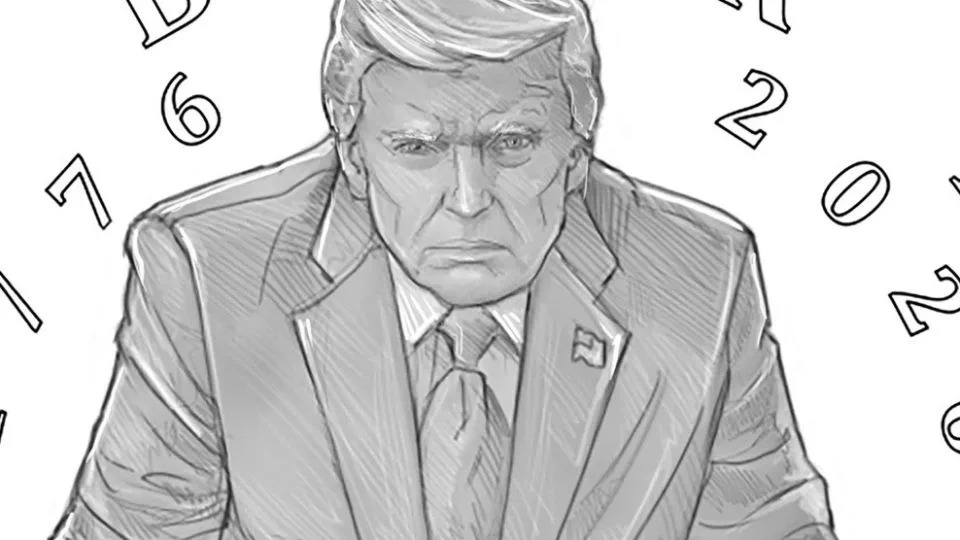
Currency and Coins: For the first time for a living president, Trump’s signature is slated to appear on some U.S. paper currency used for semiquincentennial commemoration. Separately, the president’s handpicked Commission of Fine Arts approved a proposed commemorative gold coin depicting Trump at the Resolute Desk; members reportedly pushed for a large coin roughly two inches in diameter. The Treasury has also pursued a special $1 coin with the president’s image, even though federal law and longstanding practice generally restrict images of living presidents on circulating coinage and notes.
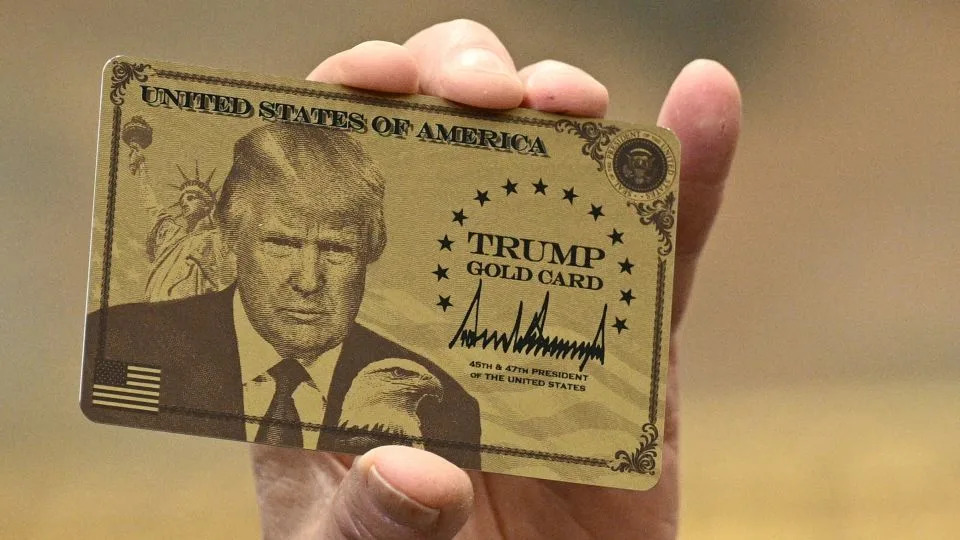
President Donald Trump holds up a "Trump Gold Card" as he makes an announcement from the Roosevelt Room of the White House on December 19, 2025. - Brendan Smialowski/AFP/Getty Images
Residency Program Proposal: The administration backed a controversial Commerce Department program described by Trump as "a green card on steroids," proposing expedited residency in exchange for a $1 million investment. Early administration estimates projected very large potential revenues, though only one person had qualified as of April and the program’s ultimate scope and legality remain uncertain.
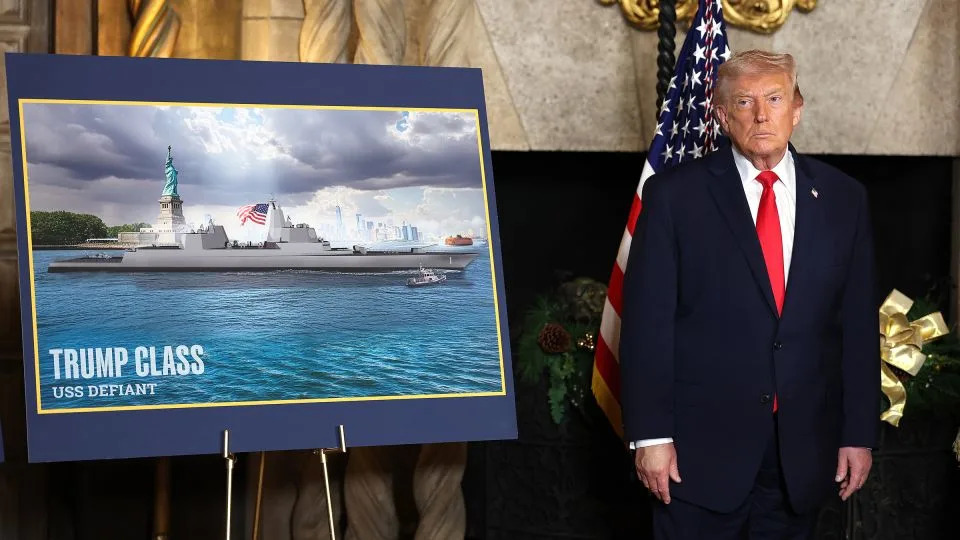
President Donald Trump announced the creation of the “Trump class” battleship during a statement to the media at his Mar-a-Lago estate on December 22, 2025. - Tasos Katopodis/Getty Images
Military and Defense Branding: The administration has attached Trump’s name to defense programs: in 2025, Trump announced Boeing’s next-generation fighter would be designated the F-47, an apparent reference to a second presidential term; last December he said a planned class of battleships would be the "Trump class." Any ships or systems bearing those names are years from production, and some proposals have stirred internal tension within the Pentagon.
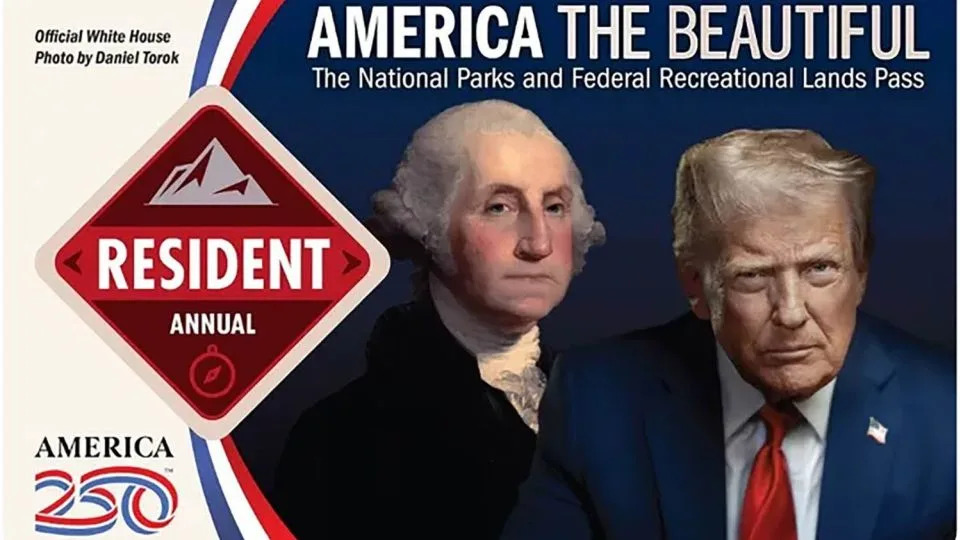
National parks and federal lands annual pass. - Department of Interior
Domestic Programs and Statutory Changes: A 2025 tax and spending law enacted by Republicans created $1,000 starter investment accounts for newborns—referred to in some coverage as "Trump accounts"—making that program part of federal law. The administration also launched or branded initiatives such as TrumpRx, a government-run website intended to help patients find prescription drug prices, though its impact on costs remains to be seen.
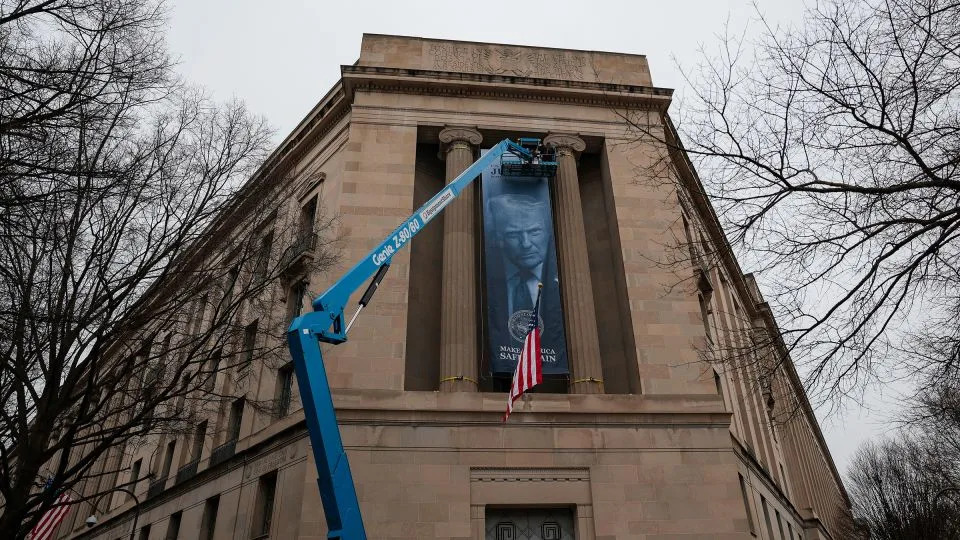
A banner of President Donald Trump is hung on the Department of Justice on February 19, 2026. - Heather Diehl/Getty Images
Administrative Name Changes, Banners and Lawsuits
The administration has taken administrative steps to affix Trump’s name to public buildings and sites. Examples include adding Trump’s name to the facade of the Kennedy Center and altering signage on the building that houses the United States Institute of Peace. These changes were implemented without congressional action to formally rename the institutions, drawing criticism and the possibility that later administrations or Congress could reverse them.
Large banners and displays bearing the president’s likeness have been placed on federal buildings in Washington, including at times the Departments of Labor, Agriculture and, most controversially, the Department of Justice. Critics argue such displays resemble state propaganda in authoritarian regimes; supporters say they are legitimate commemorations. Environmental and civil-society groups have filed lawsuits over some changes, including park-pass designs that replace images of certain parks with the president.
Private Tributes and Pushback
Private supporters have financed tributes as well: for example, a cryptocurrency company commissioned a gold statue unveiled at Trump’s Doral club. Not every naming effort succeeded—offers to release frozen infrastructure funds in exchange for renaming Penn Station and Dulles Airport were rejected by Democratic officials, and courts ordered some funds released.
Free Speech and Controversy: Supporters and opponents have used legal and public channels to promote or challenge these changes. The National Park Service has permitted temporary statues and installations of Trump—some provocative—under free-speech principles. Where legal limits apply (for example, statutes governing pictures of living persons on currency and coinage), proposals face statutory hurdles and potential litigation.
Why This Matters
These efforts raise lasting questions about precedent and propriety: Should taxpayer dollars be used to memorialize a sitting president? Are there adequate legal and ethical safeguards to prevent partisan or personal aggrandizement of public property? The answers will shape expectations about how democratic institutions commemorate leaders while they remain in office.