Renovations in Nieuwpoort, Belgium, were paused after surveyors uncovered dozens of 14th‑century stone cannonballs and an unexploded World War I artillery shell during digs that began in February. The cannonballs were found near the city’s former southern fortification and the Stadshalle civic centre, suggesting a deliberate medieval ammunition depot. Belgium’s explosive ordnance team removed the WWI shell safely. Excavations continue as experts document the finds and assess the site’s historical significance.
Renovations Halted After 14th‑Century Cannonballs and a WWI Shell Unearthed in Nieuwpoort
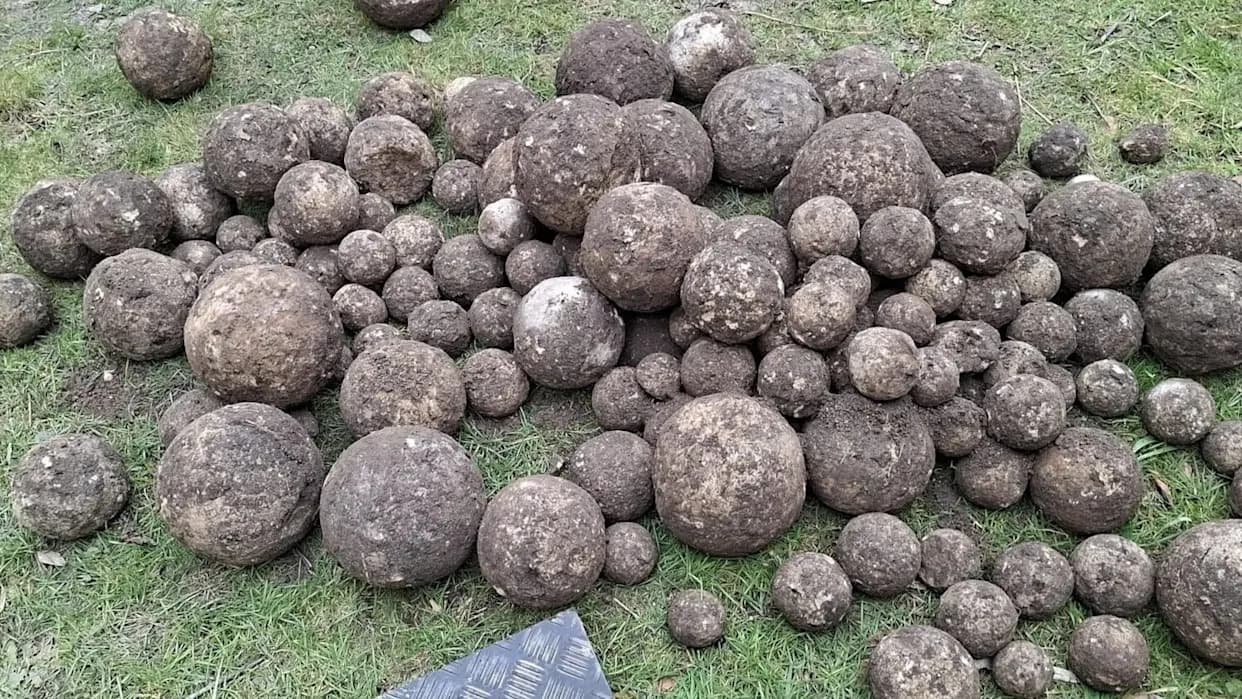
The stone cannonballs likely date back to somewhere between 1350 and 1600.
Renovation work on government offices in the coastal Belgian town of Nieuwpoort has been paused after surveyors uncovered a significant archaeological cache beneath a small building plot: dozens of carefully made stone cannonballs dating to the 14th century, and an unexploded artillery shell from World War I.
Historic Finds Stop Work
Investigations began in February after preliminary test trenches hinted at promising relics. Since then, archaeologists have recovered numerous stone cannonballs close to where the city’s southern fortification wall once stood, near the historic Stadshalle civic centre and its belfry. The organized stockpile and its location suggest an intentional ammunition depot dedicated to the town’s defence, though specialists caution that this interpretation is not yet definitive.
What the Cannonballs Reveal
Stone shot like those recovered at Nieuwpoort represent an important transitional phase in medieval military technology. Widely used across Europe from roughly 1350 to 1600, these projectiles could be employed by mechanical siege engines (trebuchets and catapults) as well as by early explosive cannons. Experts noted a variety of sizes among the cannonballs, suggesting a mixed arsenal prepared for multiple types of weapons.
A Chilling Reminder From the 20th Century
In a higher soil layer, archaeologists also found an unexploded World War I artillery shell. Belgium’s explosive ordnance team safely removed the potentially dangerous artifact; no injuries were reported. The WWI shell underlines Nieuwpoort’s longstanding strategic importance on the English Channel and its role as a frontline town during the First World War, when the city suffered extensive damage.
“What has been exposed here in recent weeks shows that Nieuwpoort is a place where history lies literally everywhere, even a few metres beneath our feet,”
“What we are uncovering surpasses expectations: from medieval building remains and an exceptional depot of cannonballs to military relics that point to our past as a frontline town. Each construction phase here becomes a journey into our history — and that history still has secrets to reveal.”
Next Steps
Excavations are ongoing under archaeological supervision, and renovation plans remain on hold while specialists document and assess the site. The finds deepen understanding of Nieuwpoort’s layered military history and reinforce why construction in historic towns often turns into archaeological discovery.
Location note: Nieuwpoort lies on Belgium’s North Sea coast, about 70 miles (110 km) northwest of Brussels.
Help us improve.