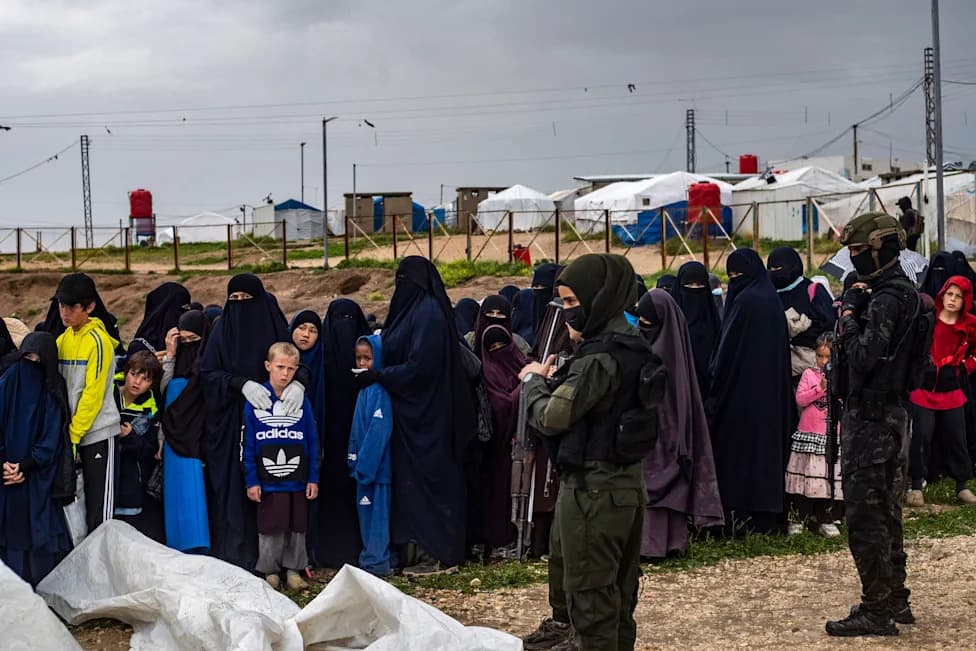
Thirteen Australian women and children from four families left Roj camp in northeastern Syria and arrived in Damascus last week, but Syrian officials say they were prevented from flying home after Australia refused to accept them. Syrian authorities allege passports were obtained while the families were still in SDF-held areas. Prime Minister Anthony Albanese confirmed Australia is providing no repatriation support. The episode follows earlier blocked returns and broader instability in Syrian detention camps since Islamic State's territorial defeat.
Australia Declines Repatriation Of 13 Women And Children From Syrian Camp, Damascus Says
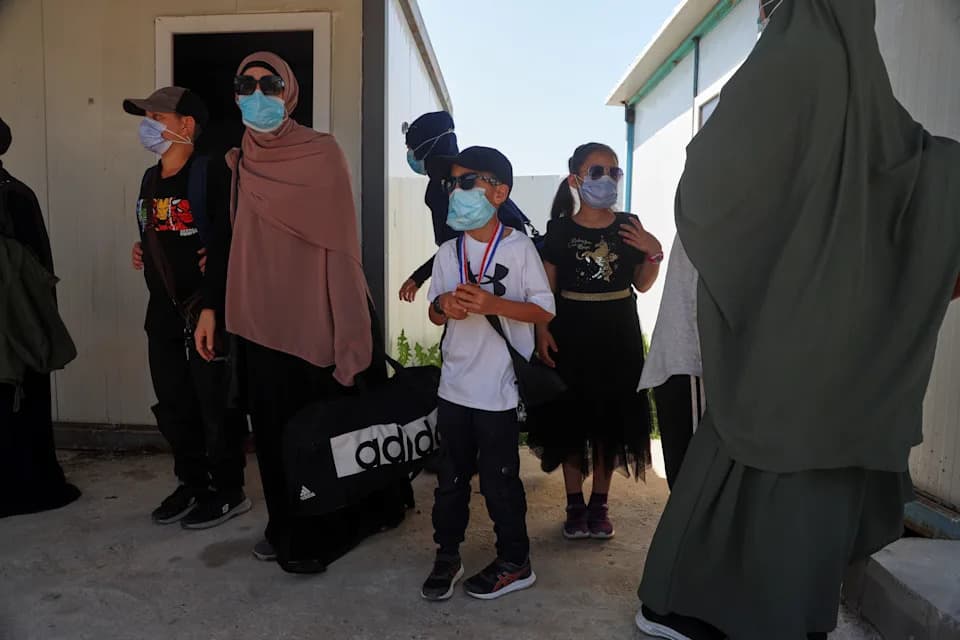
Members of Australian families at Roj Camp in eastern Syria, housing people with alleged ties to Islamic State militants, prepare to leave for Damascus as part of a second repatriation effort by Syrian authorities, at Roj Camp in eastern Syria, Friday, April 24, 2026. (AP Photo/Baderkhan Ahmad)(ASSOCIATED PRESS)
Syrian officials say 13 Australian women and children who left Roj camp in northeastern Syria are stranded in Damascus after Australian authorities refused to accept them, the Syrian Information Ministry told reporters.
The group — from four families — traveled from Roj, a remote facility near the Iraqi border that houses relatives of people suspected of ties to the Islamic State group, to Syria's capital last week. Syrian officials say the families were stopped at Damascus International Airport after being informed that the Australian government had declined to receive them.
Passports and coordination
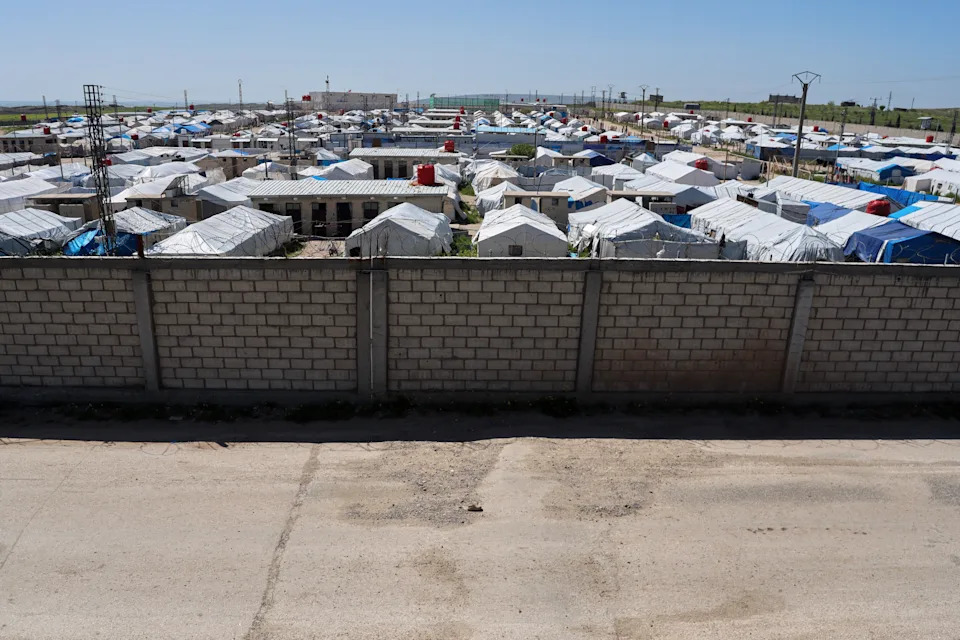
A brick wall surrounds a tent camp housing people with alleged ties to Islamic State militants at Roj Camp in eastern Syria, Friday, April 24, 2026. (AP Photo/Baderkhan Ahmad)(ASSOCIATED PRESS)
Syria's Information Ministry said the families obtained passports while still in areas controlled by the Kurdish-led Syrian Democratic Forces (SDF), delivered to them via an unnamed individual acting through a lawyer. The ministry said the families now await a solution that requires coordination with international parties.
Australia's position
Australian Prime Minister Anthony Albanese said at a news conference that "we are providing no support for repatriation and no assistance for these people." The Australian government has previously repatriated women and children from Syrian camps on two occasions, and some Australians have returned without government assistance.
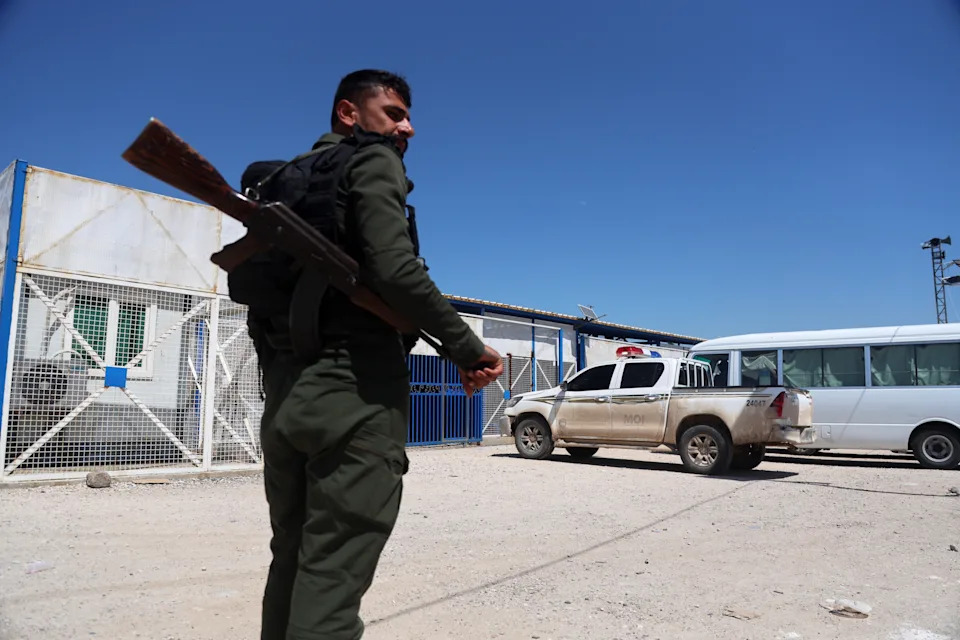
A soldier stands guard as vehicles arrive at Roj Camp in eastern Syria, housing people with alleged ties to Islamic State militants, to transport Australian families to Damascus as part of a second repatriation effort by Syrian authorities, Friday, April 24, 2026. (AP Photo/Baderkhan Ahmad)(ASSOCIATED PRESS)
Context and recent developments
After Islamic State lost control of its territory in Syria in 2019, former fighters and their families were held in camps and detention centers across northeast Syria. The larger al-Hol camp has since been closed. In the months following January clashes between Syrian government forces and the SDF, thousands of suspected IS militants detained in Syria were transferred by the U.S. military to Iraq to face trial. Fighting and disorder in the region also led to detainees fleeing al-Hol and some prisoners escaping from a detention center.
A previous attempt in February to fly 34 women and children to Australia from Roj was similarly blocked by Syrian authorities. Lebanese-Australian doctor Jamal Rifi has been reported to be involved in coordinating repatriation efforts, though he could not be reached for comment for this report.
Report contributed by Rod McGuirk in Melbourne, Australia.
Help us improve.