A Harvard-led study using nearly 16,000 ancient genomes and over 6,000 modern genomes finds 479 genetic variants that show strong signs of recent natural selection in West Eurasia. Variants linked to red hair and paler skin (MC1R) stand out, and researchers suggest lighter skin may have spread to improve vitamin D production after the shift to agriculture. The findings also flag loci related to disease risk and psychiatric traits, but authors urge caution in assigning causes. The team has released methods and data so others can apply the approach worldwide.
Study Finds 479 Genetic Variants Shaped by Recent Natural Selection — Red Hair and Vitamin D Offer Clues

(Westend61/Getty Images)
A major new study led by Harvard researchers shows that natural selection continued to shape human DNA far more recently than previously believed. The analysis identifies 479 genetic variants that appear to have been strongly selected for or against across roughly the last 10,000 years in West Eurasia.
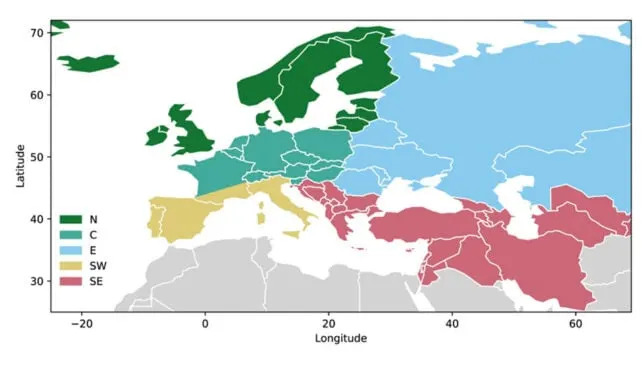
The regions from which ancient and recent human DNA samples were studied in this work. (Akbari et al.,Nature, 2026)
Large Dataset and New Method
The team combined an unusually large collection of ancient genomes — nearly 16,000 individuals spanning about 10 millennia — with DNA from more than 6,000 present-day people. Using a novel computational method, the researchers tracked changes in allele frequencies through time and modelled relationships among individuals to separate genuine selection signals from effects caused by migration or random genetic drift.

Subscribe to ScienceAlert's free fact-checked newsletter
Key Findings
Among the 479 variants, some affect hair color and skin pigmentation, including variants of the MC1R gene strongly associated with red hair and paler skin. The authors propose that lighter skin alleles may have been favored because paler skin produces vitamin D from sunlight more efficiently — a potential advantage as populations shifted from hunter-gatherer diets to farming, which often provided less dietary vitamin D.
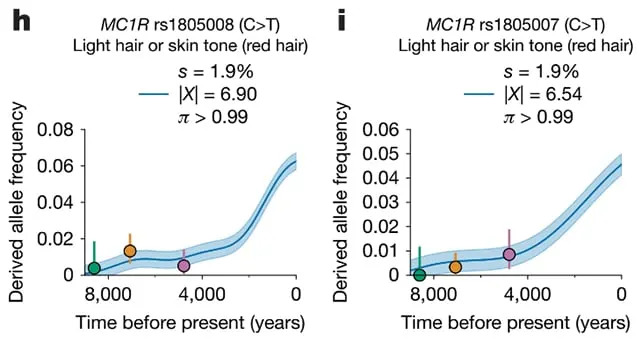
The researchers foundMC1Rvariants that had been naturally selected. (Akbari et al.,Nature, 2026)
The study also highlights selected loci linked today to disease risk and psychiatric traits, suggesting selection has influenced biologically and clinically relevant pathways. Some variants rose or fell at different times and some acted in groups, revealing a complex, dynamic picture of recent human evolution.
David Reich (Harvard): “This single paper doubles the size of the ancient human DNA literature. It reflects a focused effort to fill in holes that limited the power of previous studies to detect selection.”
Caveats and Future Directions
The paper does not definitively prove the reasons certain variants were favoured, and the vitamin D explanation for lighter skin remains a hypothesis. The researchers caution against overinterpreting gene–trait links across millennia because lifestyles and environments have changed dramatically. They have made their methods and data publicly available so other teams can apply the approach to DNA from other regions, which may deepen understanding of evolution and disease risk globally.
The research is published in the journal Nature.
Help us improve.