Senegal's National Assembly has approved amendments to the electoral code that could allow Prime Minister Ousmane Sonko to run for president in 2029 by removing legal barriers that previously disqualified him. The bill passed 128-11-2 under an emergency procedure criticised by opposition parties and will now go to the president for signature. Opponents may challenge the law at the Constitutional Council, while the presidency has also released broader draft reforms for public comment.
Senegal MPs Approve Electoral Reform That Could Open Door For Sonko's 2029 Bid
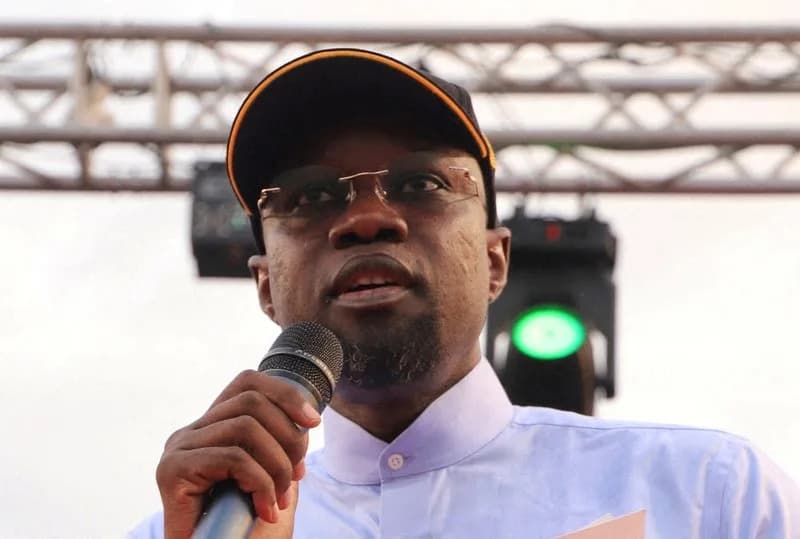
FILE PHOTO: Senegal's Prime Minister Ousmane Sonko of the ruling party PASTEF (African Patriots of Senegal for Work, Ethics and Fraternity) speaks during a political rally in Dakar, Senegal, November 8, 2025. REUTERS/Anait Miridzhanian/File Photo
DAKAR, April 28 — Senegal's National Assembly on Tuesday overwhelmingly approved amendments to the electoral code that could remove legal barriers preventing Prime Minister Ousmane Sonko from contesting the 2029 presidential election.
The bill, advanced under an emergency procedure criticised by opposition parties as rushed, was adopted with 128 votes in favour, 11 against and 2 abstentions. The Assembly is dominated by Sonko's Pastef party, which made the passage straightforward.
Background
Sonko, 51, was barred from standing in the 2024 presidential race after a criminal conviction that opponents have since used to disqualify him. His chosen successor, Bassirou Diomaye Faye, won that election and is now president. Since taking office, tensions and policy disagreements between President Faye and Sonko have become public, fuelling speculation that Sonko may seek the presidency in 2029.
What the Changes Do
The legislation amends provisions of the electoral code and related rules that had previously been applied to disqualify Sonko. If the amendments withstand legal scrutiny, they could remove a significant obstacle to his future candidacy. However, the changes are not guaranteed to secure his path: opponents can challenge the law at the Constitutional Council and the president must still decide whether to sign the bill into law.
Political Context And Next Steps
Opposition parties have already signalled they may mount a constitutional challenge, arguing the emergency procedure short-circuited debate. The text will now be sent to the presidency for signature or veto. Separately, the presidency on Monday published draft reforms touching the constitution, the electoral code, political parties and the constitutional court for public comment ahead of upcoming cabinet discussions.
Reporting by Diadie Ba; Writing by Amindeh Blaise Atabong; Editing by Robbie Corey-Boulet.
Help us improve.