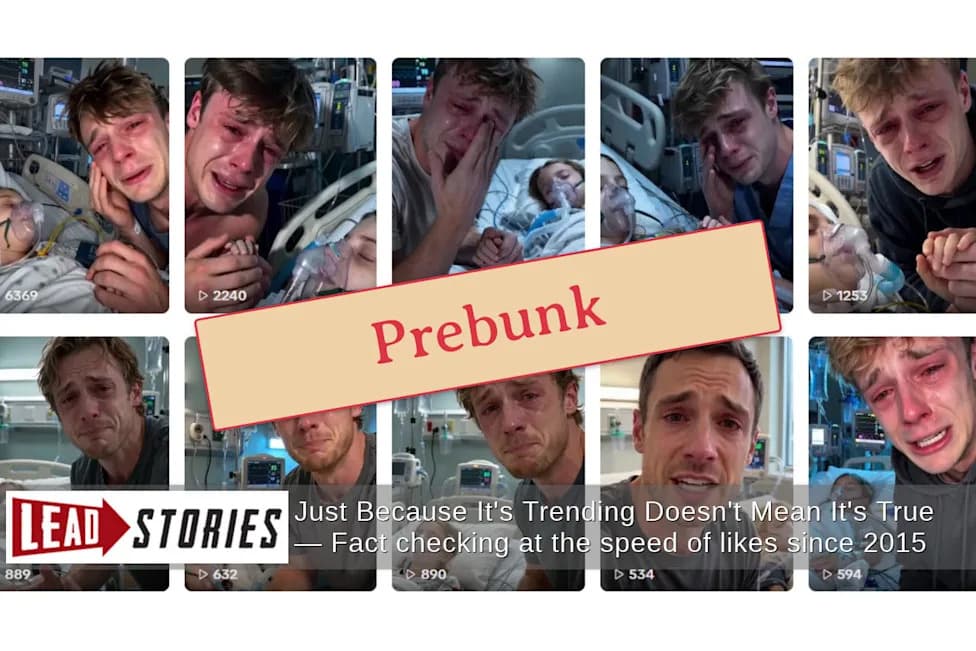
Pre-bunking uses short educational videos to teach people how to recognize common manipulation tactics—like ad hominem attacks, false dichotomies and scapegoating—before they encounter false information. A 2022 Science Advances study with Jigsaw and nearly 30,000 participants found that brief inoculation videos placed in YouTube ad slots improved viewers’ ability to spot deceptive techniques. Jigsaw later deployed campaigns across Central Europe and reached over 120 million users ahead of the 2024 EU elections, suggesting pre-bunking is a scalable complement to fact-checking.
Pre-bunking Beats Debunking: Short Inoculation Videos Help Stop Online Misinformation

Some helpful information to fight misinformation.
The rise of misinformation on social media has become a severe test of public critical thinking. False claims have shaped elections, public-health responses and attitudes toward immigrants and refugees around the world. Platforms have relied on fact-checkers and content removal, but those after-the-fact tactics have important limits: people who are most susceptible to falsehoods often distrust fact-checkers, and takedowns can be perceived as inconsistent or politically biased.
“The word fact-checking itself has become politicized,” Cambridge University researcher Jon Roozenbeek told the Associated Press.
Research also shows that directly confronting people with corrective facts can backfire: in some cases, people double down on an incorrect belief when it is challenged. That has pushed researchers toward a preventative strategy called pre-bunking, which draws on inoculation theory from communication science. The idea is simple: expose people to a weakened form of manipulative tactics (and teach them to recognize those tactics) so they are more resistant when they encounter full-strength misinformation later.
How Pre-bunking Works
Pre-bunking focuses on teaching basic critical-thinking skills and alerting people to common persuasion techniques used by disinformation campaigns. Instead of supplying corrective facts after a false claim spreads, pre-bunking gives audiences tools to recognize rhetorical tricks—such as ad hominem attacks, false dichotomies, scapegoating and incoherence—so they can spot manipulation themselves.
Evidence From Large-Scale Experiments
A 2022 study published in Science Advances by university researchers working with Jigsaw (a Google research unit) tested pre-bunking in seven preregistered studies, including a YouTube field experiment. Across nearly 30,000 participants, the researchers found that watching short inoculation videos significantly improved people’s ability to identify manipulation techniques both in laboratory conditions and in real-world environments where misinformation is common.
To reach broad audiences, the team placed brief videos in YouTube ad slots. Each clip explained a specific manipulative technique with concrete examples—for instance, showing how a false dichotomy frames two extremes as the only options or how scapegoating blames a group for complex problems—so viewers could learn the pattern and spot it elsewhere online.
Real-World Impact
The results were strong enough for Jigsaw to scale the approach. Pre-bunking campaigns targeted scapegoating narratives in Poland, the Czech Republic and Slovakia—countries facing a surge of false information about Ukrainian refugees. Ahead of the 2024 EU elections, Jigsaw-supported efforts reached more than 120 million YouTube users across 12 countries, with follow-up studies confirming improved ability to detect manipulative tactics among exposed viewers.
Why This Matters
Pre-bunking shifts the burden from constant platform moderation to public media literacy. Teaching people to identify propaganda tropes and logical fallacies is a pragmatic way to strengthen collective resilience to disinformation. Instead of playing endless whack-a-mole by removing content after it spreads, short, scalable inoculation interventions empower users to judge claims for themselves.
Bottom line: Brief educational interventions that preview manipulation tactics can reduce the spread and impact of online misinformation by equipping people with pattern-recognition skills rather than relying solely on post-hoc corrections.
Help us improve.