The Virginia Supreme Court heard an expedited challenge to a recent redistricting amendment after a narrow 'Yes' projection paused election certification. Former AG Ken Cuccinelli said Democratic tactics — notably a 45-day early-voting push and heavy spending — may have weakened their courtroom defense when lawyers appeared to concede the vote's legal relevance. Justices probed whether the October special session was properly used and whether early voting undermines the 'intervening election' requirement. A swift ruling is expected because district lines must be set before the 2026 primary.
Cuccinelli: Democrats Undercut Redistricting Defense as Virginia Justices Grill 'Yes' Camp
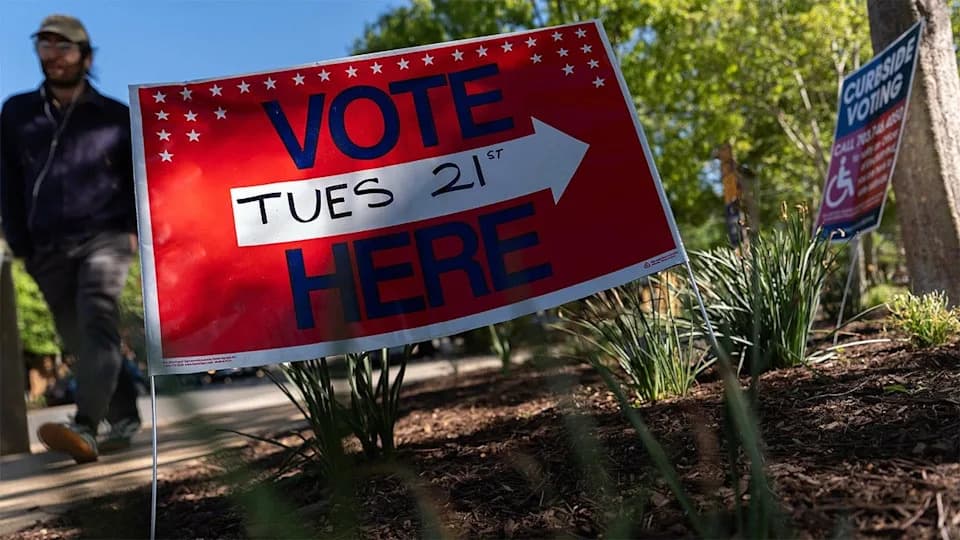
The approved referendum could result in a 10-1 advantage for Democrats in Virginia's congressional delegation, up from their current 6-5 edge, if the courts do not ultimately strike it down.(AP Newsroom)
The Supreme Court of Virginia heard arguments Monday in a fast-tracked challenge to last week's redistricting amendment, while former Attorney General Ken Cuccinelli argued that Democratic tactics — including a 45-day early-voting push and heavy spending — may have weakened the party's legal defense.
Courtroom Focus
At the Richmond hearing, Chief Justice Cleo Powell presided as justices pressed attorneys for the Democrat-led 'Yes' campaign more intensively than counsel for Republican challengers. Election certification remains on hold following a suit filed in Tazewell County by Judge Jack Hurley Jr. after projections showed a narrow 'Yes' victory.
Key Legal Questions
The central dispute before the court addressed whether the October–November process that led to the referendum complied with the Virginia Constitution and relevant procedures. Republicans argue the special session called months earlier by then-Gov. Glenn Youngkin — and later adjourned indefinitely — was improperly used to advance the amendment. They also contend that the November 2025 election cannot count as an 'intervening election' required by Article 12 because early voting had already begun.
Solicitor General Matthew Seligman and attorney Richard Hawkins, representing the 'Yes' side, argued that the General Assembly properly referred the amendment in January and that voters ratified the measure through the constitutionally prescribed process.
Cuccinelli's Critique
Former Virginia Attorney General Ken Cuccinelli said the defense undermined its public stance when, during questioning, lawyers for the 'Yes' camp reportedly conceded the vote outcome had little legal significance. Cuccinelli criticized Attorney General Jay Jones' public reliance on the 'will of the people,' saying that defense counsel's courtroom remarks undercut that argument.
Cuccinelli also suggested the Democrats' push to enable a 45-day early-voting window might have backfired, calling defense responses to concerns about an 'October Surprise' 'shockingly blasé.' He noted reports that Democrats outspent Republicans roughly 3:1 and warned that heavy spending could have inflamed voters and produced unintended results.
Justices' Line of Questioning
Justice Wesley Russell asked whether the Tuesday vote's result had any legal relevance; other justices pressed on the legality of the special session's adjournment 'sine die' and whether a later regular session could interrupt or terminate it. One justice raised a hypothetical about a special session from decades earlier, asking if it would still be in effect today if lawmakers simply forgot to adjourn.
By contrast, questions for Republican attorney Thomas McCarthy, who represented Senate Minority Leader Ryan McDougle and other challengers, were more exploratory: the court asked McCarthy to detail historical practice around special sessions and to explain how to interpret competing constitutional text and precedent regarding a governor's reasons for calling a session.
What Comes Next
The Supreme Court is operating on an expedited timeline because Virginia must finalize legislative district maps for the 2026 primary, now roughly two months away. The court's decision will determine whether the amendment remains on the books and whether certification proceeds.
Attorneys and Officials Mentioned: Richard Hawkins; Matthew Seligman; Solicitor General Tillman Breckenridge; Thomas McCarthy; Senate Minority Leader Ryan McDougle; Attorney General Jay Jones; Speaker Don Scott Jr.; Senate President L. Louise Lucas; Chief Justice Cleo Powell; Justice Wesley Russell; Judge Jack Hurley Jr.; former Gov. Glenn Youngkin.
Help us improve.