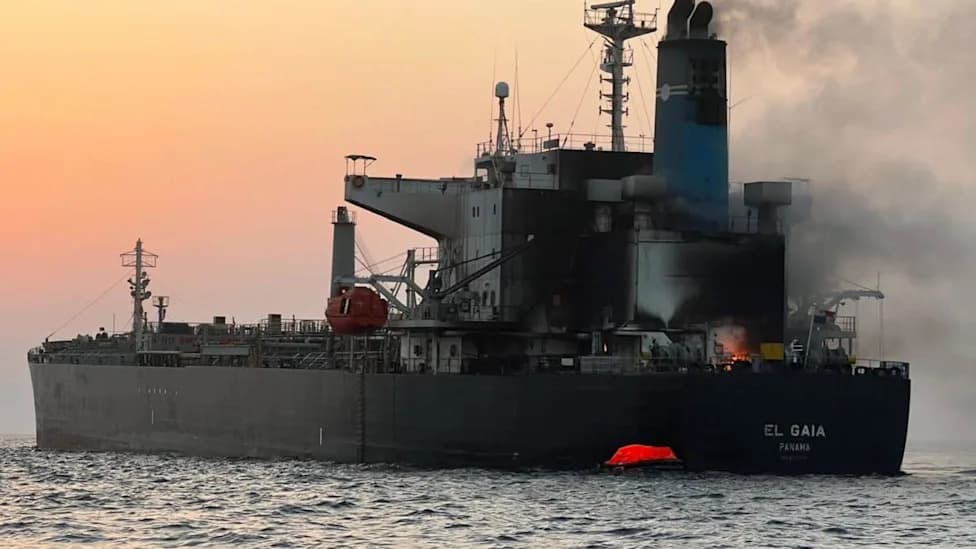
Two recent hijackings off Somalia—the oil tanker HONOUR 25 and the cement carrier SWARD—are attributed to a newly formed group of 'opportunistic' pirates, officials say. SWARD was seized from Garacad in Puntland, farther south than the usual piracy zone around Hafun, Bander Beyla and Eyl. The group is described as rural youth motivated by poverty and illegal foreign fishing, while clan ties complicate any forceful state response. Analysts warn renewed piracy will raise local costs, suppress legitimate fishing, and call for international support to strengthen Puntland's coastal policing.
Officials: New 'Opportunistic' Pirate Group Behind Recent Somali Hijackings
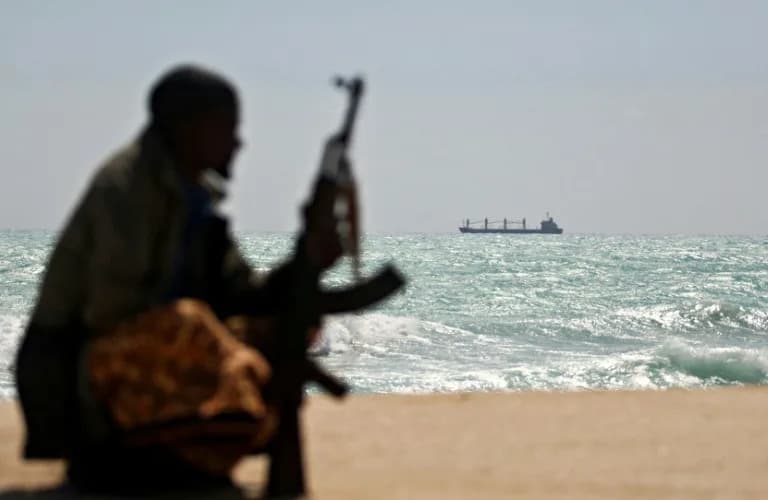
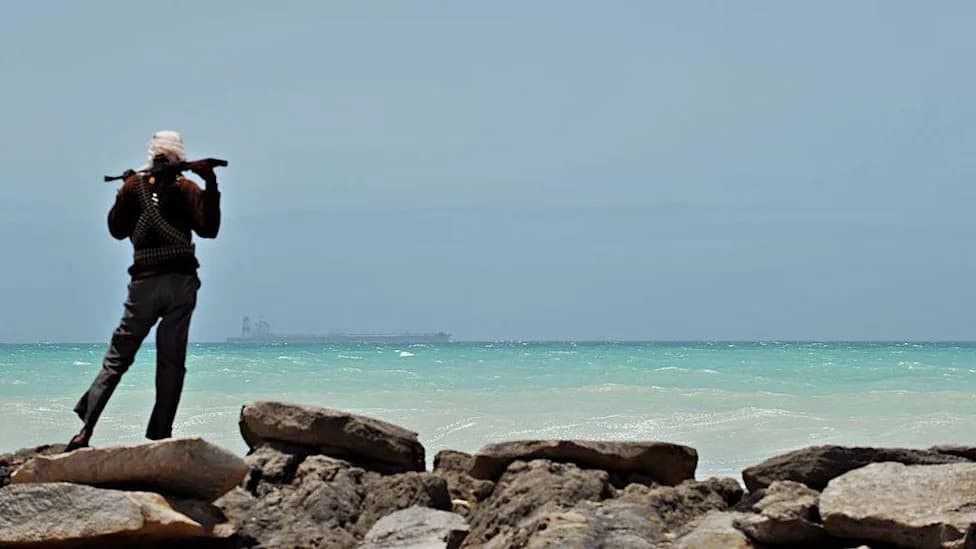
An armed Somali watches a Greek cargo ship anchored off NE Somalia in 2010 (MOHAMED DAHIR)(MOHAMED DAHIR/AFP/AFP)
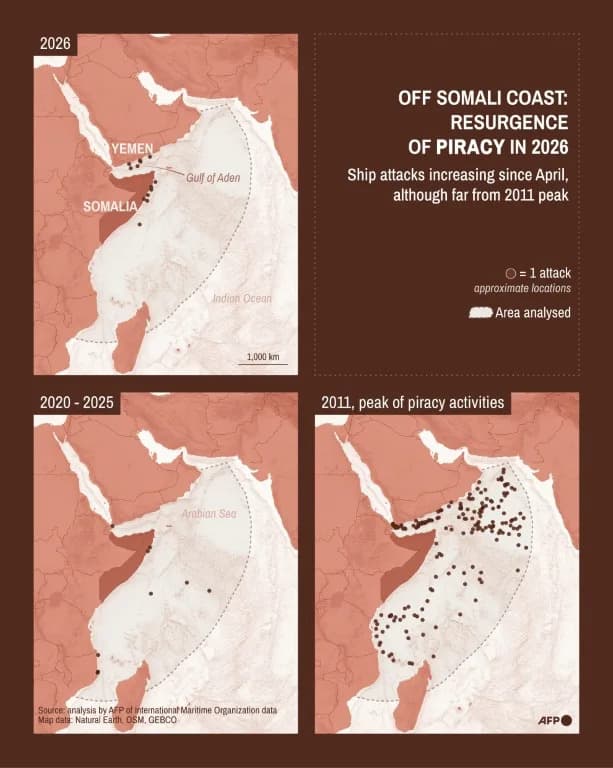
Security officials say two recent hijackings off Somalia were carried out by a newly formed band of 'opportunistic' criminals, reviving a maritime threat that costs the global shipping industry billions.
What Happened
In the past week the oil tanker HONOUR 25 and the cement carrier SWARD were both seized in the first major piracy incidents in months. Puntland security officials say SWARD was taken by a group operating from Garacad, a port town in north-eastern Puntland. The HONOUR 25 appears to have been taken further north, in the traditional piracy zone around Hafun, Bander Beyla and Eyl.
Who Are The Suspects?
Officials describe the new group as largely composed of rural youth from an area 'awash with weapons', driven by poverty and anger over illegal fishing by foreign trawlers from countries including China, Yemen and Iran. The group is characterised as opportunistic rather than part of an established maritime criminal network.
'Nearly everyone in this region is poor and nearly everyone is armed. Illegal fishing, especially from the trawlers, is making things worse,' a Puntland official told AFP.
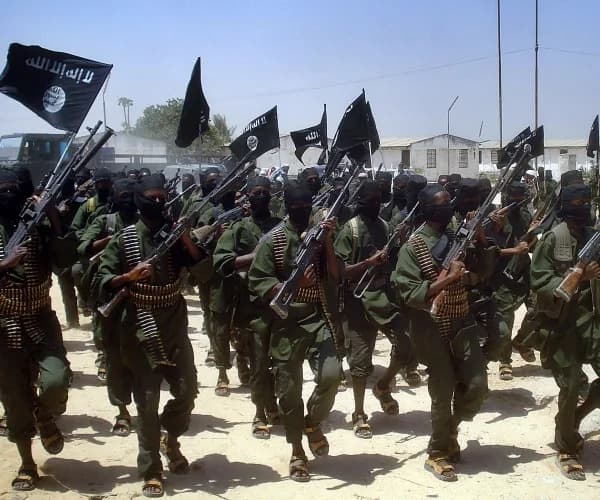
'If they are not countered, they will evolve into entities like those at war with the government,' the official added, referring to Islamist groups such as Al-Shabaab and Islamic State that have long fought Somalia's federal authorities.
Clan Dynamics And The Risk Of Escalation
Clan identity remains central to Somali politics and society, and officials warn clan and sub-clan ties complicate any forceful response. A second Puntland security official said the men who boarded SWARD all belong to the same clan and sub-clan, which differs from the Puntland president's sub-clan. That raises the risk that a military strike could spark local revenge killings.
'So if we strike and some of them are harmed, then it could lead to revenge killings between locals,' an official said. 'That's why negotiations are best to diffuse this kind of situation, but it also plays into the hands of the pirates.'
Local Impact And International Response
Analyst Jethro Norman of the Danish Institute for International Studies warned that renewed piracy can bring short-term cash to some households but longer-term harm to communities. Effects include higher prices for imported food and fuel, suppression of legitimate local fishing, and the prospect of heavier foreign naval patrols that complicate ordinary maritime life.
'Puntland has raised the alarm about illegal foreign fishing for years,' Norman said. 'Unless the international community directly resources the Puntland institutions that police this coastline, neither the immediate threat nor the political economy sustaining it gets resolved.'
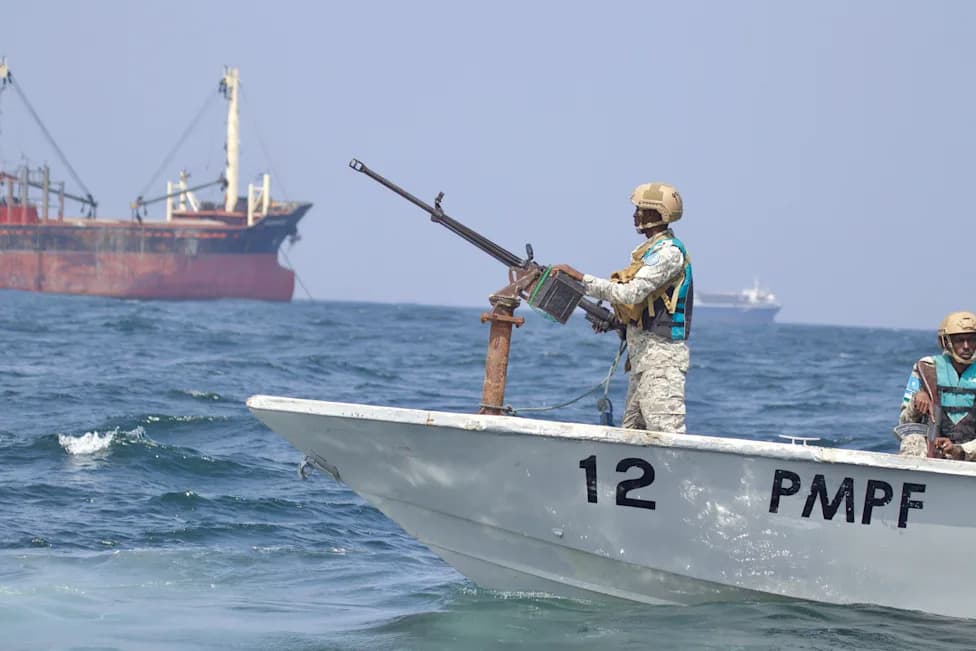
The Puntland government has not yet issued a formal public statement on the recent hijackings. Observers say a combination of better local policing resources, action against illegal foreign fishing, and sensitive engagement with clan leaders will be needed to prevent this opportunistic trend from becoming a more organised and dangerous insurgency.
Help us improve.