A wave of 26 attacks using explosives and drones in southwestern Colombia, including a highway blast that killed 21, has raised alarms ahead of the May 31 presidential vote. Officials blame the FARC-EMC faction led by Néstor Vera (Iván Mordisco), who rejected the 2016 peace deal and abandoned talks in April 2024. Analysts say the strikes aim to demonstrate capability and gain leverage for future negotiations, intensifying debate over President Gustavo Petro’s "total peace" strategy and calls for a tougher military response.
Dozens Of Attacks In Southwest Colombia Raise Alarm Ahead Of May 31 Presidential Vote
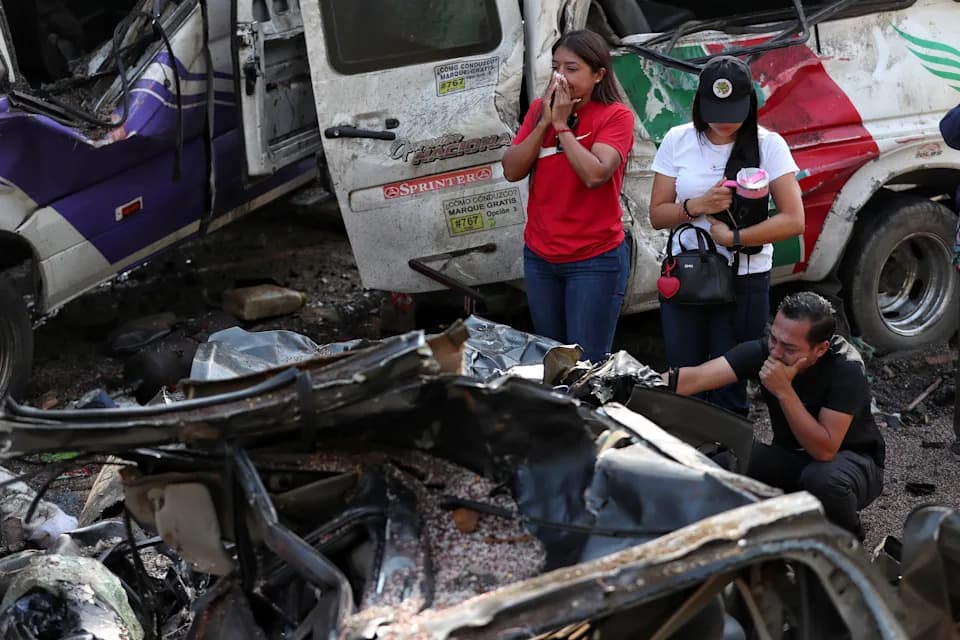
Relatives of victims pay respects at the site of an attack on the Pan-American Highway in Cajibio, Colombia, Sunday, April 26, 2026, where at least a dozen people were killed in an attack authorities blamed on dissident groups of the former FARC rebels. (AP Photo/Santiago Saldarriaga)(ASSOCIATED PRESS)
A recent surge of attacks in southwestern Colombia has intensified security concerns as the country prepares for a presidential election on May 31. Colombia's defense ministry says rebel groups carried out 26 attacks using explosives and drones since Friday, including a powerful explosion on the Pan-American Highway between Cali and Popayán that left 21 people dead.
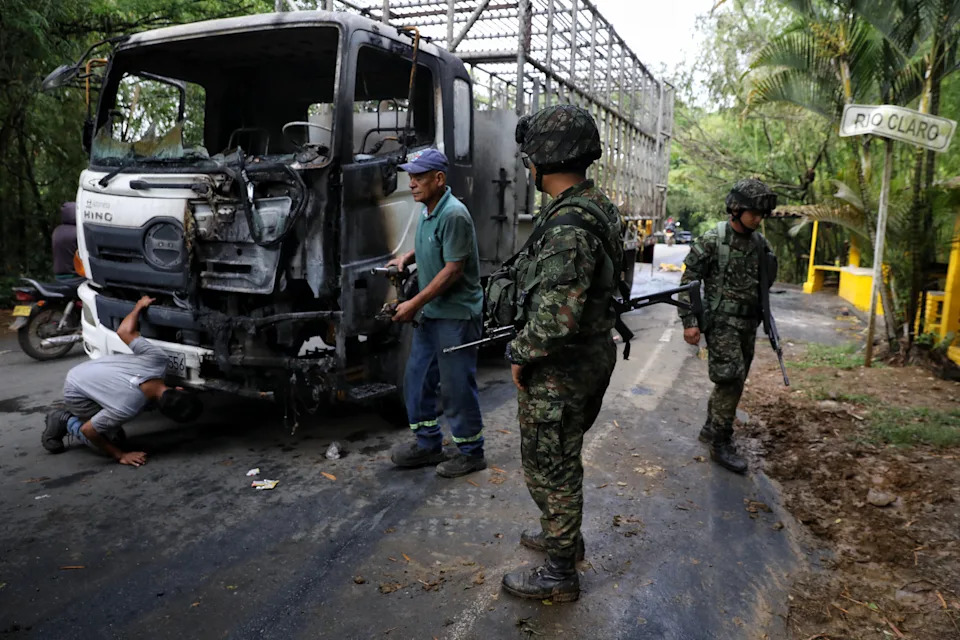
Soldiers stand next to a truck carrying chickens that was set on fire by dissident factions of the former FARC rebels in Jamundi, Colombia, Monday, April 27, 2026. (AP Photo/Santiago Saldarriaga)(ASSOCIATED PRESS)
Who Is Accused
Authorities have blamed the FARC-EMC, a dissident faction led by Néstor Vera, widely known as Iván Mordisco. A former member of the Revolutionary Armed Forces of Colombia (FARC) who refused to join the 2016 peace accord, Mordisco split from formal talks in April 2024 and his faction has since resumed armed operations.
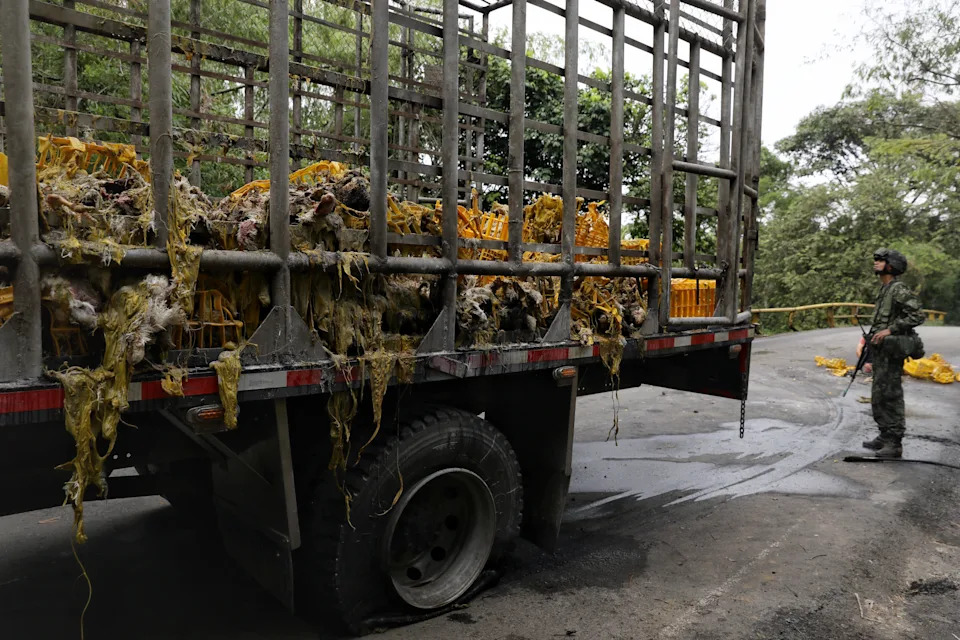
Soldiers stand next to a truck carrying chickens that was set on fire by dissident factions of the former FARC rebels in Jamundi, Colombia, Monday, April 27, 2026. (AP Photo/Santiago Saldarriaga)(ASSOCIATED PRESS)
Methods, Motives And Local Impact
The faction has used car bombs, improvised explosives and drones, especially in the provinces of Cauca and Valle del Cauca, where control of drug-trafficking routes, illegal gold mining and coca cultivation is contested. Analysts say the recent attacks are intended to demonstrate the group’s capability, send a signal to Colombia’s next government, and gain leverage for any future negotiations.
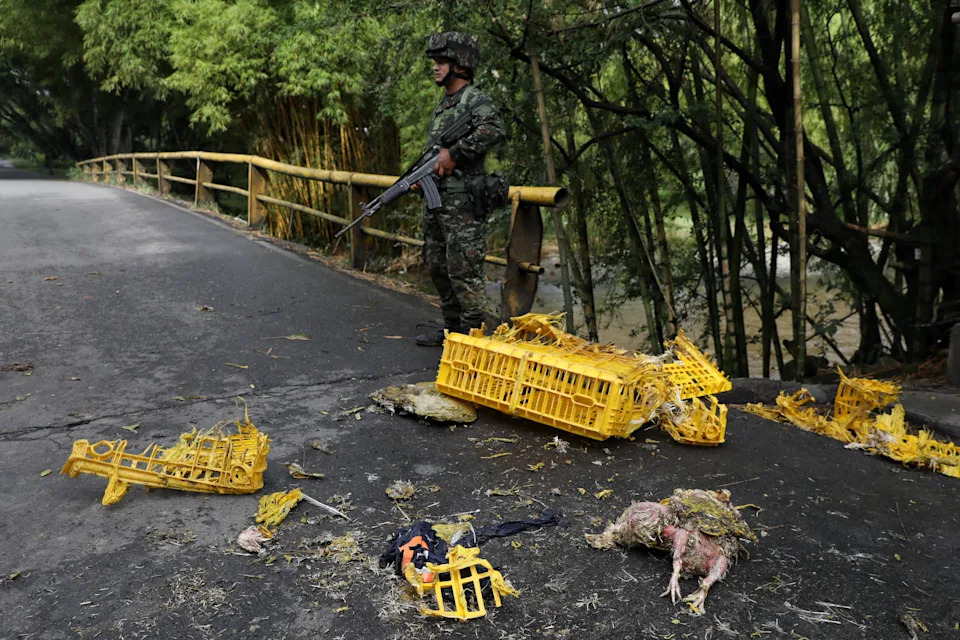
Soldiers stand next to a truck carrying chickens that was set on fire by dissident factions of the former FARC rebels in Jamundi, Colombia, Monday, April 27, 2026. (AP Photo/Santiago Saldarriaga)(ASSOCIATED PRESS)
“Part of what they are doing is establishing leverage towards the future,” said Sergio Guzmán, a political risk analyst in Bogotá.
Political Fallout
President Gustavo Petro’s administration has pursued a policy it calls "total peace," offering ceasefires and talks to remaining armed groups. Critics argue some factions used pauses in fighting to regroup, rearm and extend control over communities, and they point to incidents like forced recruitment and local taxation imposed by armed groups.
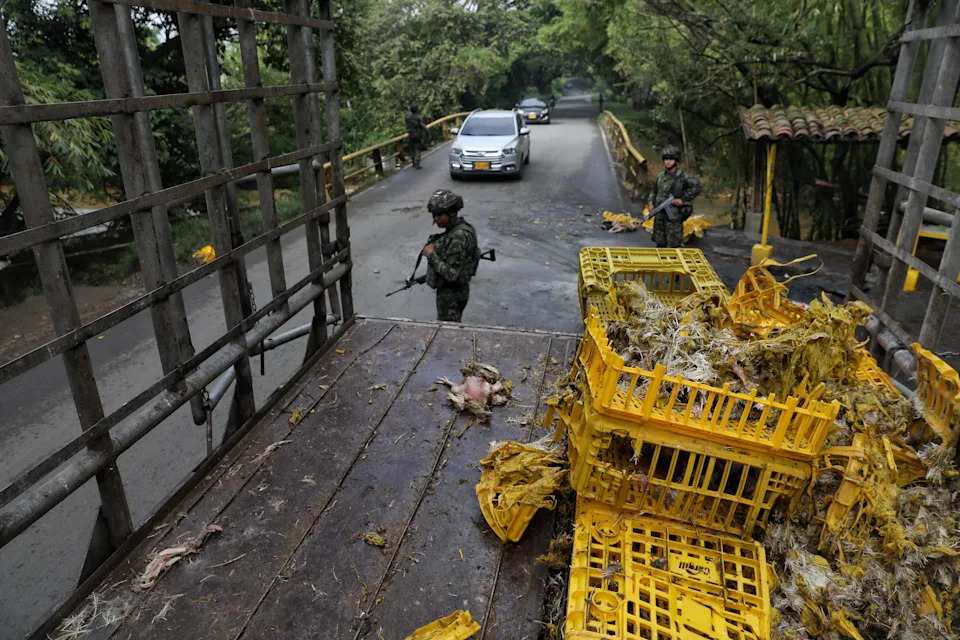
Soldiers stand next to a truck carrying chickens that was set on fire by dissident factions of the former FARC rebels in Jamundi, Colombia, Monday, April 27, 2026. (AP Photo/Santiago Saldarriaga)(ASSOCIATED PRESS)
Petro is constitutionally barred from running again. His party’s candidate, Iván Cepeda, supports continuing peace negotiations, while conservative rivals are campaigning for increased military pressure before resuming talks. The attacks have heightened security as a top electoral issue and are likely to be used by both sides in the debate over how to restore order.
Security Measures And Outlook
Colombia’s defense minister reported declines in kidnappings and community lockdowns in some areas over the past year due to military operations, but experts warn that violence in remote zones such as the Micay Canyon remains difficult to eradicate. Investigations into the highway explosion and other incidents are ongoing as authorities prepare for election-day security challenges.
The wave of violence underscores the difficult balance between pursuing negotiations to end long-running conflicts and confronting armed groups that continue to exert control over parts of rural Colombia.
Help us improve.