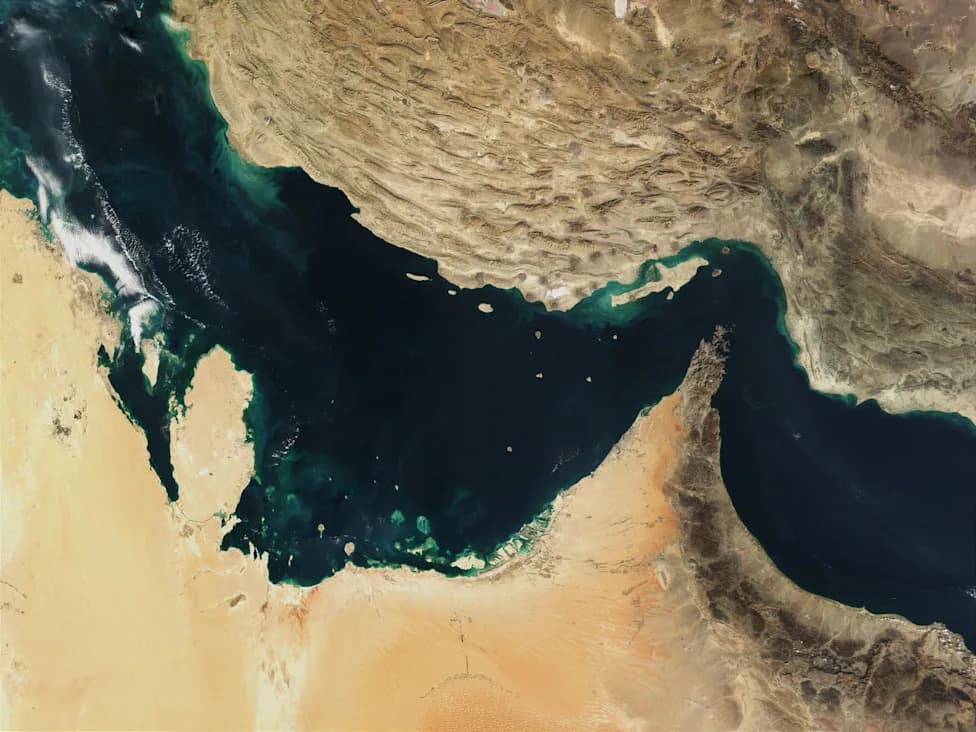
The International Maritime Organization has rejected proposals to impose tolls or fees on ships transiting the Strait of Hormuz, saying there is "no legal basis" for such charges. Iran has tightened control of the strait since strikes in late February and is considering legislation to place the waterway under armed forces authority and collect revenues in rials. An evacuation of about 20,000 seafarers stranded in the Gulf depends on the strait being declared fully secure, while IMO members are also trying to revive stalled ship decarbonisation talks.
IMO Rejects Tolls For Strait Of Hormuz, Calls For Secure Passage To Free 20,000 Seafarers
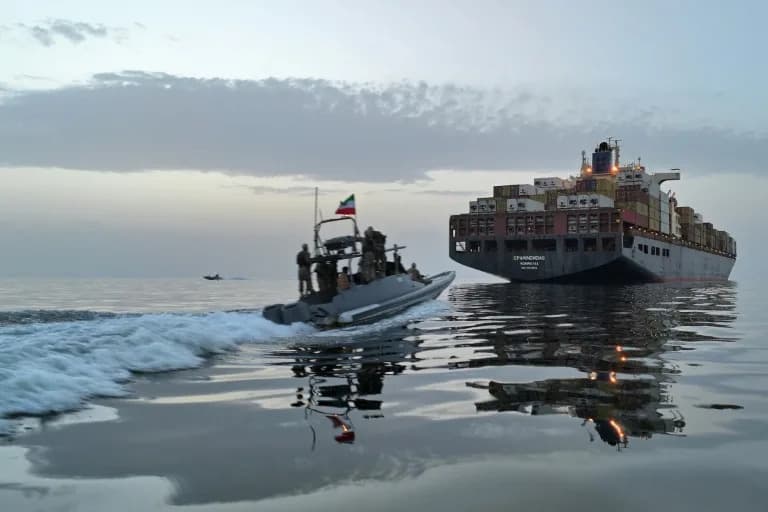
Iran has effectively closed the Strait of Hormuz (Meysam MIRZADEH)(Meysam MIRZADEH/TASNIM NEWS/AFP)
The head of the UN's maritime agency has ruled out any legal basis for imposing tolls or other charges on ships passing through the Strait of Hormuz, as regional tensions continue to disrupt shipping in the Gulf.
International Maritime Organization (IMO) Secretary-General Arsenio Dominguez said at a press conference on Monday that "there's no legal basis for the introduction of any tax, any customs, or any fees on straits for international navigation." He added that reopening the waterway should not be conditioned on payment of fees.
Security, Control And Transit Proposals
Shipping through the narrow strait has been severely constrained since strikes in late February, which have prompted Iran to shut parts of the passage and reduced oil and gas flows. The United States has also imposed a blockade on several Iranian ports.
A proposed Iranian law would give the country's armed forces authority over the strategic waterway. Ebrahim Azizi, head of the national security commission in Iran's parliament, told state television the armed forces are already in control of the strait and aim to bar what they deem "hostile vessels." The draft bill also specifies that any financial gains from the strait would be collected and paid in Iran's rial.
Humanitarian And Diplomatic Implications
Dominguez said he has been in contact with "all the countries of the region," including Iran, and stressed that an evacuation operation for roughly 20,000 seafarers stranded on vessels in the Gulf can only proceed once the strait is declared fully secure. Control of the shipping lane remains a central sticking point in ongoing negotiations between Washington and Tehran, despite a fragile ceasefire that began on April 8.
Broader IMO Agenda
Separately, IMO members meeting this week are working to revive talks on an ambitious package to decarbonise the global shipping industry. That package, originally due for adoption last October, was delayed after the United States — backed by Saudi Arabia, Russia and other oil-producing countries — blocked the agreement, postponing adoption by a year.
Bottom line: The IMO has firmly rejected tolls for international navigation through the Strait of Hormuz, while security concerns and proposals for armed control and local currency payments keep the waterway at the center of diplomatic talks and humanitarian planning.
Help us improve.