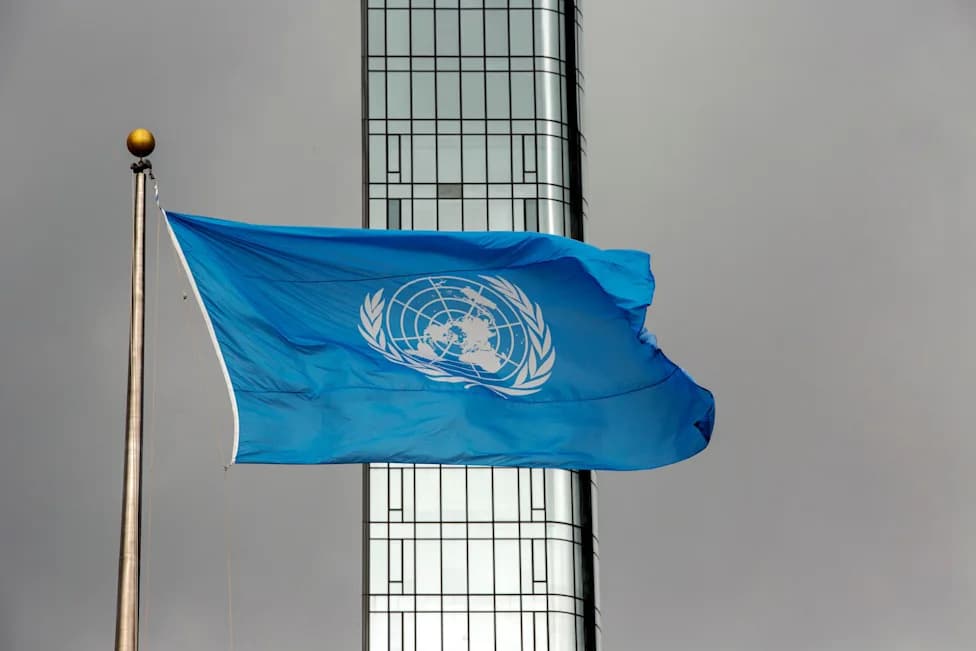
The NPT review conference opened at the United Nations amid warnings that rising tensions and major nuclear modernization programs risk triggering a new arms race. UN Secretary‑General António Guterres said the treaty is eroding and that the drivers of proliferation are accelerating. SIPRI reports the nine nuclear-armed states held about 12,241 warheads in January 2025, with the US and Russia holding nearly 90% of them. Delegates face steep obstacles to consensus given regional disputes and geopolitical rivalries.
UN Warns of 'Looming' Nuclear Arms Race as NPT Review Opens
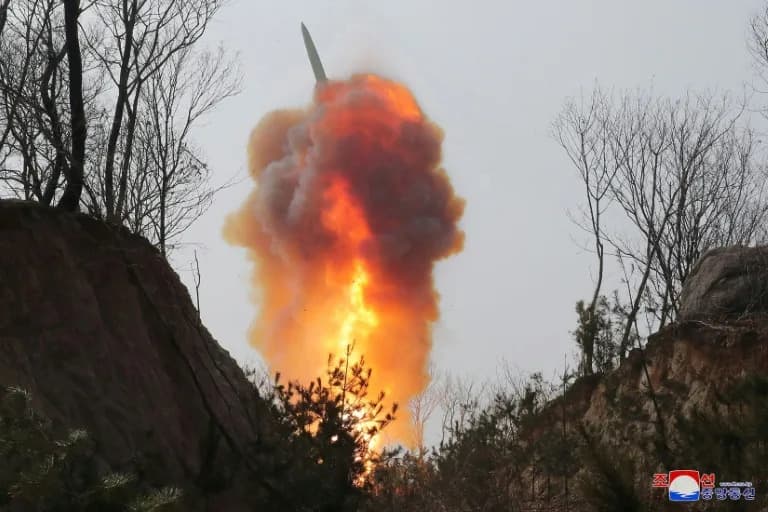
North Korea's developing nuclear arsenal could be a deal-breaker (STR)(STR/KCNA VIA KNS/AFP)
Representatives of the near-universal Nuclear Non‑Proliferation Treaty (NPT) convened at United Nations headquarters as delegates warned a renewed nuclear arms race may be unfolding amid rising geopolitical tensions and competing modernization programs.
UN Secretary‑General António Guterres opened the review conference by sounding a stark warning about the state of the treaty and the accelerating forces driving proliferation.
"For too long, the treaty has been eroding. Commitments remain unfulfilled. Trust and credibility are wearing thin. The drivers of proliferation are accelerating. We need to breathe life into the treaty once more." — António Guterres
With mistrust rising among nuclear-armed states and regional flashpoints intensifying since the last review in 2022, delegates acknowledged limited expectations for sweeping breakthroughs but urged practical, confidence-building measures.
Key Concerns and Spotlighted States
France's foreign minister warned that the risk of proliferation is higher than ever, singling out Iran and North Korea as particularly concerning. SIPRI (Stockholm International Peace Research Institute) reported that the nine states known to possess nuclear weapons held an estimated 12,241 warheads as of January 2025, with the United States and Russia together accounting for nearly 90% of that total.
Delegates also noted rapid expansion in China’s arsenal and recent policy shifts in the United States and France: President Donald Trump indicated intentions to pursue new nuclear tests, while French President Emmanuel Macron announced an increase in France’s strategic deterrent to roughly 290 warheads.
Institutional Challenges
Decision-making in the NPT requires consensus, a rule that has repeatedly produced deadlock. Past conferences failed to agree on final declarations in 2015 and 2022 over disputes including a proposed Middle East nuclear-weapon-free zone and references to the Zaporizhzhia nuclear power plant in Ukraine.
Do Hung Viet, Vietnam’s UN ambassador and president of the conference, urged realism: "We should not expect this conference to resolve the underlying strategic tensions of our time. But a balanced outcome that reaffirms core commitments and sets out practical steps forward would strengthen the integrity of the NPT." He warned that "the prospects of a new nuclear arms race are looming over us."
Emerging Topics
Delegations signaled that emerging technologies — notably artificial intelligence — could become part of the discussion, with some states urging guarantees that human control remains central to nuclear command, control and decision-making.
Observers said this year's talks face multiple potential deal-breakers: the war in Ukraine, Iran's contested nuclear activities, North Korea's continuing arsenal development, and broader geopolitical rivalries that undermine trust.
Reporting credits: SIPRI data (January 2025); remarks by António Guterres, Do Hung Viet, Jean‑Noël Barrot; statements from national leaders as cited during the NPT review opening session.
Help us improve.