Ben Austin warns that Democratic midterm momentum can be misleading. Drawing on his experience in the Clinton White House after 1994, he argues that midterm gains do not automatically translate into presidential victory. Austin points to education as a pivotal issue where Democrats must move beyond activist orthodoxies and adopt pragmatic reforms that appeal to working-class voters. He urges the party to pick a nominee capable of challenging special interests and delivering tangible change.
The Midterm Mirage: Why Democrats Must Avoid Complacency and Embrace Real Reform
Democrats enter this midterm season with palpable confidence—and much of that confidence is justified. Polls and political fundamentals point to a strong Democratic advantage this November. Yet even if Democrats reclaim the House and make a run at the Senate, party leaders must resist celebrating prematurely. Momentum in midterms can be a mirage, not a mandate.
Lessons From 1994
I say that from experience. In 1994 I worked in the White House Political Affairs Office under President Bill Clinton, tasked with managing midterm strategy. The result was catastrophic: Democrats lost both the Senate and the House for the first time in roughly half a century, and the outcome surprised us.
Typically White House aides jockey for presidential access. But on election night, as losses accumulated into the early morning, the chain of command broke down—senior advisors deputized junior staffers, who deputized interns, who eventually sent strangers to brief the president on what had become an unfolding collapse.
"The president is relevant."
—President Bill Clinton
After that historic defeat, Clinton’s prominence appeared diminished. Yet less than two years later, as a staffer on his reelection campaign, I watched him win comfortably by tying his opponent to the new Republican Congress. The red tide of 1994 receded far sooner than many expected.
Why Midterm Wins Don't Guarantee Presidential Success
Midterm victories often give parties a false sense that partisan backlash alone will carry them into the White House. History shows that successful presidential candidates more often present themselves as independent problem-solvers willing to challenge elements of their own party. By contrast, losing nominees frequently look like extensions of party interest groups.
The two most electorally successful Democratic presidents since Franklin D. Roosevelt—Bill Clinton and Barack Obama—both ran as agents of change who confronted status-quo interests, including teacher unions. Rather than being a liability, that posture helped them broaden their appeal.
Education Is Exhibit A
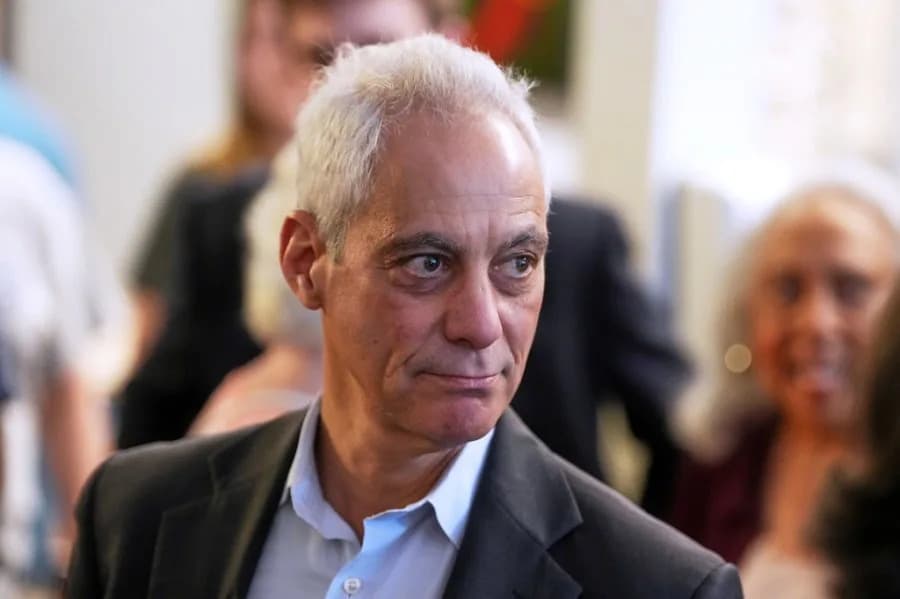
Education crystallizes the divide within the Democratic coalition between change-oriented candidates and defenders of the status quo. Several potential 2028 contenders—including Sen. Cory Booker, Gov. Josh Shapiro, Pete Buttigieg, and Gov. Jared Polis—have records of challenging party orthodoxies in the public interest. But it is former Chicago Mayor Rahm Emanuel who has driven early debate, pressing the party to focus less on cultural flashpoints and more on classroom outcomes.
Emanuel has sharpened an argument that resonates with working-class voters: “We’ve become so obsessed with bathroom access that we’ve ignored classroom excellence.” By classroom excellence he means pragmatic reforms that have produced results even in conservative states like Mississippi: adopting the Science of Reading, ending social promotion, instituting early screening and intervention, and holding schools accountable for outcomes. He also argues for embracing charter schools as a progressive school-choice alternative to national vouchers and for treating access to high-quality public education as a civil right for every child.
What This Means for 2028
Winning midterms by being merely the anti-Trump option may be enough to flip chambers, but it is unlikely to secure the presidency. Democrats should avoid nominating a candidate who appears to be the privé choice of entrenched special interests. Instead, the party should prioritize nominees who can credibly challenge those interests, unite working-class voters, and translate policy commitments—especially on education—into tangible reform.
American democracy and global stability cannot afford another four years of what the author describes as Republican excess in the White House. That urgency makes the choice of a nominee all the more consequential.
Ben Austin is a former staffer for Kamala Harris’s 2024 presidential campaign and the founding director of Education Civil Rights Now.
Copyright 2026 Nexstar Media, Inc. All rights reserved. For the latest news, weather, sports, and streaming video, visit The Hill.
Help us improve.