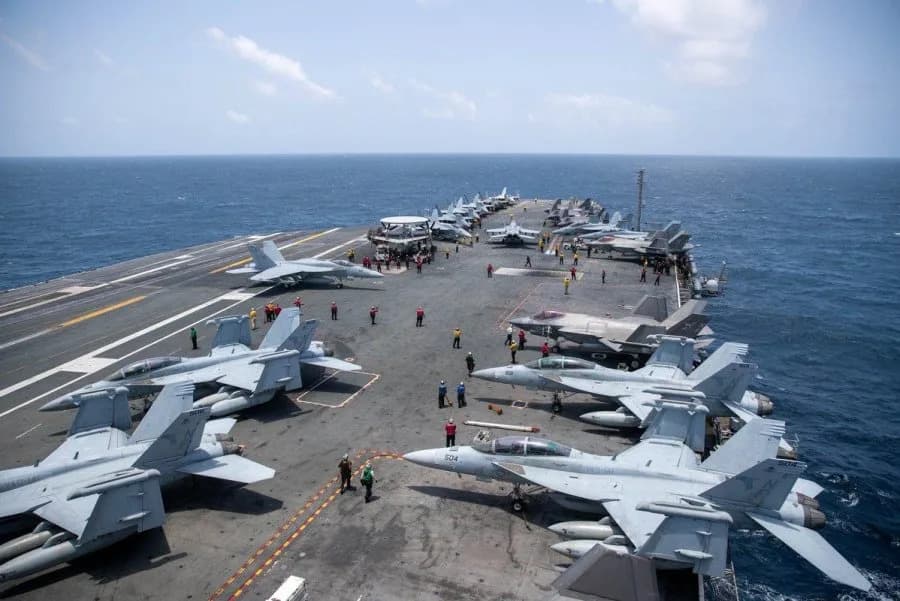
The U.S. Navy is searching for Iranian mines in the Strait of Hormuz, a chokepoint that normally carries about 20% of global oil. Pentagon briefings indicate mine clearance could take roughly six months, and experts warn that even a declared "clear" channel may not immediately restore commercial shipping due to insurers' concerns and the psychological impact of a mine threat. The Navy has deployed littoral combat ships and sent Avenger-class minesweepers toward the region while smaller EOD teams and uncrewed vehicles undertake detailed minehunting operations.
U.S. Minehunters Search the Strait of Hormuz as Officials Seek to Reopen Vital Oil Route
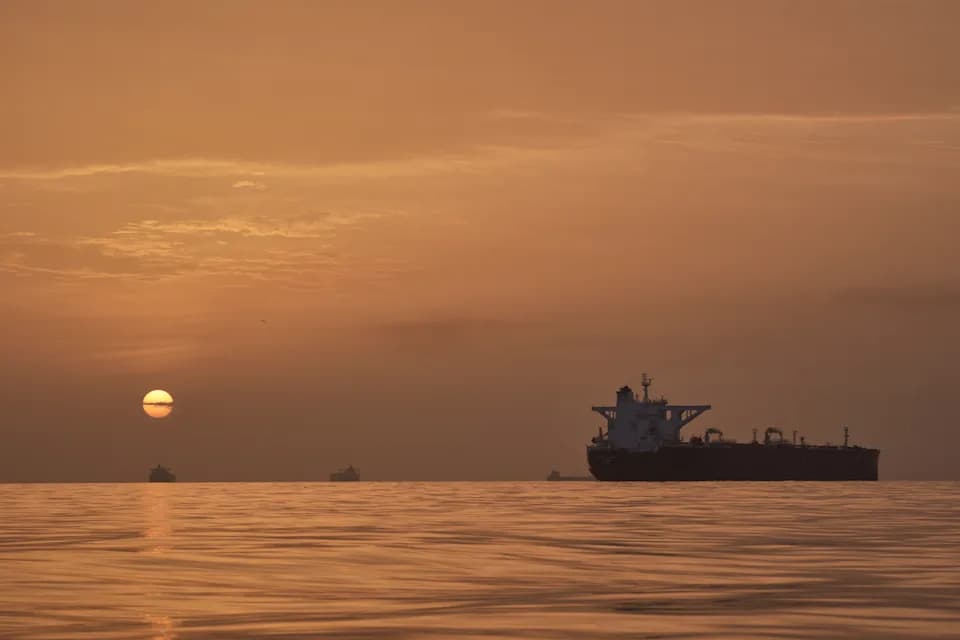
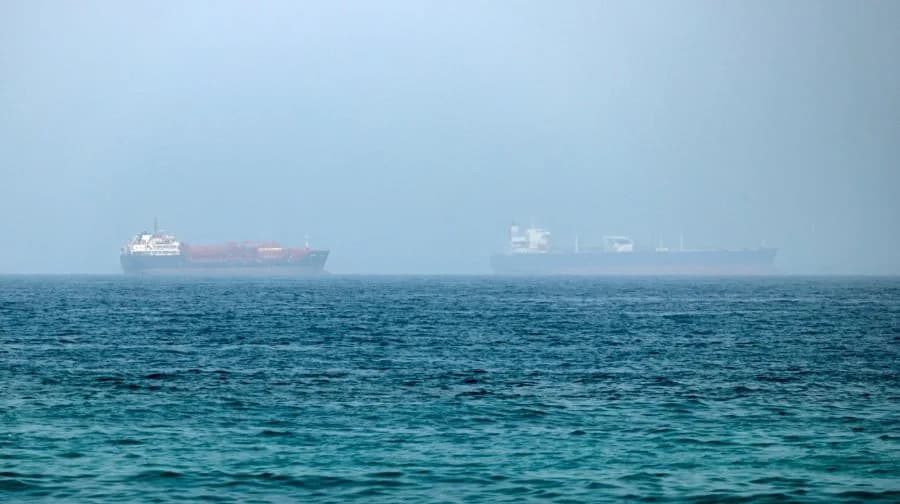
The sun rises behind tankers anchored in the Strait of Hormuz off the coast of Qeshm Island, Iran, Saturday, April 18, 2026. (AP Photo/Asghar Besharati)(ASSOCIATED PRESS)
WASHINGTON — The White House says U.S. Navy teams are searching for Iranian mines in the Strait of Hormuz, the critical chokepoint through which roughly 20% of the world’s oil normally passes. U.S. officials and outside experts warn that finding and neutralizing underwater explosives could take months and that a declared "clear channel" may not immediately convince commercial shippers or insurers to resume normal transit.
What U.S. Officials Say
Pentagon officials told lawmakers in a classified briefing that clearing mines placed in the strait could take about six months, according to a person familiar with the presentation. When asked about the estimate, Defense Secretary Pete Hegseth declined to confirm a timeline but said the military was confident in its ability to clear identified mines.
"Allegedly that was something that was said," Hegseth said at a Pentagon news conference. "But we feel confident in our ability, in the correct period of time, to clear any mines that we identify."
How the Navy Is Approaching Mine Clearance
The Navy has deployed two littoral combat ships to the Middle East that are equipped for minehunting, and two Avenger-class minesweepers based in Japan have been sent toward the region. Officials say the service also has smaller explosive ordnance disposal (EOD) teams and divers in the area who can locate and neutralize mines without using large, conspicuous warships. Some mine-clearance equipment can be moved ashore and operated from land as well.
Minehunting — a careful, deliberate process to locate individual devices — is different from broader minesweeping. As one retired minesweeper officer put it, "Minehunting is walking through your yard pulling individual weeds and dandelions so you can walk safely from one side to the other. Minesweeping is more like mowing the grass." Remote, uncrewed vehicles using sonar and other sensors are commonly used to find mines; EOD teams or charges are then used to neutralize them.
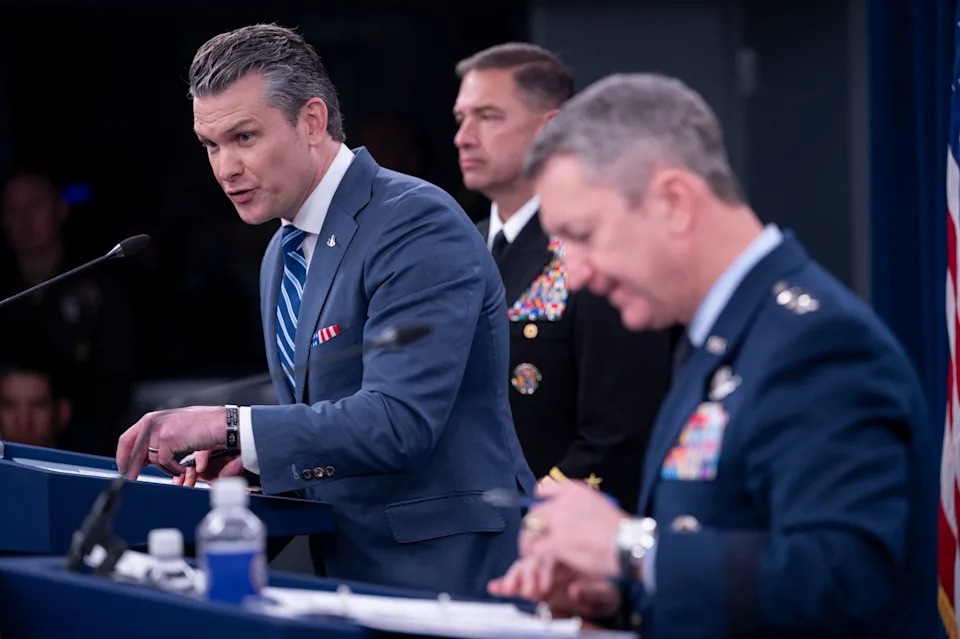
Defense Secretary Pete Hegseth speaks to members of the media during a press briefing with Adm. Brad Cooper, center, and Chairman of the Joint Chiefs of Staff Gen. Dan Caine, right, at the Pentagon, Thursday, April 16, 2026 in Washington. (AP Photo/Kevin Wolf)(ASSOCIATED PRESS)
Scope of the Threat
It remains unclear whether Iran actually emplaced mines in the strait. Iranian officials have spoken only of the "likelihood" that mines were placed along prewar transit routes. Estimates of Tehran’s mine inventory are in the low thousands and largely consist of older Soviet designs, with some newer systems possibly of Chinese origin or domestically produced.
Most naval mines are not the spiky floating spheres seen in films. They are typically moored below the surface or rest on the seabed and can be triggered by pressure changes or acoustic signatures when a vessel passes. Iran also possesses small submarines capable of laying mines, which are harder to detect.
Economic and Psychological Impact
Even if U.S. forces establish a cleared channel, commercial operators and insurers may be reluctant to resume normal traffic immediately. Insurers are adding clauses that require shipowners to contact Iranian authorities to confirm safe transit, covering threats such as missiles, drones or seizures as well as mines. Analysts say the psychological effect — the mere perception of a mine threat — can be enough to delay restoration of confidence and prolong disruptions.
President Donald Trump has said he ordered the Navy to attack any vessel laying mines and that U.S. mine "sweepers" are operating in the strait. Adm. Brad Cooper, the top U.S. commander in the Middle East, has confirmed military efforts to clear mines but provided few operational details.
McHugh reported from Frankfurt, Germany. AP Congressional Correspondent Lisa Mascaro contributed to this report.
Help us improve.