The NPT review conference opens at the UN amid rising distrust and expanding nuclear arsenals, making a consensus outcome unlikely. UN disarmament chief Izumi Nakamitsu warned of a shared sense of crisis after the lapse of bilateral arms control between the US and Russia. SIPRI reports nine nuclear-armed states hold 12,241 warheads as of January 2025, with the US and Russia owning nearly 90% of the total. Key obstacles include wars in Ukraine and the Middle East, Iran and North Korea, and emerging concerns about AI and human control of nuclear forces.
High-Stakes NPT Review Opens at the UN as Nuclear Tensions Mount
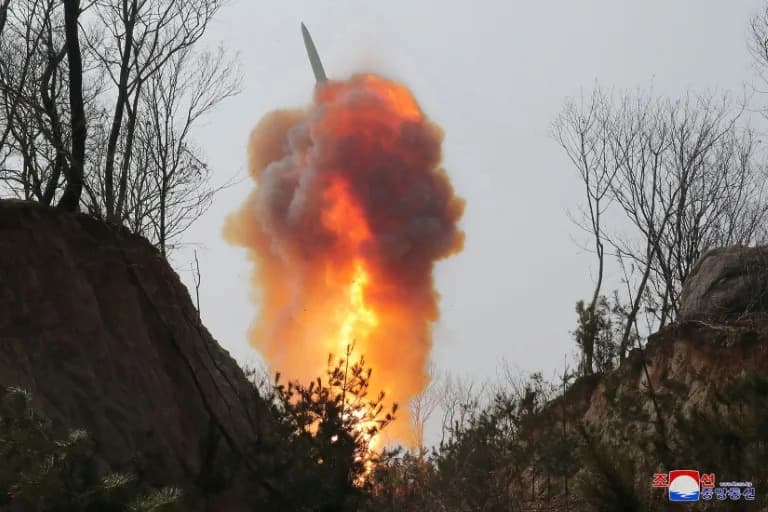
North Korea's developing nuclear arsenal could be a deal-breaker (STR)(STR/KCNA VIA KNS/AFP)
Delegates to the Nuclear Non-Proliferation Treaty (NPT) review conference assemble at United Nations headquarters on Monday for a four-week meeting that many officials fear may produce no consensus outcome. Rising geopolitical tensions and expanding arsenals have deepened doubts about the treaty's ability to check the spread and modernization of nuclear weapons.
“We are seeing a shared sense of crisis,” said Izumi Nakamitsu, the UN High Representative for Disarmament Affairs. She warned that the expiration of the New START agreement has left no bilateral arms-control framework between the world's two largest nuclear powers, and that several nuclear states are increasing the size and sophistication of their arsenals.
“We don't have any bilateral arms control agreements between the two largest nuclear weapon states. We are also beginning to see quantitative increases in nuclear capabilities in all nuclear weapon states.”
According to the Stockholm International Peace Research Institute (SIPRI), nine states possess nuclear weapons: Russia, the United States, France, the United Kingdom, China, India, Pakistan, Israel and North Korea. SIPRI's latest tally put the global stockpile at 12,241 nuclear warheads as of January 2025.
SIPRI notes the United States and Russia together hold nearly 90% of that total and have undertaken extensive modernization programs in recent years. China has been rapidly expanding its stockpile, prompting concern from NATO members and the G7. National leaders have also signaled more assertive nuclear postures: in recent months, US President Donald Trump has indicated willingness to consider new nuclear tests, and France has announced changes to its deterrent posture and an increase to its arsenal, which France states numbers about 290 warheads.
Campaigners warn that mutual distrust is eroding confidence in the NPT framework. “It is obvious that trust is eroding, both inside and outside the NPT,” said Seth Sheldon of the International Campaign to Abolish Nuclear Weapons (ICAN).
The review conference requires consensus for final decisions — a procedural hurdle that blocked declarations in both 2015 and 2022. Previous deadlocks involved disputes over a proposed nuclear-weapon-free zone in the Middle East and contentious references to the Zaporizhzhia nuclear power plant in Ukraine. This year, potential deal-breakers include the war in Ukraine, tensions and conflict in the Middle East, Iran's nuclear program, concerns from non-nuclear states about proliferation risks, and North Korea's advancing arsenal.
New technologies add a further layer of complexity: several states are calling for safeguards to ensure humans retain control over nuclear weapons as artificial intelligence becomes more integrated into military systems. Christopher King, the conference secretary-general, cautioned that a third consecutive failure to adopt a final declaration would not cause the treaty to collapse overnight but could allow it to “unravel over time.”
What to watch: whether delegations can bridge divisions over regional security disputes, commit to renewed arms-control measures, and address emerging technological risks — especially the role of AI in command-and-control systems.
Help us improve.