Nearly half (47%) of adults ages 18–29 say they would choose to live in the past, according to an NBC News Decision Desk Poll powered by SurveyMonkey. The preference reflects broader Gen Z pessimism: 62% expect life will be worse than prior generations and 80% say the U.S. is on the wrong track. Interviews link this nostalgia to anxiety over constant connectivity and a cultural revival of 1980s–2000s fashion, media and tech. NBC’s "Common Ground" series also spotlights bipartisan cooperation, including Sen. Katie Britt and Sen. John Fetterman working on youth social media issues.
Gen Z’s Time-Travel Impulse: Nearly Half Say They’d Choose To Live In The Past, NBC Poll Finds

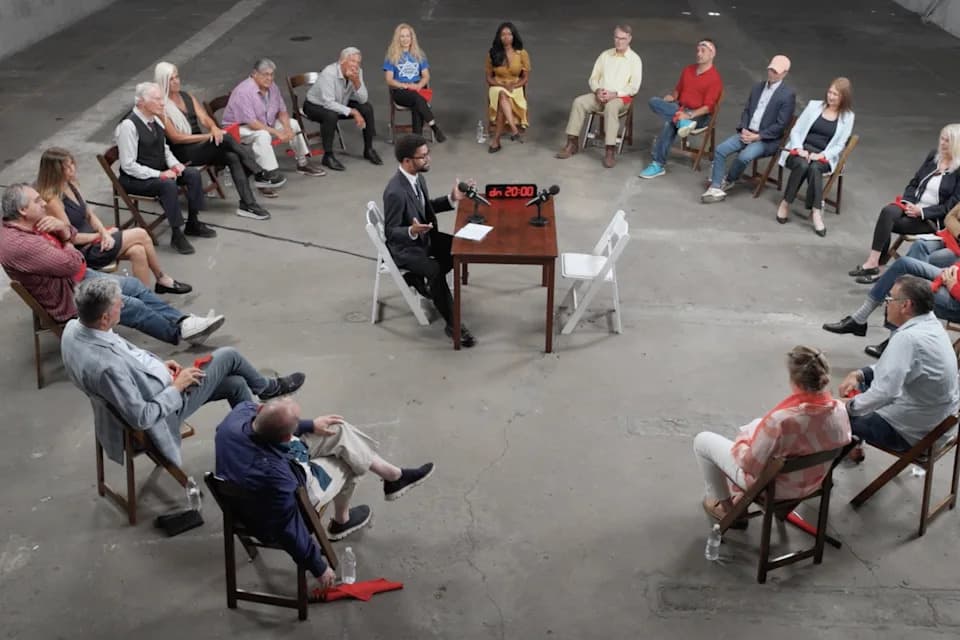
Kristen Welker with Sen. Katie Britt (R-Ala.) and John Fetterman (D-Pa.) at Common Ground in Washington on Thursday. (Caroline Gutman for NBC News)(Caroline Gutman for NBC News)
Nearly half of adults ages 18–29 say they would choose to live in the past if given the option, a striking finding from an NBC News Decision Desk Poll conducted with SurveyMonkey that underscores widespread Gen Z pessimism about the future.
Poll Results: A Strong Preference For The Past
The poll found 47% of Gen Z respondents would opt to live in an earlier era. About one-third of that group said they would select a time within the last 50 years, while 14% said they would go back more than 50 years. By contrast, 38% preferred to stay in the present, 10% chose a future less than 50 years from now, and 5% picked a future more than 50 years ahead.
These preferences were largely consistent across gender and party lines, though the poll showed notable differences by race: 52% of young white adults said they would prefer the past, compared with 47% of young Hispanic adults and 33% of young Black adults.
Why Many Young People Long For Earlier Eras
Interviews conducted for NBC News suggest that discomfort with constant connectivity and anxiety about technology and geopolitics are driving nostalgia. Many young people said the idea of an earlier era — especially one before social media and ubiquitous computing — feels like a refuge from perpetual online life and the pressures that come with it.
“I think a lot of young people want an era right before social media and computers mediated life,” said Clay Routledge, a nostalgia researcher and existential psychologist, in an NBC News interview.
“I think a lot of young people want an era right before social media and computers mediated life.” — Clay Routledge, nostalgia researcher
Cultural Signs Of Nostalgia
The yearning for earlier decades shows up in fashion, media and consumer habits. Renewed interest in claw clips, baggy jeans and strappy tops, rising sales of cassette tapes and classic iPods, and social-media fascination with 1990s figures such as John F. Kennedy Jr. and Carolyn Bessette point to a broader revival of 1980s–2000s styles and icons.
Broader Outlook: Pessimism About The Future
The poll also captures Gen Z’s bleak expectations for their own futures: 62% of respondents in the 18–29 age group said they expect life will be worse for them than for previous generations, while just 25% said it will be better and 13% said it would be about the same. Additionally, 80% of Gen Z adults said the United States is on the wrong track — the highest share of any age group in the survey.
Politics And Bipartisan Examples Of Cooperation
Alongside the poll findings, NBC News highlighted bipartisan initiatives in Washington through its "Common Ground" series. Host Kristen Welker and other correspondents have showcased lawmakers from both parties who work together on shared concerns. One example: Senators Katie Britt (R-Ala.) and John Fetterman (D-Pa.) formed a friendship after arriving in the Senate and have worked jointly on policies addressing youth social media use.
“We’ve taken the time to not just understand our politics or position on something, but to really get to know each other as people,” Britt said of their connection. Their collaboration — and Fetterman’s account of Britt visiting him during his hospitalization — were presented as reminders that personal relationships can bridge partisan divides.
Other Brief Headlines From NBC News
- Investigation Dropped: The Justice Department ended a criminal probe into the Federal Reserve and its chair, Jerome Powell, a move that could affect confirmation timing for Powell’s successor.
- Citizenship Revocations: The Justice Department is reportedly targeting at least 300 foreign-born Americans for possible denaturalization under the Trump administration’s denaturalization efforts.
- Medical Absence: Rep. Tom Kean Jr. (R-N.J.) has been absent from the House since early March due to a personal health matter.
- Alleged Betting Offense: Reporting identified a U.S. special forces soldier accused of using classified information to bet on the raid that captured Venezuelan leader Nicolás Maduro as an active-duty service member and real-estate investor.
- Gold Card Visa: Commerce Secretary Howard Lutnick said only one person has been approved so far for President Donald Trump’s proposed $1 million "gold card" visa.
This newsletter was compiled by Scott Bland for NBC News. For more reporting and full interviews, see NBC News’ coverage and the “Common Ground” series.
Help us improve.