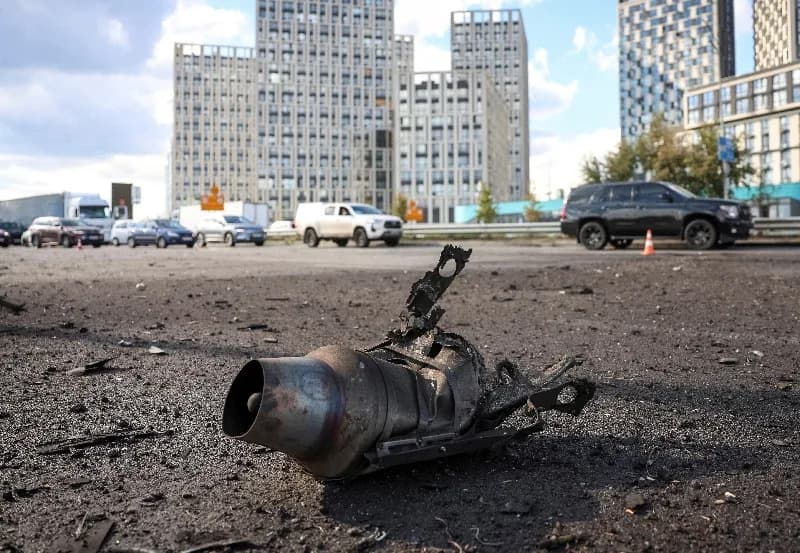
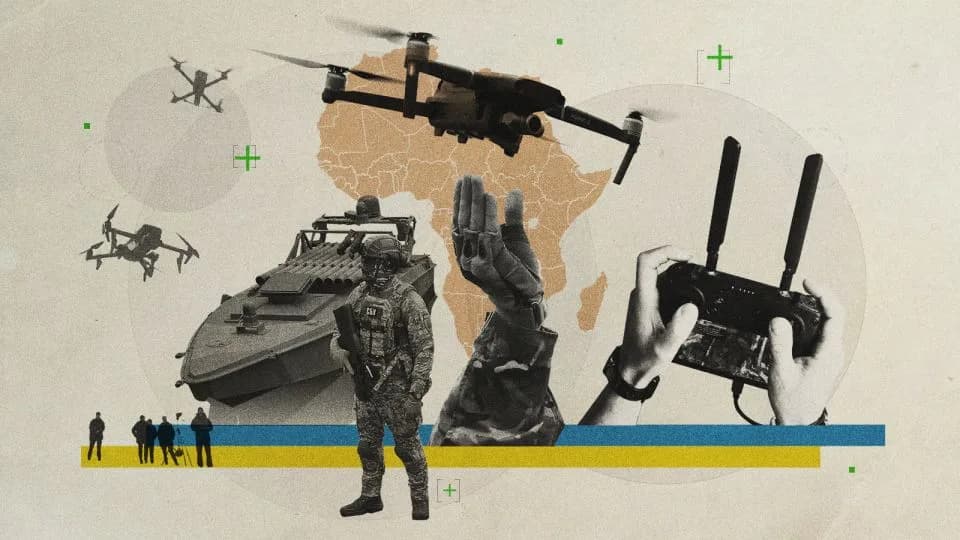
Covert meetings in Paris showcased how Ukraine's improvised drone industry is exporting battlefield‑tested systems and know‑how. Firms such as Bavovna and Skyfall produce everything from heavy strike drones like the Perun Max to low‑cost FPV attackers that manufacturers say have neutralised vehicles and aerial threats. Europe is adapting — with troop reassignments, new procurement priorities and increased cooperation with Ukrainian developers — even as many technical claims remain company‑reported and not independently verified.
Ukrainian Drone Know‑How Goes Global: How Low‑Cost Systems Are Rewriting Warfare
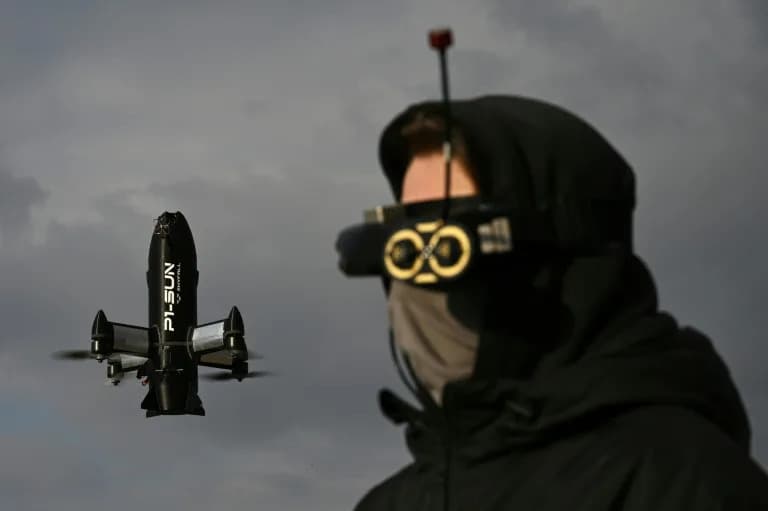
An operator from Ukraine's Skyfall tests a P1-Sun model (Genya SAVILOV)(Genya SAVILOV/AFP/AFP)
Like a scene from a spy thriller, AFP arranged covert meetings with three Ukrainian drone makers on the sidelines of a secretive defence forum in Paris, using benches near the Champs‑Élysées and shifting hotel lounges after overheard Russian prompted caution.
The unconventional industry that emerged after Russia's 2022 invasion — makers working from garages and secret sites — has produced inexpensive, high‑volume systems that have reshaped modern combat and attracted growing international interest.
Perun Max and Bavovna: High‑Tempo Strike Capability
Olexandr, an engineer behind the Perun Max, described the heavy strike drone built by the group Bavovna. According to the team, Perun Max can carry three projectiles, release them on targets, return to base, reload and launch again, reportedly conducting as many as 30 sorties per night. The system is said to transport roughly 32 kg over about 25 km and can switch from GPS guidance to optical navigation, operating with its antenna off for limited distances.
Bavovna claims to produce around 1,000 drones per month, priced between €7,000 and €20,000 each. Beyond strike roles, these platforms are also adapted to deliver supplies or leaflets to frontline areas.
Skyfall: From Surveillance To Attack Swarms
Skyfall, founded by four engineers in a garage, evolved from a surveillance platform into weapons systems such as Vampire — a drone adapted to drop munitions, lay remote mines and carry emergency supplies. The Wall Street Journal reported that during NATO exercises in Estonia in May 2025, 10 Ukrainian drone operators using Vampire reportedly "neutralised" 17 armoured vehicles and two battalions.
Skyfall also makes small FPV attack drones such as Shrike, priced at about $500, which the company says was the first to shoot down a Russian Mi‑8 helicopter in mid‑flight. The P1‑Sun interceptor, nicknamed locally as "Pisiun," is claimed by the company to have shot down thousands of Shahed drones and other aerial targets. These production claims are presented by manufacturers as evidence that low‑cost systems can achieve outsized effects on the battlefield.
Taking Lessons Abroad
European militaries are taking notice. Colonel Michel Goya warned that conventional units would be highly vulnerable on a modern battlefield dominated by cheap drones, and French authorities plan to reassign 5,000 of 77,000 ground troops to drone‑related roles. General Bruno Baratz has argued for mass‑produced, inexpensive systems to match the new threat, even as elements of the defence establishment hesitate to change established procurement and doctrine.
Bastien Mancini, CEO of French drone firm Delair, said his company set up in Ukraine after seeing the conflict's lessons: "Three years ago our drones were being shot down by Russian missiles that cost much more; today they are being shot down by much cheaper systems."
Countermeasures And Industry Reaction
Ukraine’s UGV Robotics developed the Khyzhak (Predator) system, which mounts a 7.62 mm weapon on Magura naval surface drones; the concept of converting simple weapons into "smart" systems has been extended to aerial defence roles. Dmytro Burakov of UGV said the kit has been fitted to Mi‑8 and Airbus helicopters to counter Shahed strikes. He also met representatives from Airbus Helicopters, which is reported to be planning about 30 drone programmes this year and hopes to double that capacity by 2027.
The head of Germany’s Rheinmetall sparked controversy by dismissing some Ukrainian work as being built by "housewives" — a comment he later walked back. Ukrainian manufacturers have used the remark to highlight how improvised, low‑cost production can upset traditional defence industry assumptions.
"When I talk to Europeans or Americans, they know very little" about these systems, Olexandr told AFP, underscoring why Ukrainian firms are engaging with foreign partners while Kyiv retains final say over export and cooperation agreements.
Reporting notes: Technical and operational claims in this article are attributed to manufacturers, Ukrainian spokespeople, AFP reporting and other media outlets; some figures remain independently unverified and are presented as reported or claimed.
Help us improve.