Rep. Rich McCormick introduced the Make DC Square Again Act to reverse the 1840s retrocession that returned Alexandria and Arlington to Virginia. The proposal is framed as restoring the District of Columbia's original ten-mile-square shape but is widely seen as a partisan response to a Virginia redistricting referendum that may favor Democrats. Legal experts disagree on whether Congress or a president could lawfully undo the retrocession. Advocates say the debate highlights the broader push for D.C. statehood and the political stakes of boundary changes.
GOP Bill Seeks To Return Alexandria And Arlington To D.C. After Virginia Redistricting Vote
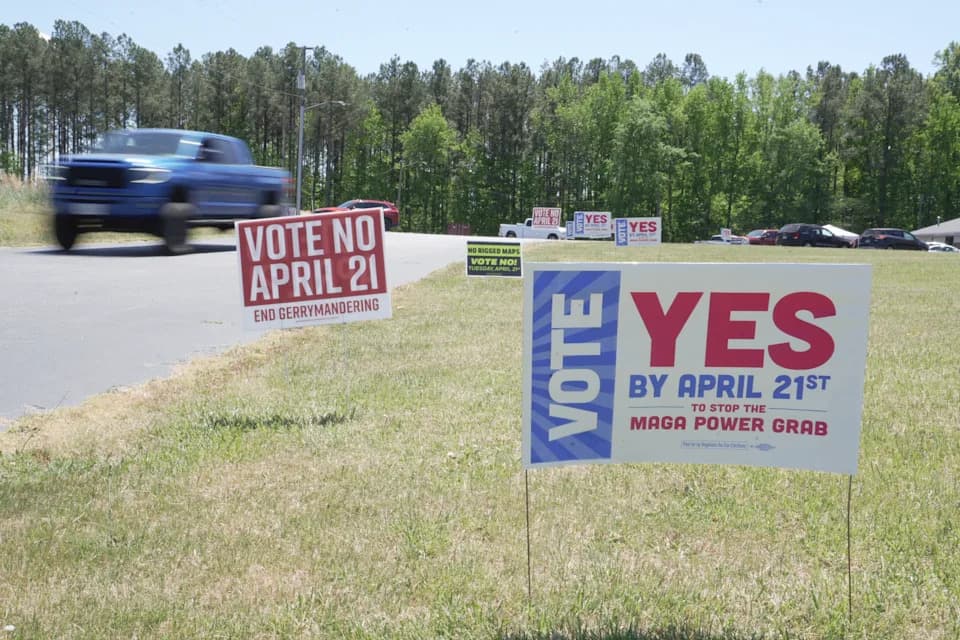
A truck passes political signs outside a polling place at Good Shepherd Catholic Church in South Hill, Va., on Tuesday, April 21, 2026. (AP Photo/Allen G. Breed)(ASSOCIATED PRESS)
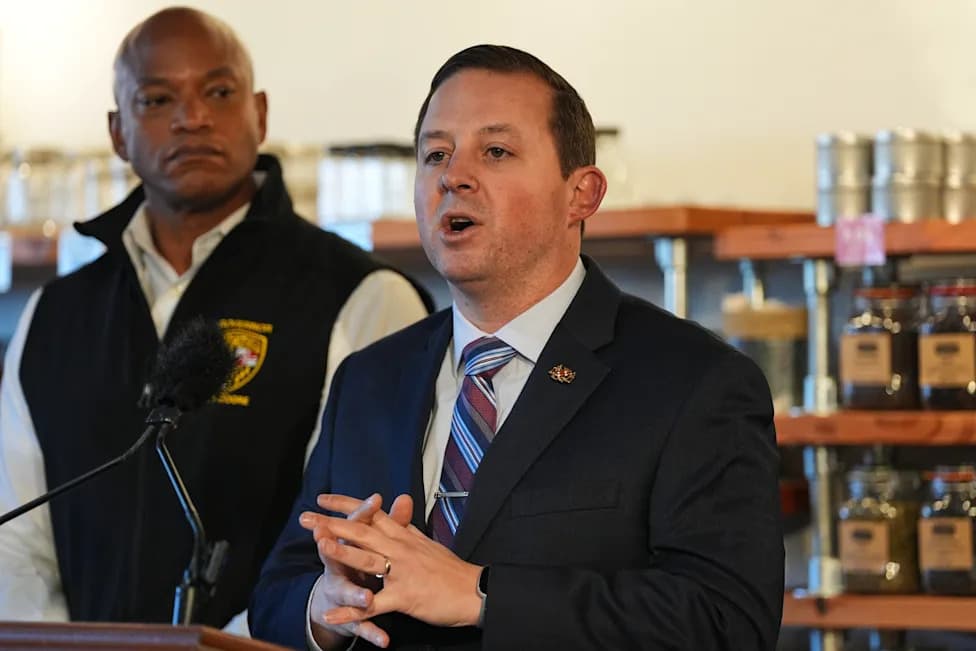
Rep. Rich McCormick (R-Ga.) introduced the Make DC Square Again Act on Thursday, proposing to reverse the 19th-century "retrocession" that returned roughly 31 square miles of land — including the City of Alexandria and Arlington County — from the District of Columbia back to Virginia. McCormick framed the bill as restoring the federal district's original ten-mile-square shape and said it would address an "artificial advantage" Democrats gained after a recent Virginia redistricting referendum.
What McCormick Says
"The Make DC Square Again Act restores the original ten-mile-square District and ends the artificial advantage Virginia Democrats have recently gained from all the federal bureaucrats moving into Virginia," McCormick said in a statement. The congressman presented the measure as a direct response to a state referendum that opponents say could substantially favor Democratic candidates in U.S. House races.
Political Stakes
Supporters of the Virginia referendum argue it will make Virginia's U.S. House map more favorable to Democrats and could—by some accounts—produce a lopsided delegation outcome in certain scenarios. Critics say McCormick's bill is a partisan countermeasure that would remove roughly 400,000 residents of Alexandria and Arlington from Virginia's congressional districts, potentially changing the balance in upcoming elections and stripping those residents of representation in Virginia's Senate delegation.
Legal And Historical Context
Retrocession refers to the mid-1840s process by which Congress and Virginia approved returning about 31 square miles (roughly 80 square kilometers) of land to Virginia. That territory included today’s Alexandria, the site of the Pentagon and Arlington National Cemetery. Contemporary accounts cited local economic concerns and slavery-related politics as factors in the decision to retrocede the land.
Legal scholars disagree about whether Congress today could lawfully reabsorb previously retroceded land into the federal district, or whether a president could undo the 1840s action by executive order. George Derek Musgrove, an associate professor of history, expressed skepticism about the timing and motive of McCormick’s proposal and called it effectively a "Virginia voter suppression bill." The full text of McCormick’s measure was not immediately available for review.
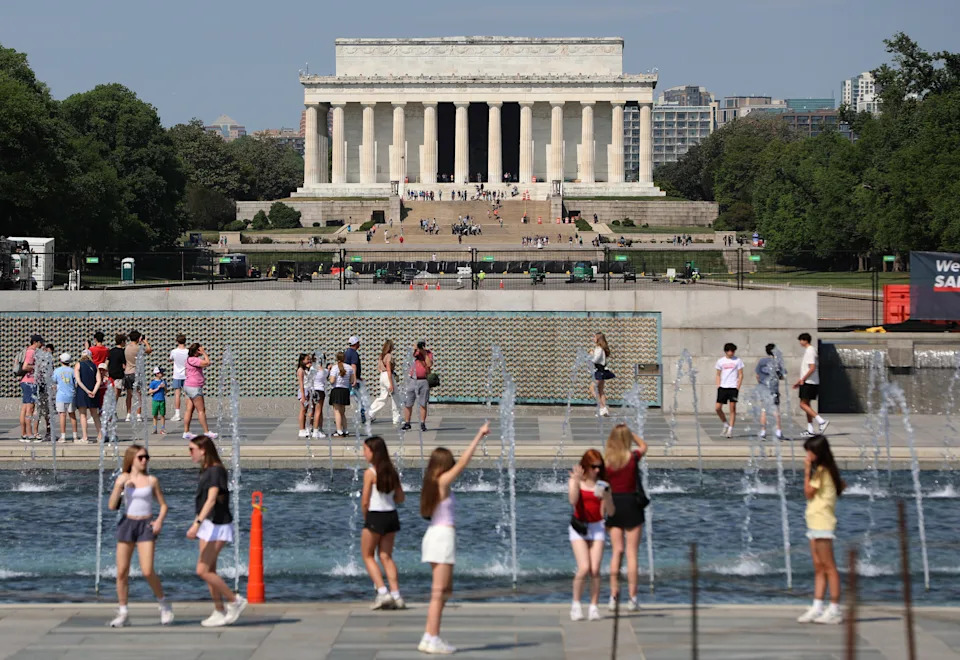
Tourists are seen visiting near the Lincoln Memorial, Thursday, April 23, 2026, in Washington. (AP Photo/Rahmat Gul)(ASSOCIATED PRESS)
Reactions
Advocates for D.C. statehood were critical, saying the proposal illustrates how the district can be used as a political football. "Residents of the district are not fully participating in the democracy of this country because we are not allowed to," said Alicia Yass, advocacy director at the ACLU of D.C., arguing that tinkering with boundaries highlights the case for full rights and representation.
Some critics of the Virginia referendum urged former President Donald Trump to declare the retrocession unconstitutional by executive action. In a Fox News opinion piece, Chad R. Mizelle, a former chief of staff at the Justice Department under Trump, argued such an order could be defensible—but the idea remains legally untested and politically controversial.
Alternatives And Broader Context
Besides congressional legislation, groups such as the American Capital Project have proposed a presidential order that would send the question to the courts, potentially reaching the U.S. Supreme Court. Public information about the American Capital Project is limited: its website provides little detail about funding or leadership.
Separately, Democrats have long pursued D.C. statehood as a permanent remedy for lack of full congressional representation. The House passed a statehood bill in 2021, but it stalled in the Senate. Proposals floated by some Republicans have included returning portions of the current federal district to Maryland as an alternative path to providing representation.
Implications
If enacted, McCormick's plan would reshape the electoral map for Virginia and could remove tens or hundreds of thousands of voters from Virginia's congressional calculations. The measure faces long odds in the current, closely divided Congress, but it underscores how state and federal boundary questions can become central to partisan strategy in closely contested elections.
Help us improve.