Overview: Reuters records show the Trump administration has cut more than 4,000 positions across major Justice Department agencies while publicly pledging tougher crime enforcement. The FBI lost roughly 2,600 staff (over 7%), the DEA about 6%, ATF about 14%, and the National Security Division nearly 38%. Critics warn the reductions and roughly 7,000 unfilled posts have contributed to a drop in drug prosecutions and strained prison staffing; the department says buyouts removed staff unwilling to aggressively tackle crime.
Exclusive: Trump Justice Department Cuts Over 4,000 Law‑Enforcement Jobs While Pledging Tougher Crime Policy

Yellow police cordon is placed by Metropolitan Police officers in Washington, D.C. U.S., September 8, 2025. REUTERS/Daniel Becerril
WASHINGTON, April 23 (Reuters) - Records obtained by Reuters show the Trump administration has cut more than 4,000 positions across several of the Justice Department’s top law‑enforcement components even as it publicly pledges a tougher approach to crime.
Key Numbers
Internal Justice Department management records show the FBI’s workforce has fallen by more than 7% since the government’s 2024 fiscal year — a decline of roughly 2,600 employees. The Drug Enforcement Administration’s staff declined by about 6%, while the Bureau of Alcohol, Tobacco, Firearms and Explosives saw its headcount shrink by roughly 14%.
Other components contracted even more sharply: the National Security Division lost nearly 38% of its personnel, its budget submission warned of “unprecedented personnel constraints,” and the Civil Rights Division shrank by more than half. Overall, the department now employs about 107,000 people — roughly 11,200 fewer than it did in the fiscal year that ended three months before President Trump began his second term. About 7,000 positions remain unfilled.
Impact On Priorities And Operations
Agency interviews and additional records show the staffing reductions, together with a stronger focus on immigration enforcement, have led officials to step back from some traditional priorities. Federal prosecutions for drug trafficking fell last year to their lowest level in more than two decades, and Reuters’ review of federal court dockets found even fewer such cases this year.
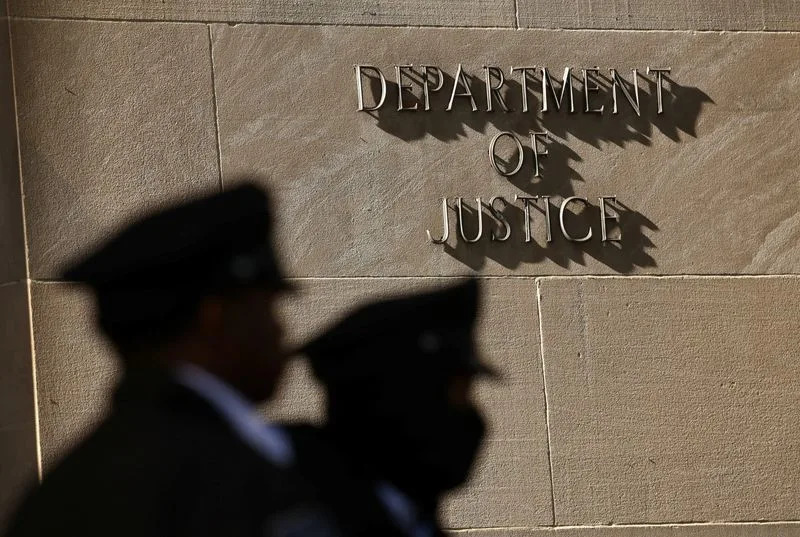
FILE PHOTO: Police stand guard at the U.S. Department of Justice in Washington, D.C., April 6, 2026. REUTERS/Kevin Lamarque/ File Photo
The Bureau of Prisons shed more than 2,200 employees (about 6%), even as the federal inmate population has remained largely steady. One current prison official, speaking on the condition of anonymity for fear of retaliation, said some guard posts have gone unfilled and others have been staffed by reassigned teachers and nurses.
Official Responses
“Buyouts last year allowed the agency to shed people who did not want to aggressively and faithfully tackle crime to protect the American people,” Justice Department spokeswoman Natalie Baldassarre said, while asserting that reductions have not hampered the department’s ability to tackle violent crime.
Critics say the cuts undercut core investigative and prosecutorial work on national security, drug trafficking and civil rights. “The administration talks a big game when it comes to crime and terrorism, but the fact that it’s hollowing out agencies tasked with addressing them shows that they don’t stand behind their words,” said Stacey Young, a former Justice Department lawyer who leads Justice Connection.
Context
The reductions come amid a broader White House push to shrink government staffing, with the exception of expanded funding for immigration enforcement. Trump‑appointed officials have also removed or pressured out dozens of prosecutors and agents who previously worked on probes involving the president and his allies, while opening new cases targeting political opponents.
What This Means
Justice Department records provide the most detailed accounting to date of the scale and distribution of these cuts. Officials warn that reduced staffing and persistent vacancies could hinder the department’s ability to pursue long‑running, specialized investigations — from espionage and export‑control cases to major drug trafficking prosecutions.
(Reporting by Brad Heath and Andrew Goudsward; Editing by Michael Learmonth and Alistair Bell)
Help us improve.