The US boarding of the oil tanker M/T Tifani in the Indian Ocean demonstrates Washington’s intent to interdict Iran-linked vessels globally, extending pressure beyond the Persian Gulf. The Tifani (IMO 9273337), reportedly capable of carrying about 2 million barrels, was intercepted between Sri Lanka and Indonesia after recent movements from Kharg Island and the Gulf of Oman. US officials say these open-sea operations target a "dark fleet" network that obscures sanctioned shipments, but analysts warn that pushing interdictions into the Indo-Pacific could complicate peace negotiations with Tehran. Iran has denounced recent seizures and declined to attend planned talks, suggesting potential diplomatic fallout.
US Boarding of Iran-Linked Tanker in Indo-Pacific Widens Conflict, Complicates Peace Prospects
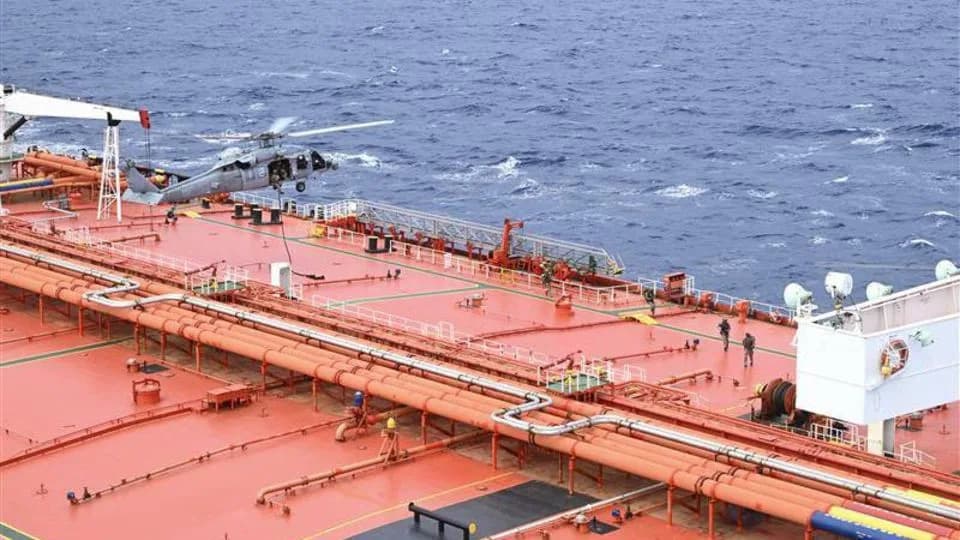
US troops boarding the M/T Tifani on Aril 21, 2026. - @DeptofWar/X
The US boarding this week of the oil tanker M/T Tifani (IMO 9273337) in the Indian Ocean highlights Washington's determination to track and interdict vessels linked to Iran anywhere they operate. The move effectively extends maritime pressure beyond the Persian Gulf and increases diplomatic strain on Tehran.
Marine-tracking records place the Tifani — a vessel capable of carrying roughly 2 million barrels of crude — between Sri Lanka and Indonesia, more than 2,000 miles from the Persian Gulf and inside the area overseen by US Indo-Pacific Command (INDOPACOM). Satellite imagery and AIS data reviewed by analysts indicate the ship was at Iran’s Kharg Island oil terminal as recently as April 6 and transited the Gulf of Oman on April 10.
On April 21 the tanker made abrupt course changes after passing Sri Lanka — a roughly 90-degree turn south followed by another 90-degree turn east — movements soon followed by reports of a US boarding. Video released by the US Defense Department shows troops launching from helicopters aboard a US naval platform and landing on the tanker.
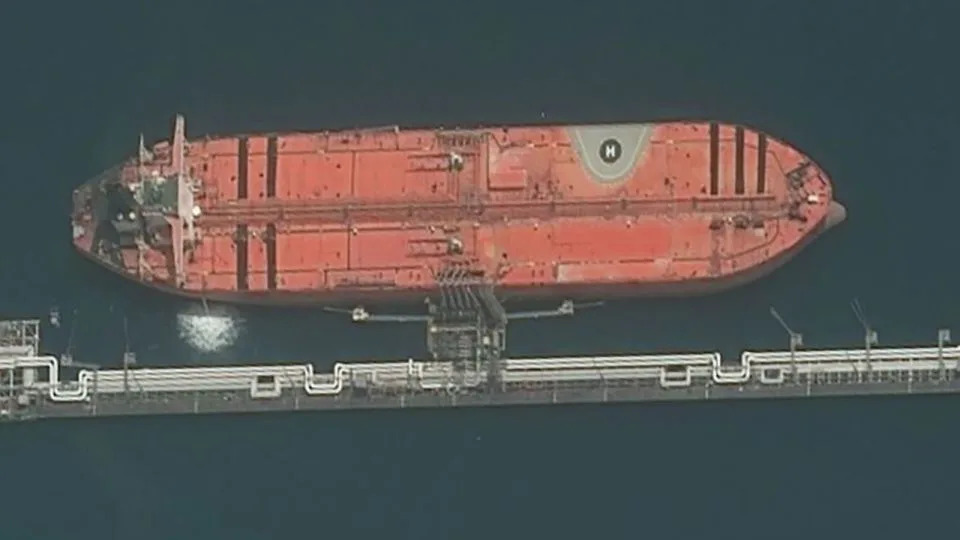
Recently intercepted tanker vessel MT Tifani seen docked at Iran's Kharg Island terminal on April 6, 2026. - Airbus
Operations, Tactics and Legal Ramifications
Officials described the platform used as an expeditionary sea base, a large vessel able to support helicopters and special operations teams. The Defense Department did not publicly name which ship was involved; reports noted the USS Miguel Keith had recently been in the region, but the Pentagon has not confirmed its involvement. A previous correction to reporting clarified that the department had not specified the vessel.
The interception follows another operation this weekend in which the US seized the Iranian cargo ship M/V Touska. That boarding involved a guided-missile destroyer and Marines from an amphibious assault ship. US officials say both vessels are suspected participants in the so-called “dark fleet,” networks of tankers and transfer points used to move sanctioned oil and other cargo while obscuring provenance.
Under US statements, these open-ocean interdictions are part of a global maritime enforcement effort to disrupt illicit networks that provide material support to Iran. Analysts say the open sea can be a more controlled environment for interdictions because there are fewer neutral vessels nearby and no landmasses to hamper maneuvering or conceal adversaries.
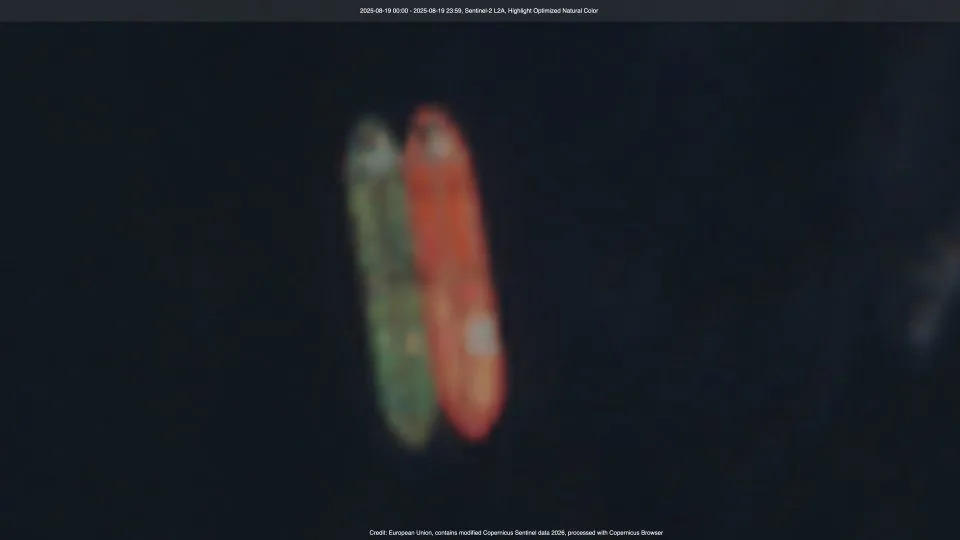
Satellite imagery appears to show the MT Tifani conducting a ship-to-ship transfer off Malaysia's east coast in August 2025. - European Space Agency
Potential Consequences for Diplomacy
While such operations aim to enforce sanctions and choke off revenue streams, they risk widening the theatre of confrontation — from the Persian Gulf into the Indo-Pacific — and could complicate ongoing diplomatic efforts. Iran condemned the Touska seizure as "criminal" and said it violated a ceasefire that took effect on April 8; Tehran has since refused to send a delegation to a planned round of peace talks in Pakistan.
Legally, interdicted ships may be searched and their cargoes inspected. If courts or tribunals find a seizure lawful under applicable statutes, seized vessels and cargo can be forfeited — in maritime tradition, sometimes described as a "prize." The US Treasury’s Office of Foreign Assets Control (OFAC) already lists the Tifani under sanctions, and the US Justice Department has previously filed civil forfeiture complaints seeking seizure of Iran-linked tankers and their cargoes.
For now, the immediate effect of long-range interdictions appears limited in drawing Tehran back to negotiations. Instead, analysts warn, expanding maritime enforcement farther afield may harden Iranian positions and widen the diplomatic gap that mediators must bridge.
Correction: Earlier reporting named the USS Miguel Keith as involved in the Tifani boarding. The Department of Defense has not publicly identified the vessel used in the operation.
What to Watch Next: Tracking data for the Tifani shows it circling near the interdiction site; outcomes to watch include any legal filings, the status of the cargo, and whether the interdictions influence Iran’s engagement in peace talks.
Help us improve.