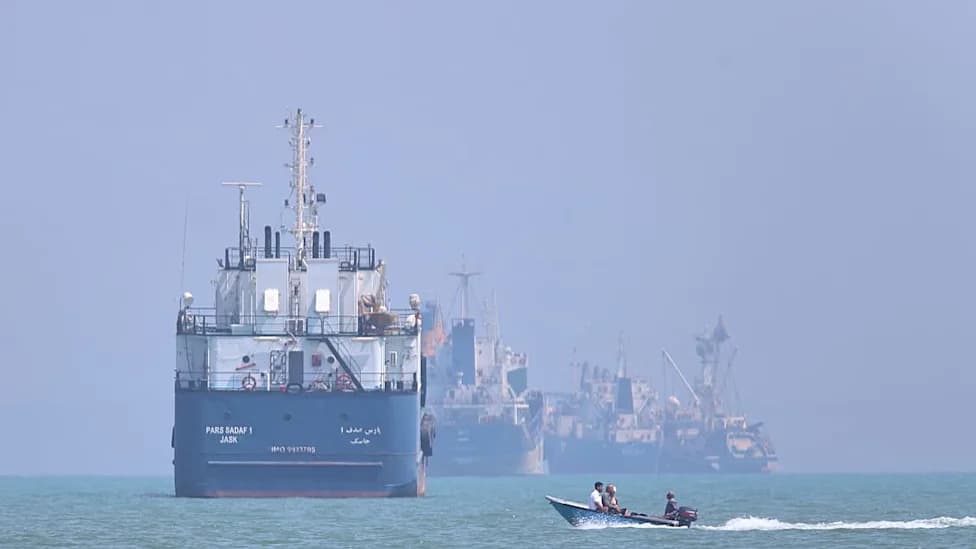
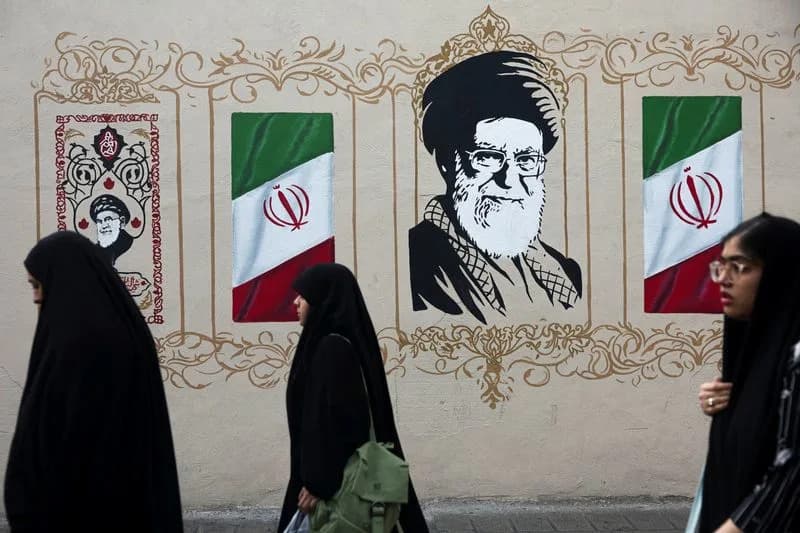
The Gulf states warn that US‑Iran negotiations risk prioritising the reopening and management of the Strait of Hormuz over dismantling Iran's missile and proxy capabilities, potentially cementing Tehran's leverage over a key oil chokepoint. Diplomats expect upcoming talks in Islamabad to focus on uranium enrichment limits and mechanisms to secure shipping, a shift Gulf officials say sidelines regional security concerns. Analysts urge a phased, verifiable approach to sanctions relief and call for greater regional inclusion in any settlement.
Gulf Warns US‑Iran Talks Could Cement Tehran’s 'Golden' Grip on Strait of Hormuz
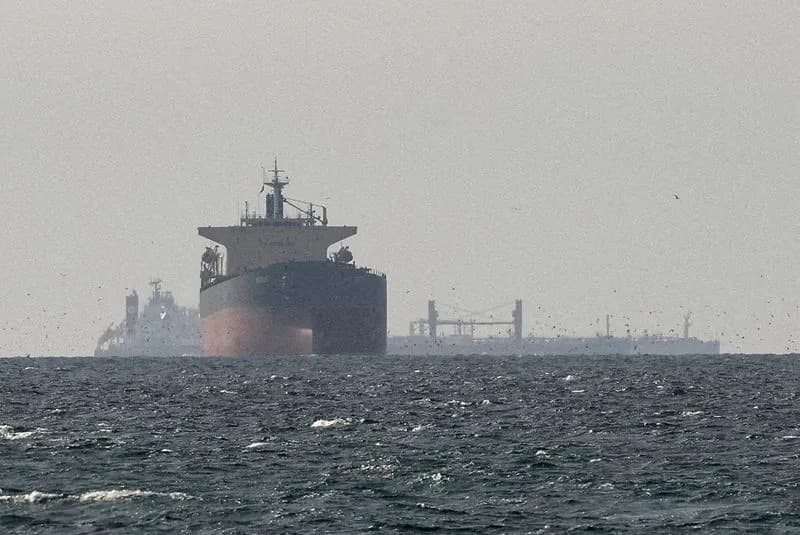
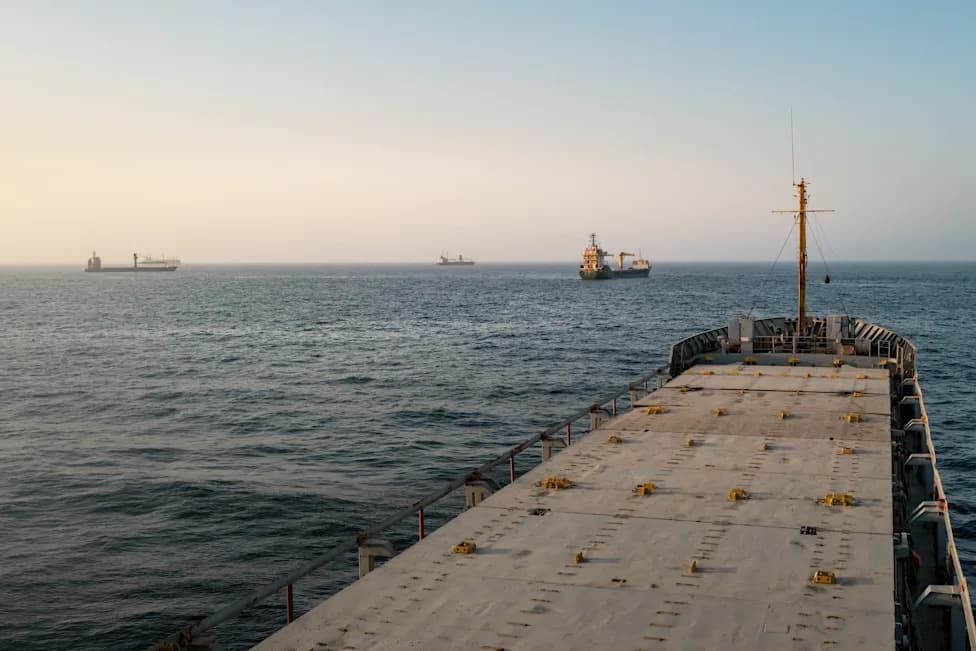
FILE PHOTO: Cargo ships in the Gulf, near the Strait of Hormuz, as seen from northern Ras al-Khaimah, near the border with Oman’s Musandam governance, amid the U.S.-Israeli conflict with Iran, in United Arab Emirates, March 11, 2026. REUTERS/Stringer/File Photo
Gulf officials and analysts are warning that renewed US‑Iran negotiations risk locking in Tehran's strategic leverage over the Strait of Hormuz rather than delivering a broader rollback of Iran's regional military capabilities. With talks due in Islamabad, diplomats expect discussions to focus increasingly on uranium enrichment limits and arrangements to manage Hormuz, the chokepoint through which roughly a fifth of the world's oil flows.
Shift In Focus Raises Regional Alarm
Gulf sources say the diplomatic emphasis has moved away from pressing Tehran to curb its missile arsenal and proxy networks, and toward technical limits on enrichment and mechanisms to ensure uninterrupted oil shipments. Officials argue that this framing treats Iran's maritime leverage as a risk to be managed rather than a capability to be dismantled, prioritising global economic stability while sidelining the states most exposed to the security consequences.
Although negotiations remain stalled over enrichment, with Iran rejecting both zero enrichment and demands to ship its stockpiles abroad, Gulf diplomats contend the change in priorities is itself troubling. 'At the end of the day, Hormuz will be the red line,' one Gulf source close to government circles said. 'It wasnt an issue before. It is now. The goal posts have moved.'
Hormuz As Leverage
Iranian officials privately describe the Strait as a long‑prepared instrument of deterrence. A senior Iranian security source called Hormuz a 'golden, invaluable asset rooted in Iran's geography' and said Tehran planned for scenarios involving closure or disruption of the waterway. Another source close to the Revolutionary Guards described a long‑standing taboo about using Hormuz as leverage as effectively broken.
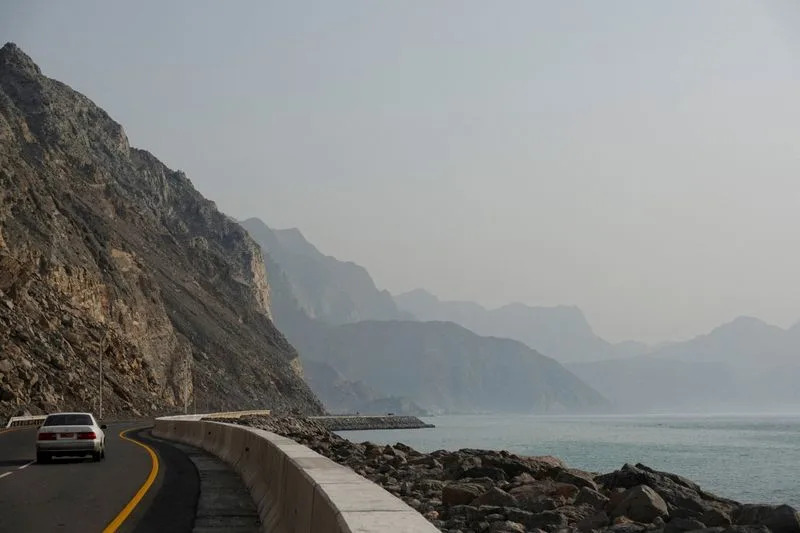
FILE PHOTO: A car rides along the coast of Musandam overlooking the Strait of Hormuz amid the U.S.-Israeli conflict with Iran, Oman, March 2, 2026.REUTERS/Amr Alfiky/File Photo
‘Its not clear how the truce between Washington and Tehran will play out, but one thing is certain — Iran has tested its nuclear weapons. It is called the Strait of Hormuz. Its potential is inexhaustible, wrote Dmitry Medvedev on April 8.
Medvedev's comment helped crystallise a perception that the Strait itself can be used as a potent non‑nuclear bargaining chip, letting Tehran raise costs and shape rules of passage without crossing a nuclear threshold.
Gulf Security Concerns
Analysts say Gulf states are alarmed that, while missiles, drones and proxy attacks have repeatedly hit the region, diplomacy appears dominated by concerns about Hormuz because of its global economic impact. For Gulf officials the issue is less who formally controls the Strait than who sets and enforces the rules of passage, a shift they see as moving away from established international norms toward power‑based arrangements.
Ebtesam Al‑Ketbi, president of the Emirates Policy Center, warned that what is emerging is not a historic settlement but an engineered, sustainable conflict. 'Whos suffering from missiles and proxies?' she said. 'Israel, and specifically the Gulf states. A good deal for us would address missiles, proxies — and Hormuz. It seems they dont care about the missiles or the proxies.'
Caution Over Sanctions Relief
Diplomats and analysts caution that an agreement focused mainly on keeping trade flowing could stabilise tensions at levels tolerable to Washington and Tehran but would leave Gulf states living under a persistent threat from missile and proxy attacks. Gulf officials have urged a phased approach to sanctions relief tied to verifiable changes in Iranian behaviour rather than immediate, blanket concessions.
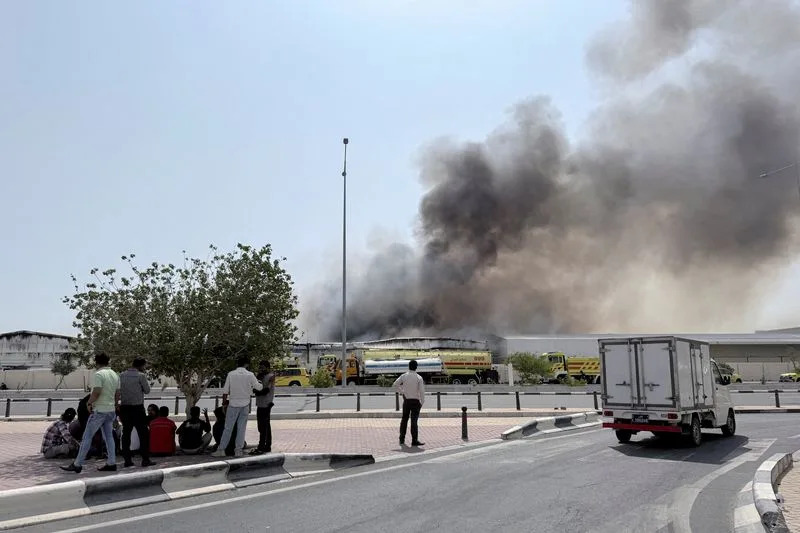
FILE PHOTO: People gather as smoke rises at the Industrial Area after reported Iranian missile attacks, following United States and Israel strikes on Iran, in Doha, Qatar, March 1, 2026. REUTERS/Mohammed Salem/File Photo
The US‑Israeli conflict with Iran, which escalated in late February, has already forced Gulf economies to absorb damage from attacks on energy infrastructure and rising export and insurance costs. Alternative export routes remain costlier and vulnerable to similar threats.
Exclusion And The Limits Of Reliance
Across the Arab Gulf, sentiment toward Washington now ranges from quiet resentment to frustration over perceived unilateral decision making. Regional analysts stress that Gulf states have long warned the US against direct confrontation with Iran but have also relied on US military capabilities and advanced air and missile defence systems to deter attacks.
Mohammed Baharoon of Dubai's B'huth research centre said the war highlighted the limits of depending on a single external protector. Gulf leaders, while bristling at being sidelined in diplomacy, acknowledge the continuing influence of US military power but say exclusion from talks over Hormuz has global implications given the Strait's importance to international energy markets.
Requests for comment from Gulf Arab governments on these concerns received no immediate response.
Additional reporting by Parisa Hafezi in Dubai; original reporting by Samia Nakhoul; editing by William Maclean.
Help us improve.