Researchers analyzing 74 communication signals from insects, amphibians, birds, fish, crustaceans and mammals found a surprising tempo clustering between 0.5 and 4 hertz, with many species concentrating near ~2 pulses per second. A computational neural-circuit model responded most strongly to inputs near 2 Hz, and physiological arguments suggest neurons need roughly half a second to reset. Though the sample is small and selection bias is possible, the finding hints at a shared perceptual or processing constraint that merits further study. The work is published in PLOS Biology.
Across Species, a Common Beat: Many Animals Signal Near ~2 Pulses Per Second

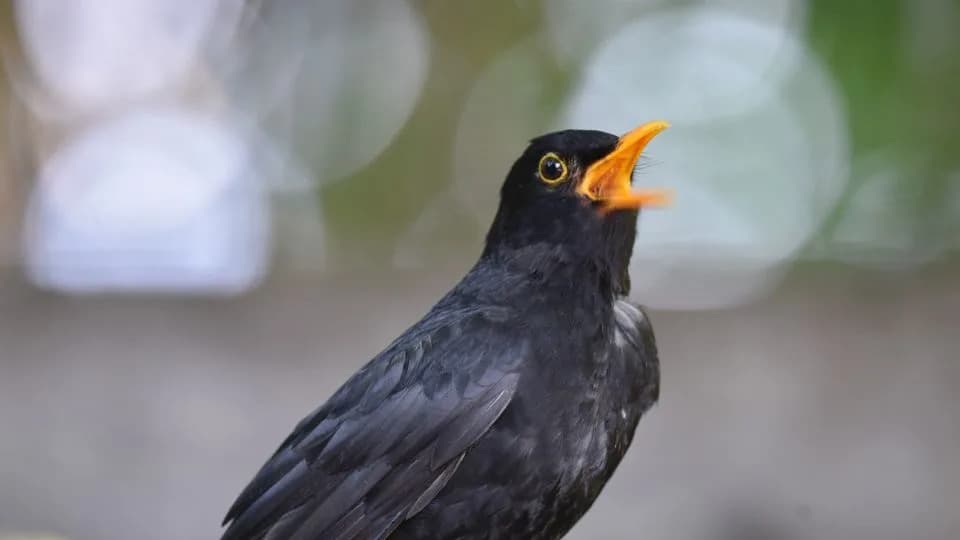
(Photography by Jessie Reeder/Moment/Getty Images)
Researchers report a striking cross-species pattern: many animals time their communication signals to a similar basic tempo, clustering around roughly 0.5–4 hertz and concentrating near about 2 pulses per second.
How the Discovery Began
The project began during fieldwork in Thailand, where mathematician Guy Amichay of Northwestern University was investigating synchronized signaling in fireflies. While observing spectacular synchronized flashes, he noticed nearby crickets chirping at a seemingly matching pace. Back in the lab, Amichay and colleagues found the apparent synchronization was not mutual coordination but independent signals that happened to share similar tempos.

YouTube Thumbnail
Analysis and Methods
To test whether this was coincidence, the team reviewed published studies and sampled signals from two dozen species across six major groups: insects, amphibians, birds, fish, crustaceans and mammals. They also pulled 50 random recordings from the xeno-canto database (ten each from birds, bats, frogs, grasshoppers and land mammals), bringing the total dataset to 74 communication types. Sampled signal types included firefly flashes, cricket chirps, frog calls, birds’ mating displays, pulses from fish and mammal vocalizations and gestures. For each signal the researchers measured tempo and plotted the distribution.
Key Finding
Across eight orders of magnitude in body mass and in air, land and water, most species concentrated around a carrier frequency between 0.5 and 4 hertz—roughly 0.5 to 4 pulses per second—with a strong clustering near 2 hertz. Humans fit the pattern too: many mainstream rock and pop songs center around 120 beats per minute, which is two beats per second, and human walking cadence is also near 2 hertz.

Subscribe to ScienceAlert's free fact-checked newsletter
Physiological Explanation and Modeling
Biophysicist Vijay Balasubramanian of the University of Pennsylvania noted a plausible physiological constraint: neurons need time to process inputs before firing again, and an optimal interval appears to be about half a second, corresponding to ~2 hertz. To probe this idea, the researchers built a computational model of a neural circuit and exposed it to pulsed inputs with different periods. The simulated circuit produced the strongest response to signals near 2 hertz, suggesting that this tempo may be especially efficient for neural detection and attention.
"Getting the 'carrier' signal in the right tempo range may be key to communicating efficiently," said Daniel Abrams of Northwestern University. "The carrier may not convey the detailed message but serves as a baseline that captures attention, onto which richer information can be layered—much like musical notes following a beat."
Limitations and Cautions
The authors emphasize important caveats: Earth hosts millions of species, and this study examined just 74 communication types, a small sample of global biodiversity. There is also potential selection bias—researchers may be likelier to record or notice signals at tempos to which human observers are attuned. These limitations mean the result is intriguing but not yet definitive.
Implications and Next Steps
The cross-taxonomic clustering raises interesting questions about the evolutionary origins of rhythmic signaling and whether shared neural constraints favor similar tempos. The authors call for broader, systematic surveys across more species and experimental work to test how tempo affects perception and communication success in different animals.
Publication: The study appears in PLOS Biology.
Help us improve.