
U.S. and Iranian negotiators have shifted from pursuing a comprehensive peace pact to a temporary memorandum designed to prevent renewed hostilities. Talks in Islamabad stalled over the fate of Iran's enriched uranium stockpiles and the length of any enrichment pause. Iran seeks partial unfreezing of funds and safer transit through the Strait of Hormuz in exchange for greater maritime access, while the U.S. demands long-term limits on enrichment. If agreed, the memorandum would give the parties 60 days to negotiate a final deal with IAEA involvement.
Iran-US Talks Shift Toward Interim Memorandum as Nuclear Disputes Persist
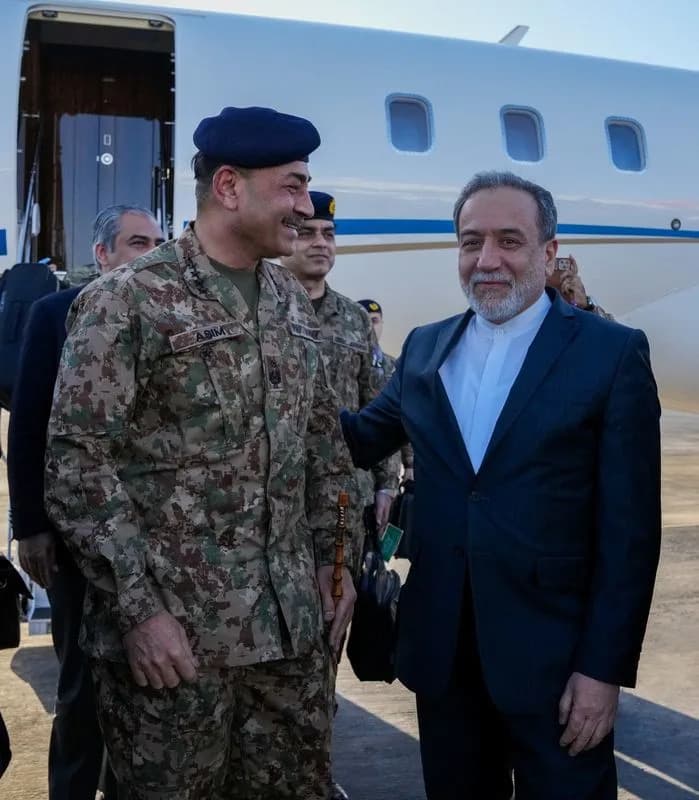
Iranian Foreign Minister Abbas Araqchi welcomes Pakistan army chief Asim Munir at an airport in Tehran, Iran, April 15, 2026. Iranian Foreign Ministry/WANA (West Asia News Agency)/Handout via REUTERS
DUBAI, April 16 — U.S. and Iranian negotiators have stepped back from pursuing a comprehensive peace agreement and are instead working toward a temporary memorandum intended to avert a return to open hostilities, two Iranian sources told Reuters.
That change in approach follows inconclusive talks in Islamabad, where sharp disagreements over Iran’s nuclear programme — particularly the fate of its enriched uranium stockpiles and the duration of any pause in enrichment — have continued to stall progress despite optimistic public statements from U.S. officials and Pakistani mediators.
Points Of Progress And Remaining Divisions
A senior Iranian official said negotiators had begun to narrow certain gaps, including management of the Strait of Hormuz, a strategic corridor responsible for roughly 20% of global oil and gas shipments that has been closed to most commercial traffic for weeks.
Iran wants the memorandum to include the partial unfreezing of Iranian funds by Washington in exchange for allowing increased maritime traffic, the official — who spoke on condition of anonymity — said. A source briefed by Tehran added that Iran has proposed arrangements to allow ships to transit safely along the Omani side of the strait without risk of attack, provided a durable deal is reached.
But deep divisions remain more than halfway through a two-week truce. Iranian sources identified the disposition of Iran’s highly enriched uranium (HEU) — which the United States wants removed — and the length of any suspension of enrichment as core sticking points. Iran insists Washington formally recognise its right to enrich uranium for peaceful purposes; Western capitals and Israel contend the capability could be repurposed for weapons development.
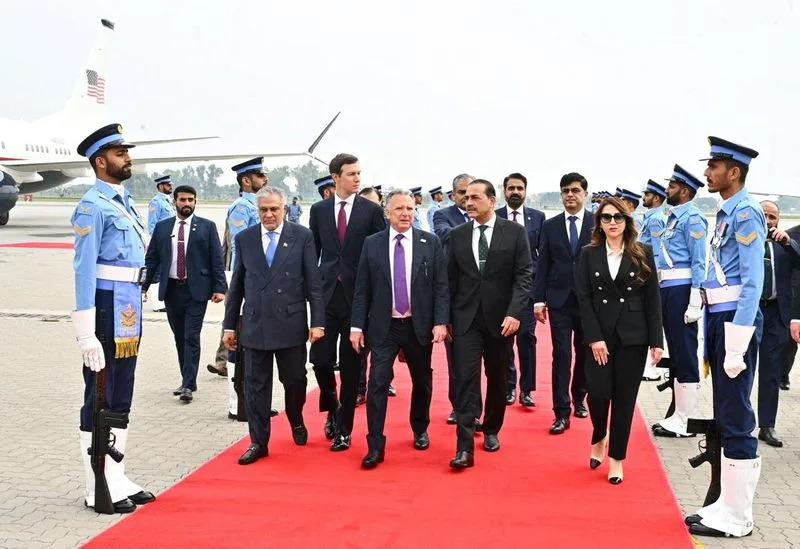
U.S. Special Envoy Steve Witkoff and Jared Kushner walk with Pakistan's Chief of Defence Forces and Chief of Army Staff Field Marshal Asim Munir, and Pakistani Deputy Prime Minister and Foreign Minister Mohammad Ishaq Dar after arriving for peace talks with Iranian officials in Islamabad, Pakistan, Saturday, April 11, 2026. Pakistan's Ministry of Foreign Affairs/Handout via REUTERS
Timetable And Technical Talks
If the parties agree a memorandum to halt hostilities, Iranian sources say they would have 60 days to negotiate a final accord involving technical experts and the International Atomic Energy Agency (IAEA). Observers note that the 2015 nuclear deal, which similarly traded curbs for sanctions relief, took nearly two years to finalize before the United States withdrew in 2018.
According to the Iranian sources, U.S. demand includes a 20-year suspension of enrichment activities, while Tehran proposes a much shorter pause of three to five years and seeks clear timetables for lifting U.N., U.S. and EU sanctions.
Highly Enriched Uranium: Quantities And Concerns
Historically, Iran has resisted U.S. calls to export its entire stockpile of uranium enriched to 60% — a concentration far above civilian levels. The IAEA estimated Iran had about 440.9 kg of 60% enriched uranium in June 2025 when Israel and the United States carried out strikes on Iranian nuclear facilities; how much of that stock remained after the attacks is uncertain.
IAEA Director General Rafael Grossi told reporters in March the agency believed slightly more than 200 kg of that material was “mainly” stored in a tunnel complex near Isfahan, with additional material assessed at the Natanz nuclear site. A Western diplomat warned that the 440 kg figure remains worrisome because the final enrichment phase to weapons grade can be relatively rapid.
Iranian sources signalled limited room for compromise: Tehran is not prepared to ship all its HEU abroad but said it might transfer part of it to a third country, while retaining some HEU for medical isotope production and for a Tehran research reactor that uses material enriched to around 20%.
Reporting by Parisa Hafezi in Dubai, John Irish in Paris and Francois Murphy in Vienna; Writing by Parisa Hafezi; Editing by Peter Graff and William Maclean.
Help us improve.





















