House leaders advanced a floor vote on an 18‑month "clean" reauthorization of Section 702 of FISA, preserving warrantless surveillance authorities unless Congress acts to change them. The provision—set to expire this Monday—allows collection of foreign targets' communications without traditional warrants and can incidentally sweep up Americans' data. Political shifts have left positions fluid: President Trump and House GOP leaders now support a straight extension while some Republicans and Democrats press or resist reforms. Separately, Gov. Kathy Hochul proposed a narrow tax on second homes over $5 million to help close NYC's $5.4 billion budget gap.
House Advances Vote On 18‑Month Reauthorization Of Warrantless FISA Surveillance

House Readies Spy Powers Vote
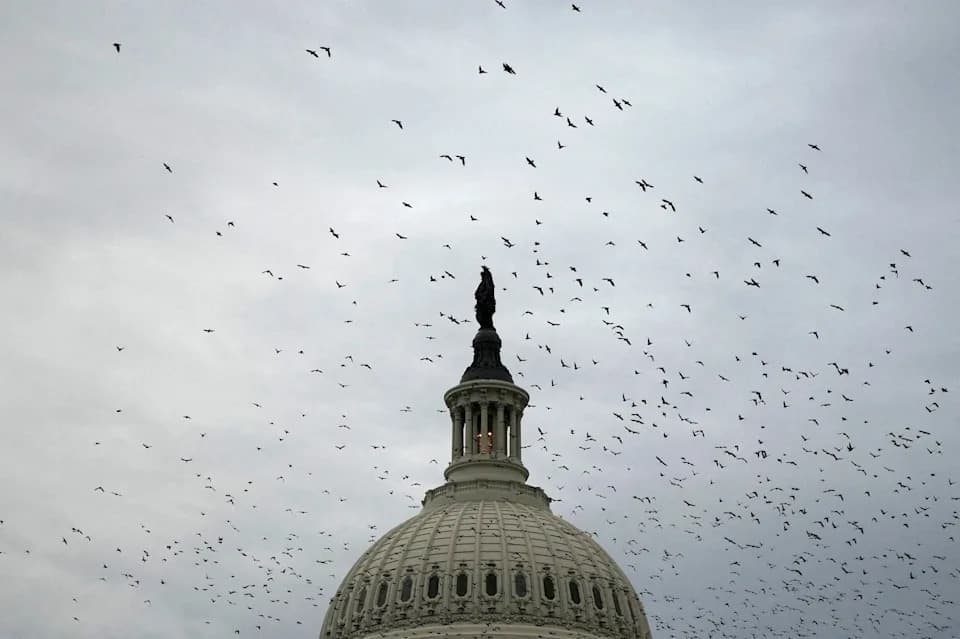
House leaders have cleared the way for a floor vote on an 18‑month "clean" reauthorization of Section 702 of the Foreign Intelligence Surveillance Act (FISA), advancing a straight extension that would keep current warrantless surveillance authorities in place.
What Section 702 Allows
Section 702 permits U.S. intelligence agencies to collect the communications of foreign targets without obtaining a traditional judicial warrant. In that process, communications involving Americans can be collected incidentally.
Privacy Concerns
"The government routinely searches through [Section 702] data to find Americans' phone calls, text messages, and emails," the Brennan Center for Justice recently explained, calling the practice "a bait and switch that drives a gaping hole through the protections of the Fourth Amendment and FISA."
Civil liberties advocates and some lawmakers argue the program grants agencies broad discretion and can erode Fourth Amendment protections unless reformed.
Politics And The Vote
The authority in Section 702 is set to expire this coming Monday unless Congress renews it. President Donald Trump and House GOP leaders, including Speaker Mike Johnson (R–La.), support a clean renewal that would preserve the program as it stands. Some Republicans, however, have pushed for added privacy safeguards—most notably a warrant requirement before the government accesses Americans' communications incidentally collected under the program.
Despite those demands, two House Rules Committee Republicans who have criticized Section 702—Reps. Ralph Norman (R–S.C.) and Chip Roy (R–Texas)—allowed the unamended extension to advance out of committee late last night, according to Politico.
Observers note considerable flip‑flopping across parties: President Trump, who called to "KILL FISA" in 2024, now backs a straight extension; some Democrats who previously supported reauthorization in 2024 are now opposing it over concerns about how the law might be used under a Trump administration.
With Republicans holding only a narrow House majority, unified Democratic opposition combined with a small number of GOP defections could be enough to block the extension. Civil liberties advocates argue that durable, bipartisan reforms would be preferable so citizens do not have to rely on shifting majorities to protect Fourth Amendment rights.
New York Second‑Home Tax Proposal
Separately, New York Governor Kathy Hochul has proposed a narrowly targeted tax on second homes valued above $5 million to help close New York City's roughly $5.4 billion budget gap, The New York Times reports. Mayor Zohran Mamdani has pushed for greater local taxing authority and additional revenue streams; some proposals require state approval, and several lawmakers have resisted larger measures such as an income tax increase.
Hochul frames the proposed surcharge as a compromise that would generate revenue from a small group of ultra‑high‑value property owners who may not reside in the city full time. Politically, such a narrowly targeted tax may be more viable than a broad property tax hike, but similar ideas have failed in past years. Even under optimistic estimates, a second‑home levy would likely raise only about $500 million—roughly 10% of the city's projected shortfall—and would not solve underlying structural issues in subsequent years.
Scenes From Washington
Short items from the capital: the fountain at Dupont Circle briefly had water again; federal prosecutors made a surprise visit to the Federal Reserve building; new allegations surfaced involving Rep. Eric Swalwell; and Reuters reports that, so far, shipping traffic through the Strait of Hormuz remains mostly unaffected by U.S. actions in the region.
Background: Lawmakers now face a tight calendar and narrow margins in deciding whether to renew Section 702 and whether to attach privacy reforms before the provision lapses.
Help us improve.