The "Oslo patient," a 63-year-old Norwegian living with HIV since 2006, appears to be functionally cured after a 2020 stem-cell transplant from his brother, who unexpectedly carried a rare CCR5 mutation that blocks many HIV strains. Two years after the transplant the man stopped antiretroviral therapy and extensive tests found no detectable virus in blood, gut or bone marrow. The transplant — performed to treat a dangerous blood disorder — remains a high-risk option only for patients with both HIV and life-threatening blood cancers, but studying these rare cases could help guide broader cure research.
Oslo Patient Appears Functionally Cured Of HIV After Brother's Rare CCR5 Stem-Cell Transplant
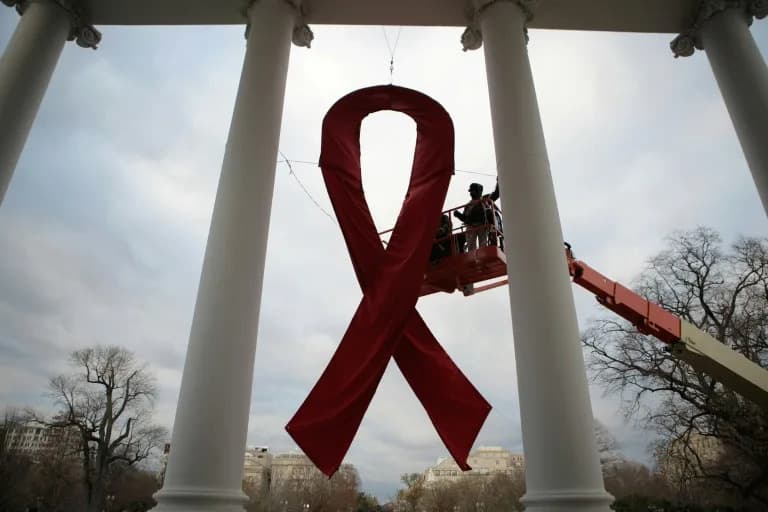
The stem cell transplant that can 'cure' HIV is only an option for patients who also have blood cancer (CHIP SOMODEVILLA)(CHIP SOMODEVILLA/GETTY IMAGES NORTH AMERICA/Getty Images via AFP)
A Norwegian man has been reported to be effectively cured of HIV after receiving a stem-cell transplant from his brother, doctors at Oslo University Hospital announced.
The 63-year-old, known in reports as the "Oslo patient," received the transplant in 2020 to treat a life-threatening blood disorder. His brother unexpectedly carried a rare mutation in the CCR5 gene that blocks many strains of HIV from entering cells, a genetic trait present in roughly 1% of people in northern Europe.
The patient had been living with HIV since 2006 and was diagnosed with myelodysplastic syndrome, a dangerous blood cancer, in 2017. Clinicians searched for a donor who could potentially treat both conditions; when an unrelated match was not found they selected his older brother. On the day of the transplant the team discovered the brother carried the CCR5 mutation.
"We had no idea... That was amazing," said Dr. Anders Eivind Myhre of Oslo University Hospital, lead author of the case report published in Nature Microbiology.
Two years after the transplant the patient stopped taking antiretroviral therapy (ART). Extensive testing of blood, gut tissue and bone marrow found no detectable HIV. "For all practical purposes, we are quite certain that he is cured," Myhre said, and the patient reports regained energy and improved well-being.
This is the first reported case in which a curative transplant came from a family member. Study co-author Marius Troseid of the University of Oslo said the donor's immune system appeared to have completely replaced the patient's immune cells — a replacement observed in both bone marrow and gut tissue for the first time in a cured patient.
Such transplants are high-risk and are performed only when patients need them to treat life-threatening blood cancers; they are not a practical cure for the millions living with HIV worldwide. Still, researchers believe studying rare successes like this can reveal key insights into HIV biology and help guide development of safer, more widely applicable cures.
The Oslo case adds to a small group of people — including the original "Berlin patient," Timothy Ray Brown, and several later reports from multiple cities — who have entered long-term remission of HIV following stem-cell transplants. Notably, recent reports suggest that remission can sometimes occur even when the donor does not carry two copies of the protective CCR5 mutation, underscoring that multiple biological mechanisms may contribute to cure in different cases.
"The Oslo patient is perhaps no longer a patient. At least he doesn't feel like it," Troseid said.
Help us improve.