Bahrain summoned Iraq’s charge d’affaires to deliver an official protest after repeated drone strikes launched from Iraqi territory struck the kingdom and other Gulf states, despite a recently announced US‑Iran ceasefire. The move, coming a day after Saudi Arabia’s similar action, reflects growing regional concern over Iran‑aligned groups operating in Iraq. Baghdad denies permitting such attacks and has offered to receive evidence to investigate and address the incidents promptly.
Bahrain Summons Iraqi Envoy After Repeated Pro‑Iranian Drone Strikes Despite US‑Iran Ceasefire
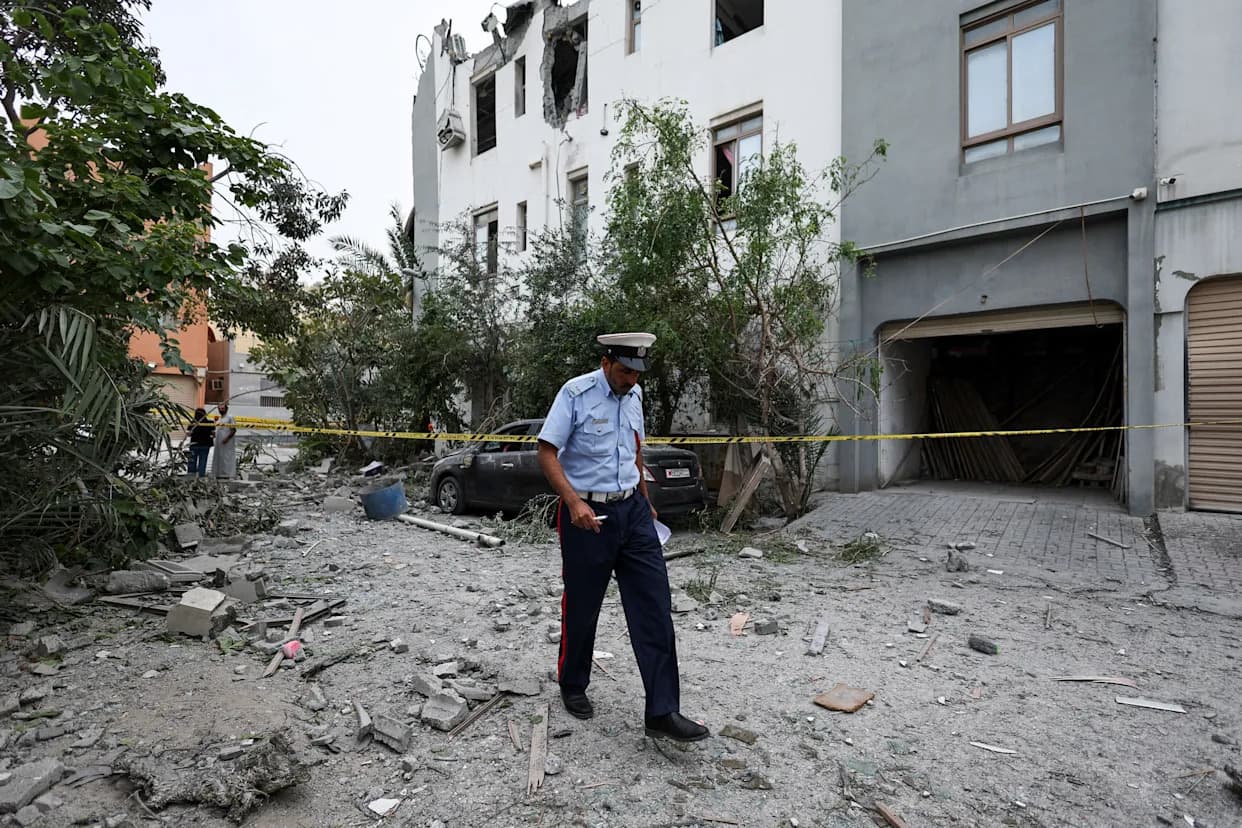
A police officer walks past a cordon tape near damaged buildings in Sitra, Bahrain, on April 4, 2026 [Hamad I Mohammed/Reuters]
Bahrain summoned Iraq's charge d’affaires on Monday to protest a series of drone attacks launched from Iraqi territory that struck the kingdom and other states in the Gulf, actions that have continued despite a recently announced US‑Iran ceasefire.
The move followed a similar diplomatic action by Saudi Arabia a day earlier, underscoring growing regional alarm over the activities of Iran‑aligned armed groups operating inside Iraq and complicating Baghdad’s efforts to rebuild ties with its Arab neighbours.
Official Protest Delivered
Bahrain’s Ministry of Foreign Affairs, cited by the state news agency BNA, said Abdullah bin Ali Al Khalifa, Director General of Bilateral Relations, handed an official protest note to the Iraqi charge d’affaires, Ahmed Ismail Al‑Karawi. The diplomatic note called on Baghdad to address “these threats and attacks urgently and responsibly.”
Last month, Bahrain joined Jordan, Kuwait, Qatar, Saudi Arabia and the United Arab Emirates in a joint statement demanding that Baghdad take immediate steps to prevent attacks from Iraqi territory by Iran‑aligned groups.
Baghdad’s Response
Iraq has rejected the use of its territory to target Gulf states or Jordan and says it is taking necessary measures “in accordance with the constitution and the law.” Baghdad has also offered “full readiness” to receive any information or evidence about the strikes so they can be addressed “responsibly and swiftly.”
Wider Context
Amid a broader regional confrontation involving the United States, Israel and Iran, Iraq has increasingly been used as a launch area for secondary attacks: Iran‑aligned groups in the country have repeatedly targeted Gulf states and Jordan with drones and missiles. US interests in Iraq, including the embassy compound in Baghdad, have also been targeted.
Iran‑aligned groups in Iraq publicly committed to a two‑week Iran‑US ceasefire that went into effect at dawn on Wednesday and said they would suspend actions toward the Gulf states. Nevertheless, within hours of that announcement several Gulf countries reported further missile and drone strikes on their territory.
Implications
The continued cross‑border attacks are testing Iraq’s delicate diplomatic recovery with its Arab neighbours and heightening pressure on Baghdad to demonstrate it can prevent militias from using its soil as a springboard for regional strikes.
Help us improve.