Colombia announced it will raise import tariffs on goods from Ecuador to 100 percent, matching a move Quito made a day earlier as trade and diplomatic tensions escalate. Ecuador cited a trade deficit and alleged Colombian laxity on drug trafficking; Colombia denies the claims and points to recent anti-narcotics operations. Colombian Trade Minister Diana Morales said diplomatic channels were exhausted before the countermeasures took effect immediately. The dispute is intensified by political clashes between Presidents Daniel Noboa and Gustavo Petro and related security allegations near the border.
Colombia Retaliates: Raises Import Tariffs on Ecuador to 100% Amid Escalating Diplomatic Spat
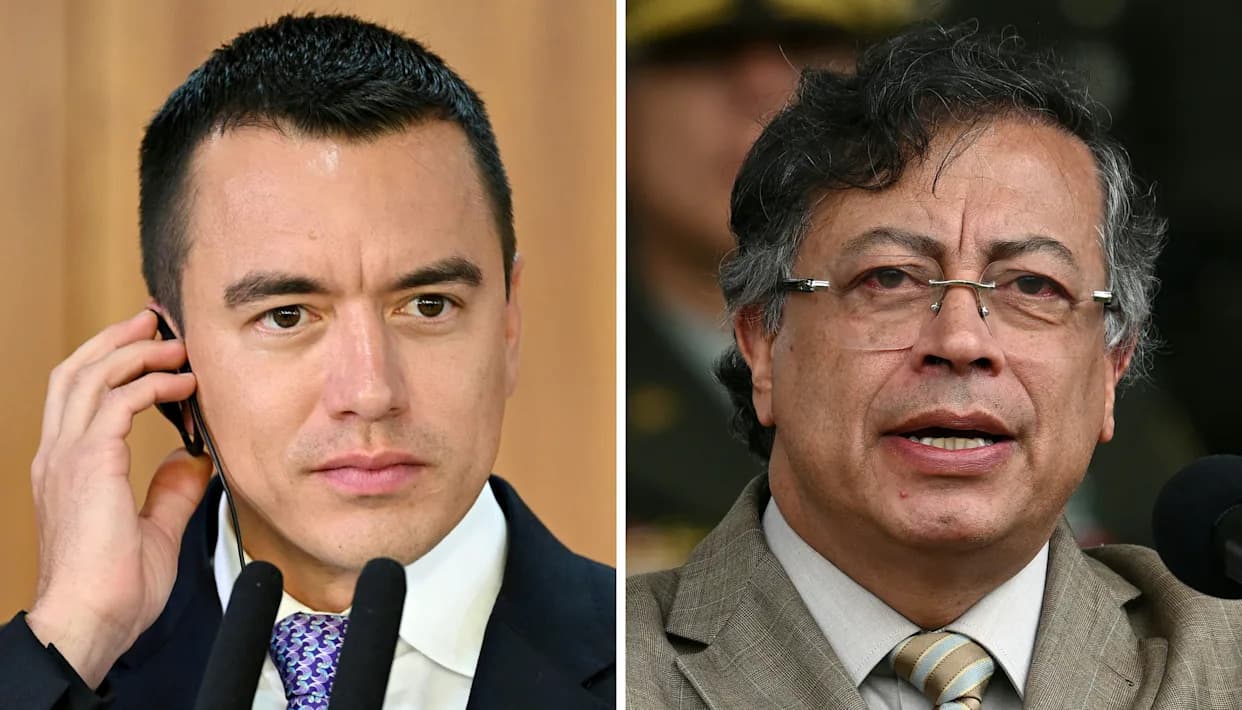
Ecuador's President Daniel Noboa has had strained relations with his Colombian counterpart, Gustavo Petro [AFP]
Colombia's Ministry of Commerce, Industry and Tourism announced on Friday that it will raise tariffs on imports from neighbouring Ecuador to 100 percent, up from the previous 30 percent rate. The measure mirrors a decision Quito made a day earlier and marks a sharp escalation in a growing trade and diplomatic dispute between the two countries.
The tariff increase comes after months of reciprocal trade measures. Ecuador said it raised duties because of a persistent trade deficit with Colombia and accused Bogotá of not doing enough to curb drug trafficking across the border. Colombia rejects those accusations and points to recent military operations and law-enforcement successes.
Colombian authorities stressed their anti-narcotics efforts. Officials noted that last November Colombia intercepted the largest drug shipment seized in a decade as evidence of its commitment to combating illicit trafficking.
The dispute is also fueled by political tensions between Ecuadorian President Daniel Noboa and Colombian President Gustavo Petro. This week Noboa criticized Petro's comments on the imprisonment of former Ecuadorian vice president Jorge Glas, calling them an "assault on our sovereignty." Petro has described Glas as a "political prisoner" and urged Glas's transfer to Colombian custody; Glas was convicted of corruption in Ecuador.
Petro additionally accused Noboa of ordering a bombing near the Colombian border without coordinating with Bogotá; local reports said charred bodies were recovered from the scene. Both governments have exchanged strong public statements amid growing mutual distrust.
Diana Morales, Colombia's Trade Minister, said: "We have exhausted all diplomatic efforts and kept channels of dialogue open with the government of Ecuador, seeking a solution that benefits both countries, businesses, and above all, the communities on both sides of the border. However, we have not received a positive response."
Morales added that Colombia's countermeasures would take effect immediately. The move is likely to increase economic pressure on border communities and could further complicate ongoing diplomatic efforts to de-escalate the dispute.
What Happens Next
Analysts say both nations may face economic fallout if the tit-for-tat tariffs remain in place, particularly for small businesses and cross-border trade. Diplomats from both capitals — and possibly regional partners — may be called upon to mediate if tensions continue to rise.
Help us improve.