
At the Reagan Institute, Dutch Prime Minister Mark Rutte said some NATO allies were "a bit slow" to provide logistical support after a U.S. strike on Iran, while emphasizing they had no prior knowledge of the action. Rutte, who met President Trump at the White House the day before, said most European partners are now responding to U.S. requests. Nevertheless, no European state has pledged military backing if the U.S. seeks to reopen the Strait of Hormuz by force, and Spain recently closed its airspace to related U.S. operations.
Rutte: Some NATO Allies 'A Bit Slow' to Back U.S. After Strike on Iran
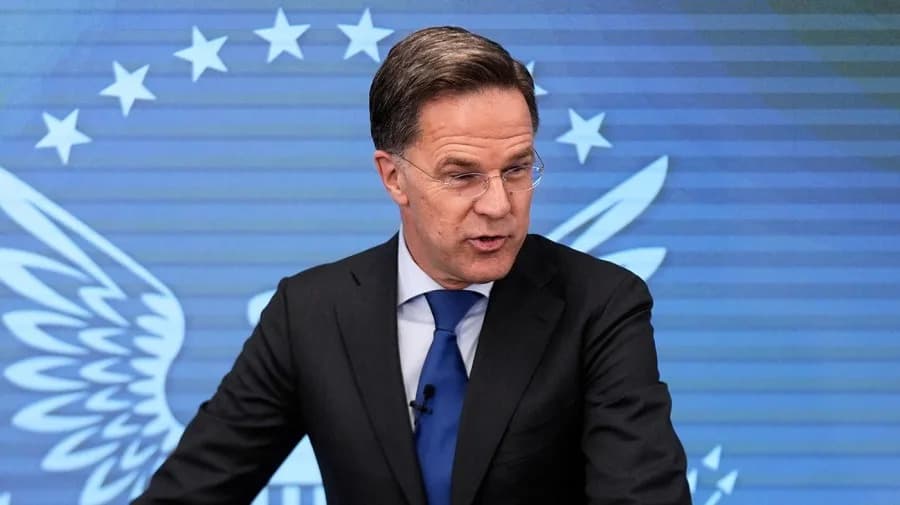
Rutte says NATO allies ‘were a bit slow, to say the least’ on Iran war
Dutch Prime Minister Mark Rutte said Thursday that a number of NATO allies were "a bit slow, to say the least," in providing logistical and other support to the United States after Washington carried out a strike against Iran. He stressed, however, that allied governments were not informed of the kinetic action against Tehran in advance.
Speaking at the Reagan Institute in Washington, D.C., Rutte said: "When it came time to provide the logistical and other support the United States needed in Iran, some allies were a bit slow, to say the least." He added that "nearly without exception, allies are doing everything" Washington has requested and that member states have "heard and are responding to President Trump's requests."
Rutte's remarks followed a White House meeting the previous day with President Donald Trump. The meeting came amid renewed public criticism from Mr. Trump that NATO did not sufficiently support the U.S. during the early phase of the military operation dubbed Operation Epic Fury.
Trump on Truth Social: "NATO WASN'T THERE WHEN WE NEEDED THEM, AND THEY WON'T BE THERE IF WE NEED THEM AGAIN. REMEMBER GREENLAND, THAT BIG, POORLY RUN, PIECE OF ICE!!!"
Rutte said he sensed the president's disappointment that some allies had not stood more firmly with the U.S., but emphasized that most European partners have complied with Washington's requests. "I sensed his disappointment about the fact that he felt that too many allies were not with him," Rutte said, adding that he told Mr. Trump the "majority of Europeans have done what the U.S. asked."
Despite those assurances, no European government has publicly committed to providing military support if the United States were to attempt to reopen the Strait of Hormuz by force. Separately, Spain closed its airspace at the end of March to U.S. military aircraft involved in offensive operations related to Iran.
The comments highlight growing tensions within the transatlantic alliance over burden-sharing and political support for U.S. military initiatives in the Middle East. Rutte's intervention underlines both the strain and the continued diplomatic engagement between NATO partners and the United States.
Help us improve.





















