Benin holds a presidential election on April 12 as outgoing President Patrice Talon leaves office after ten years of strong economic growth but growing insecurity in the north. Finance Minister Romuald Wadagni is the government-backed favorite while critics say electoral rules and recent constitutional changes have sidelined opposition rivals. Rights groups warn of a tightening clampdown on dissent, and a failed coup in December underscored rising political and security tensions.
Benin Votes April 12 as Security Worsens and Critics Say Opposition Has Been Sidelined
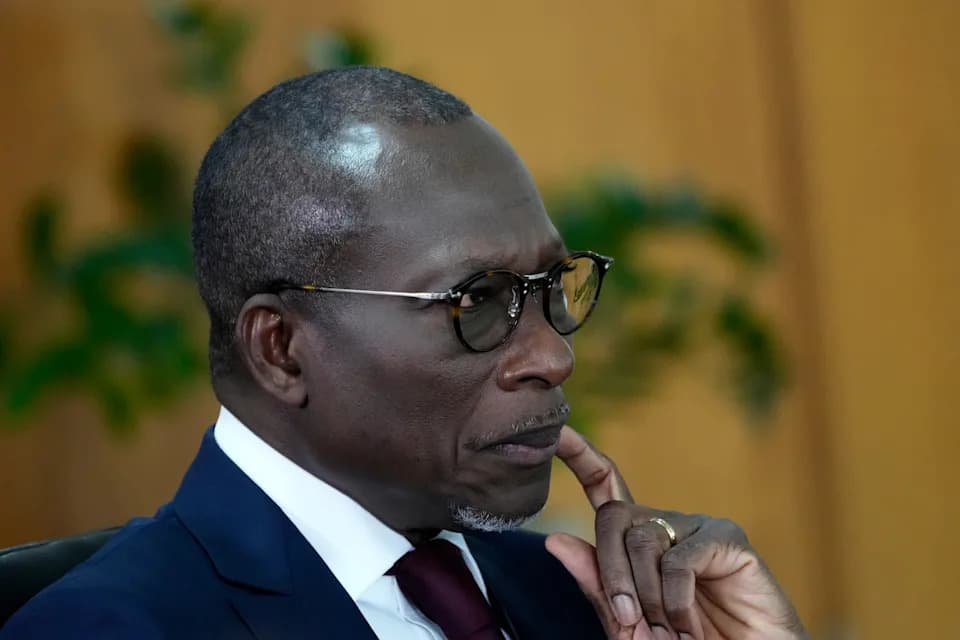
FILE - Benin's President Patrice Talon attends a meeting with Brazilian President Luiz Inacio Lula da Silva at Planalto presidential palace, in Brasilia, Brazil, May 23, 2024. (AP Photo/Eraldo Peres, File)(ASSOCIATED PRESS)
Voters across Benin are going to the polls on April 12 to elect a new president as outgoing leader Patrice Talon steps down after a decade in power marked by strong economic growth but rising insecurity in the north and increasing complaints about restrictions on political opposition and dissent.
Front-Runner, Opposition and Parliamentary Context
Romuald Wadagni, 49, the finance minister and the candidate endorsed by the governing coalition, is widely seen as the frontrunner. He faces Paul Hounkpè, the only remaining opposition candidate on the ballot after several rivals were excluded.

FILE - Benin's Economy and Finance Minister Romuald Wadagni, left, and German Chancellor Angela Merkel shake hands prior to a meeting at the chancellery as part of the "Compact with Africa" conference, in Berlin, Nov. 19, 2019. (AP Photo/Michael Sohn, File)(ASSOCIATED PRESS)
In January’s parliamentary vote the opposition failed to meet the 20% threshold required to win seats, leaving Talon’s allied parties in control of all 109 seats in the National Assembly and giving the governing bloc a substantial advantage heading into the presidential contest.
Allegations of Political Exclusion
Renaud Agbodjo, leader of The Democrats, was barred from the presidential race after not obtaining the required number of parliamentary endorsements — a rule critics contend was engineered to keep challengers out. Human rights groups and opposition figures accuse the government of using legal and electoral changes since 2016 to sideline rivals and weaken democratic checks.
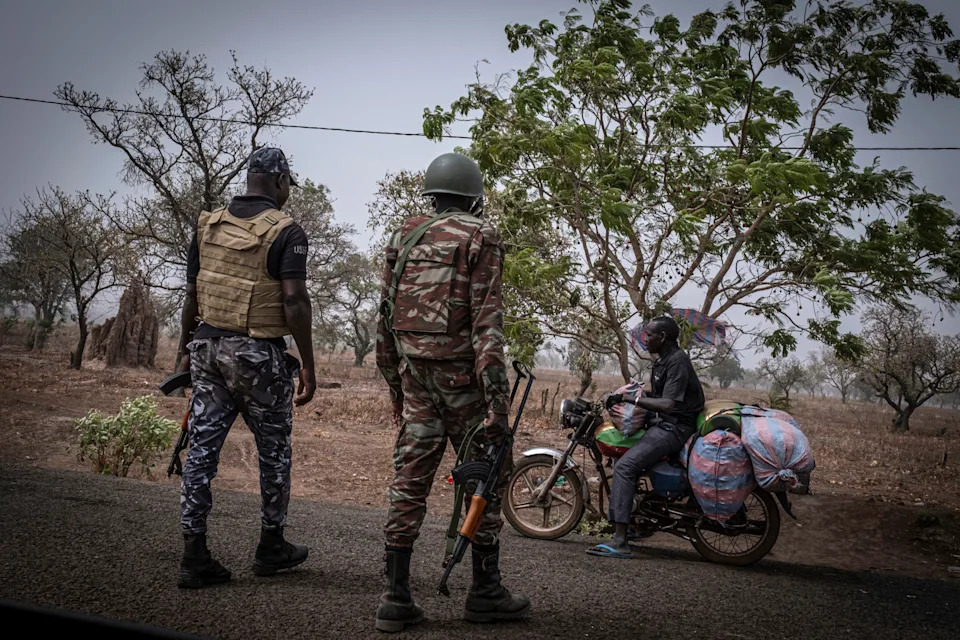
FILE - A police officer and a soldier from Benin stop a motorcyclist at a checkpoint, outside Porga, Benin, March 26, 2022. (AP Photo/ Marco Simoncelli, File)(ASSOCIATED PRESS)
“Ten years at the Finance Ministry have given him something rare in African politics: a quantified record — verifiable and difficult to dismantle in a serious debate,”
Economy and Voter Priorities
Wadagni’s campaign emphasizes Benin’s economic performance during his decade as finance minister. The International Monetary Fund reported 7% GDP growth last year, and under Talon the country saw sustained expansion driven by agriculture, trade and a major port expansion in Cotonou that boosted Benin’s role as a transit hub for landlocked neighbors. Infrastructure projects have also accelerated.
But growth has not been evenly shared: poverty remains widespread in rural areas and in the poorer northern regions. Many voters cited access to health care, education, jobs and fairer distribution of wealth as top concerns.
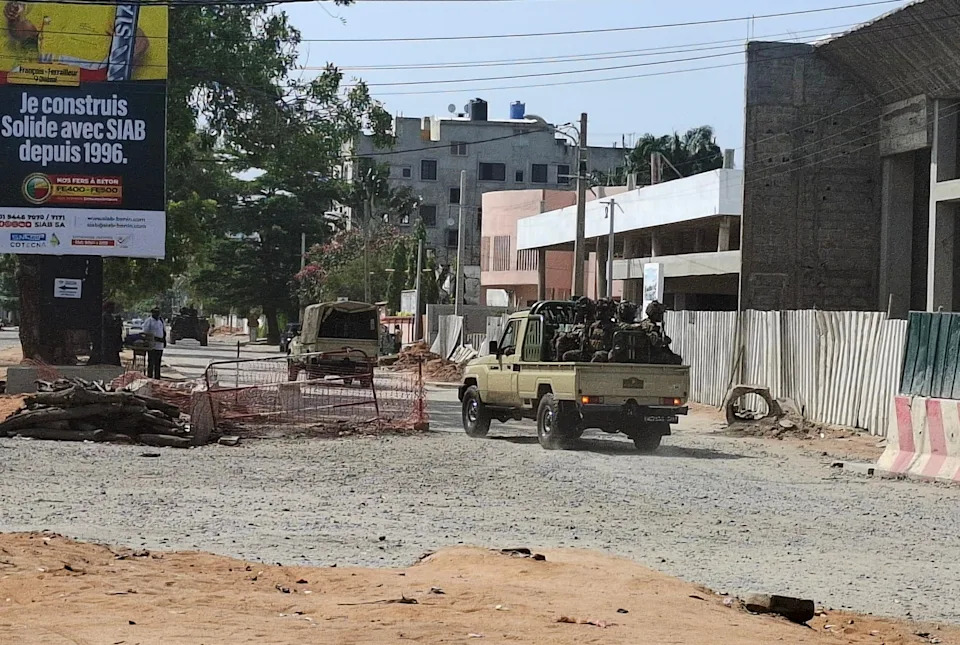
FILE - Soldiers ride in a military vehicle along a street amid an attempted coup, in Cotonou, Benin, Dec. 6, 2025. (AP Photo, File)(ASSOCIATED PRESS)
Security Challenges and a Foiled Coup
Security in northern Benin has worsened in recent years amid spillover from violence in neighboring Burkina Faso and Niger linked to the al-Qaida-affiliated Jama’at Nusrat al-Islam wal-Muslimin (JNIM). Last year militants attacked military posts, killing dozens of soldiers, and in December a group of officers staged a failed coup attempt against the government.
Analysts say the failed coup undercuts the outgoing administration’s stability narrative but may also push some voters toward continuity out of caution.

FILE - A woman casts her vote at a polling station during an election, in Seme Podji, Benin, March 6, 2016. (AP Photo/Virgile Ahissou, File)(ASSOCIATED PRESS)
Democratic Backlash and International Concerns
In November, constitutional reforms extended presidential terms from five to seven years, created a partly presidential-appointed senate and raised thresholds for parties to enter parliament. Amnesty International and Human Rights Watch have criticized what they call a sustained crackdown on dissent, citing arbitrary arrests, limits on public demonstrations and pressure on independent media.
What Happens Next
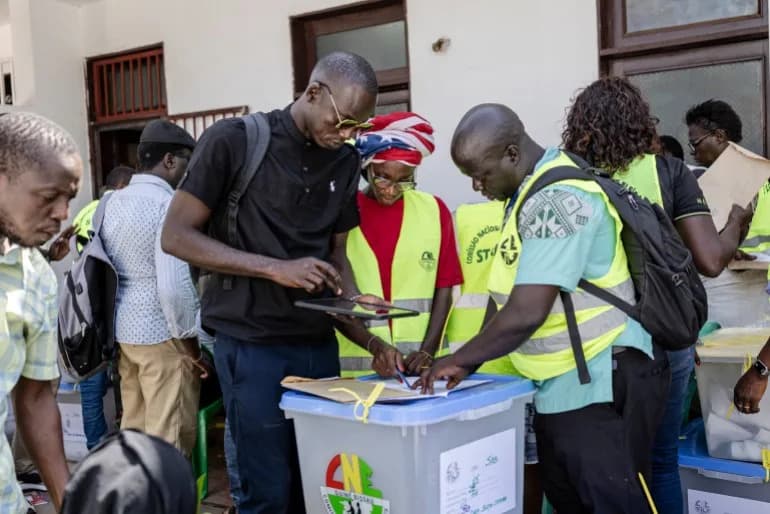
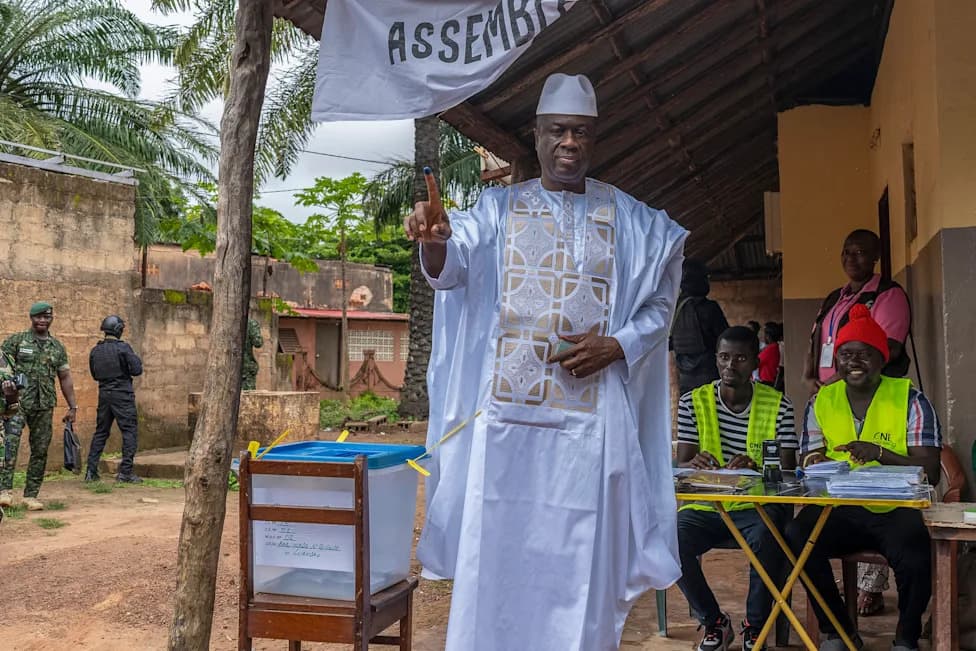
The first round is set for April 12. A candidate must secure at least 50% of the vote to win outright; otherwise a runoff between the top two contenders will be held on May 10. Nearly 8 million people are eligible to vote.
Mark Banchereau reported from Dakar, Senegal.
Help us improve.