Karoline Leavitt struggled to explain conflicting reports about a two-week ceasefire brokered by President Trump. Iranian state media said Tehran had closed the Strait of Hormuz again after Israeli strikes in Lebanon, even as the White House insisted traffic had increased. Iran’s parliamentary speaker accused the U.S. of violating key points of Tehran’s proposal — including disputes over uranium enrichment — highlighting how fragile the pause is and the potential risks to global oil flows.
Ceasefire in Peril: Leavitt Struggles to Explain Conflicting Claims Over Strait of Hormuz and Lebanon
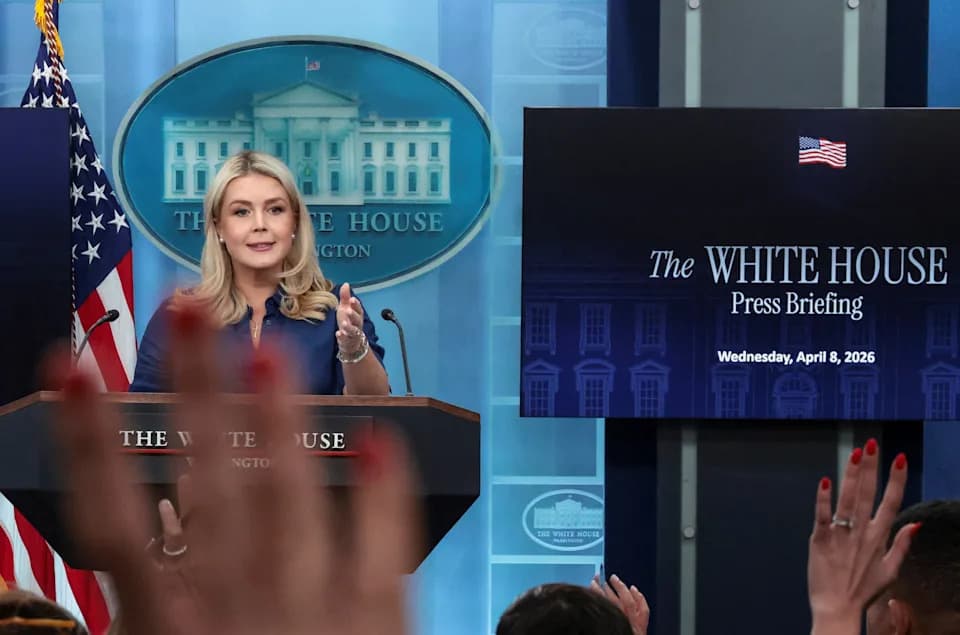
U.S. White House Press Secretary Karoline Leavitt takes questions from the media during a press briefing in the James S. Brady Press Briefing Room at the White House in Washington, D.C., U.S., April 8, 2026. REUTERS/Evelyn Hockstein / Evelyn Hockstein / REUTERS
White House press secretary Karoline Leavitt faced criticism after struggling to reconcile conflicting reports about a fragile two-week ceasefire brokered by President Donald Trump. Less than a day after both sides agreed to pause hostilities to begin negotiations, questions surfaced over the status of the strategically vital Strait of Hormuz and ongoing Israeli strikes inside Lebanon.
Conflicting Claims Over the Strait
Trump hailed a "golden age" after declaring the Strait open, but Iranian state media reported that Tehran had again closed the critical oil chokepoint in response to Israeli attacks in Lebanon. The Strait of Hormuz typically handles roughly 20% of the world’s seaborne oil flows, making any disruption a serious global economic risk.
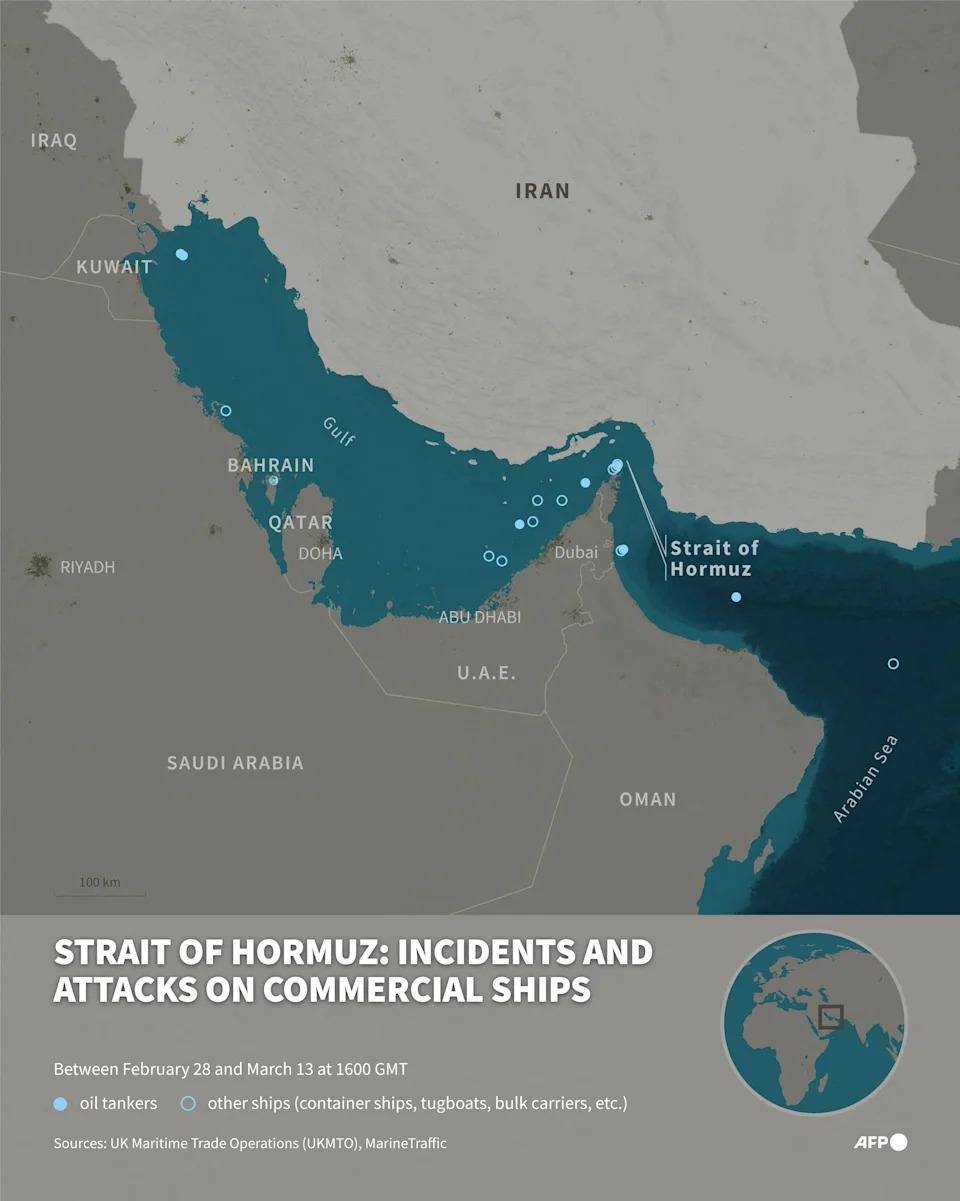
SABRINA BLANCHARD,LUCA MATTEUCCI / AFP via Getty Images
Press Briefing Highlights Confusion
When pressed at a Wednesday briefing, Leavitt described the reports as "completely unacceptable" while also insisting they were not true, then added that officials were monitoring developments "minute by minute." "This is a case of what they’re saying publicly is different privately," she said, and reiterated the President’s demand that "the Strait of Hormuz is reopened immediately, quickly, and safely."
"We have seen an uptick of traffic in the Strait today, and I will reiterate the President’s expectation and demand: that the Strait of Hormuz is reopened immediately, quickly, and safely." — Karoline Leavitt
Dispute Over Lebanon’s Role
Tension rose further when Iran and Pakistan — which assisted the U.S. in brokering the pause — said ending the war in Lebanon was part of the agreement, while Israel denied that claim and continued strikes. Asked about the discrepancy, Leavitt sided with Israel, telling reporters: "Lebanon is not part of the ceasefire."
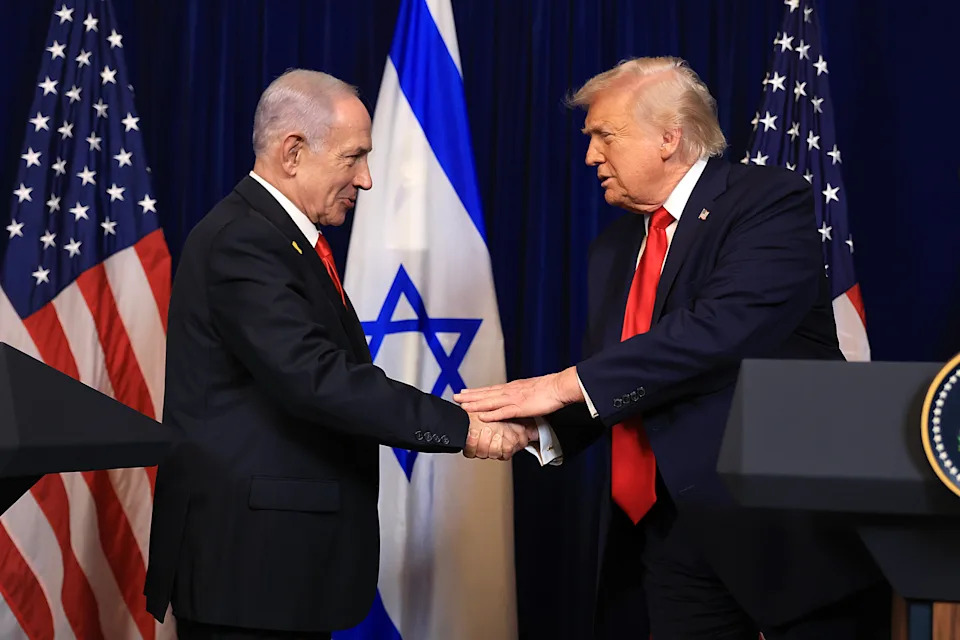
Trump ordered the attack on Iran after weeks of lobbying by Netanyahu, according to the Washington Post. / Joe Raedle / Getty Images
Accusations From Tehran
Iran’s parliamentary speaker, Mohammad Bagher Ghalibaf, accused the U.S. of violating three elements of Iran’s 10-point proposal: continued Israeli attacks in Lebanon, the incursion of a drone into Iranian airspace, and denial of Iran’s right to enrich uranium. That last point contradicts the administration’s stated red line: U.S. officials have repeatedly said they will not permit Iran to resume uranium enrichment if it leads to a weapons program.
Leavitt maintained that preventing enrichment is a top priority: "That is a red line that the president is not going to back away from, and he’s committed to ensuring that takes place."
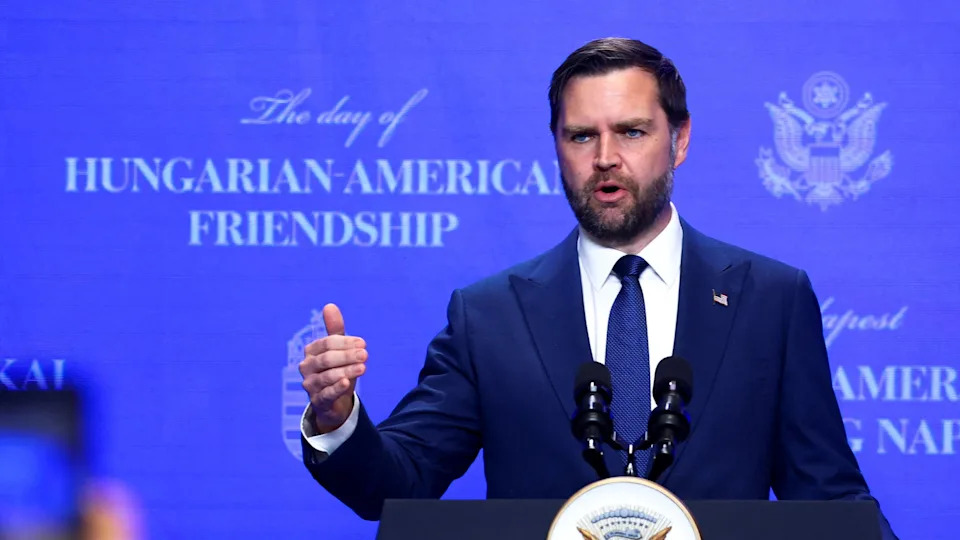
U.S. Vice President JD Vance holds a joint press conference with Hungarian Prime Minister Viktor Orban (not pictured), in Budapest, Hungary, April 7, 2026. REUTERS/Bernadett Szabo / Bernadett Szabo / REUTERS
Political and Strategic Stakes
The pause was touted by the administration as a diplomatic win, but the fighting has already taken a domestic toll: reports link the broader conflict to the deaths of 13 U.S. service members, higher gasoline prices and political strain for Republican leaders ahead of the midterm elections. Critics — including some of Trump’s allies — warn the temporary truce may have given Iran leverage it did not previously exercise.
Former National Security Council coordinator Brett McGurk warned that Iranian control over the Strait would be a global problem: "Now they’re saying ‘yes, we control it and we will meter it depending on what we, Iran, decide. That is a bad outcome, not just for the Middle East but for the world."
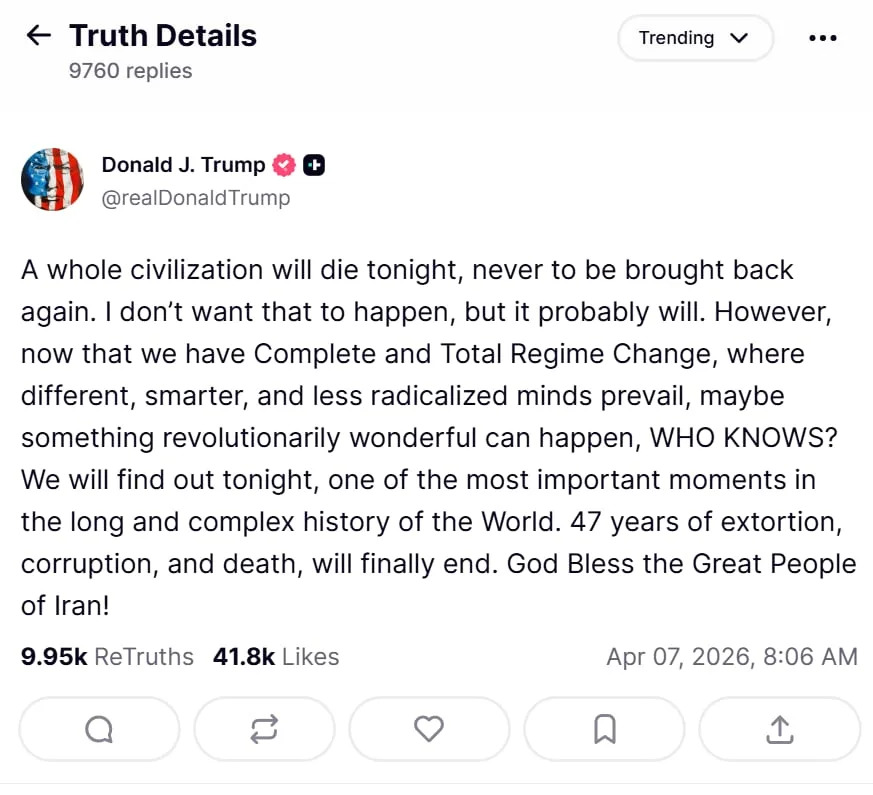
The president launched into a full-blown genocide level threat against Iran in his Truth Social Post. / Truth Social/ Donald Trump
Rhetoric and Deadlines
Both sides agreed to the ceasefire hours before a Tuesday 8 p.m. deadline set by Trump, who had posted an apocalyptic warning on Truth Social: "A whole civilization will die tonight, never to be brought back again. I don’t want that to happen, but it probably will." Reporters pressed Leavitt on how such language squares with claims of moral high ground; she defended the president, calling any suggestion otherwise "frankly insulting."
Vice President J.D. Vance, who will take a key role in upcoming negotiations, dismissed Ghalibaf’s comments as confusing, saying: "There are things that he said that, frankly, didn’t make sense in some of the context of negotiations that we’ve had."
The situation remains fluid. The competing public statements, disputed interpretations of the ceasefire’s scope, and contradictory reports about the Strait of Hormuz underscore how tenuous the pause is and how quickly regional tensions could reignite with global economic consequences.
Help us improve.