Daily NASA-processed satellite images show a 16% net rise in global nighttime light from 2014–2022, but the trend is uneven. Rapid urbanization and rural electrification drove major brightening in sub-Saharan Africa and Southeast Asia, while Europe recorded a 4% net dimming due to LED adoption and dark-sky policies. Abrupt light losses in countries such as Ukraine, Lebanon and Yemen were linked to conflict and infrastructure collapse; the United States remained the most luminous country, with a 6% net increase.
Satellite Data: Earth’s Night Lights Rose 16% From 2014–2022 — But Patterns Vary Widely
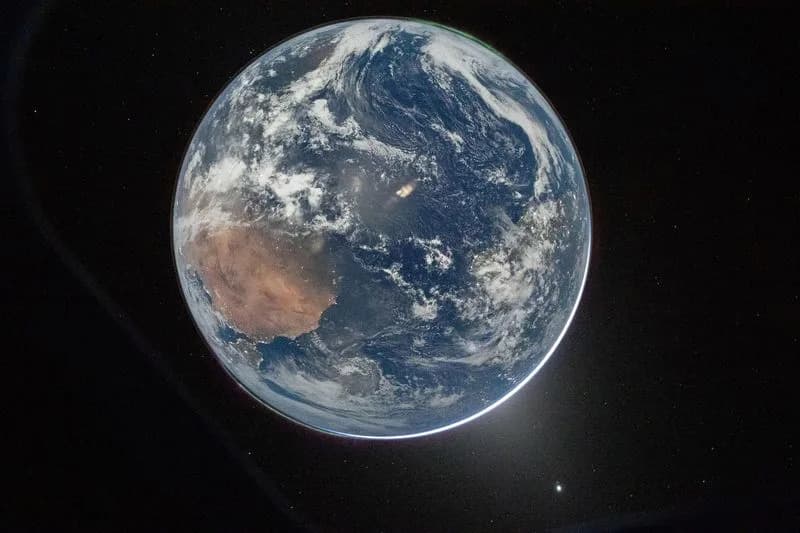
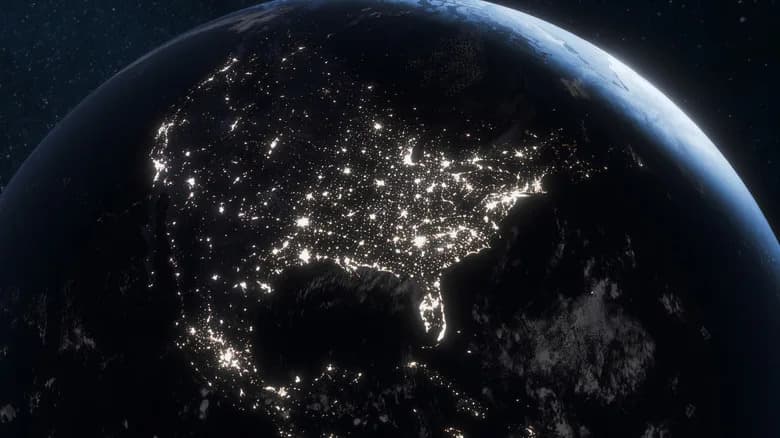
A view of Earth taken by NASA astronaut and Artemis II Commander Reid Wiseman from one of the Orion spacecraft’s window after completing the translunar injection burn on April 2, 2026. NASA/Handout via REUTERS
Daily satellite observations processed by NASA show that global nighttime lighting increased by 16% between 2014 and 2022—but that rise is far from uniform. Some regions are brightening rapidly as electricity reaches previously dark areas, while others are dimming deliberately or abruptly because of policy changes, infrastructure failures and conflict.
Key Findings
Researchers analyzed more than one million daily images from a U.S. government Earth-observation satellite to create a high-resolution picture of global night lights. The study, published in Nature, found a 16% net increase in nighttime radiance over the study period. The United States was the most luminous country in 2022, followed by China, India, Canada and Brazil.
What’s Driving Brightening
The strongest increases occurred in emerging economies, especially across sub-Saharan Africa and Southeast Asia. Rapid urbanization, infrastructure expansion and rural electrification were the main drivers. Countries with the most pronounced brightening included Somalia, Burundi and Cambodia, with notable gains also in Ghana, Guinea and Rwanda. As Zhe Zhu, the study’s senior author, put it: "This isn't just urbanization. It is a massive expansion of energy access."
Why Some Places Dimmed
Dimming happened for two distinct reasons. Sudden, dramatic drops in light usually aligned with natural disasters, wide-scale power outages and armed conflict—examples include Lebanon, Ukraine, Yemen and Afghanistan. More gradual, deliberate dimming occurred in many European countries because of policies and technology shifts: replacement of older high-pressure sodium streetlights with directional, energy-efficient LEDs, national energy mandates and dark-sky conservation efforts. Europe recorded a net 4% decrease in nighttime radiance.
Regional Patterns And The U.S. Case
The United States registered a 6% net increase overall. Regionally it was mixed: the West Coast generally brightened with population and economic growth, while much of the East Coast and Midwest dimmed—driven by urban de-densification, industrial decline in some areas and adoption of smart, energy-saving municipal lighting programs in cities such as Washington, D.C., and Chicago.
Methods And Importance
Unlike previous studies that relied on annual or monthly composite imagery, this analysis used daily data, revealing shorter-term volatility: lighting footprints expand, contract and shift over months and years. The data help distinguish long-term development trends from sudden disruptions caused by conflict, disasters or grid failure.
Impacts And Policy Implications
Nighttime illumination has wide-ranging consequences. Light pollution affects nocturnal wildlife, migratory patterns and human circadian rhythms. The study highlights trade-offs for policymakers: expanding safe, reliable electricity supports development and wellbeing, while targeted policies and technologies can reduce needless light waste and ecological harm.
"The Earth's nightscape is actually highly volatile. The planet's lighting footprint is constantly expanding, contracting and shifting," said Zhe Zhu, director of the Global Environmental Remote Sensing Laboratory at the University of Connecticut. Christopher Kyba of Ruhr University Bochum noted that deliberate measures—such as turning off streetlights late at night—may spread beyond France and other early adopters.
Overall, the research provides a more nuanced, time-sensitive view of how human activity shapes the planet's nightscape and offers actionable insights for planners balancing electrification, energy conservation and environmental protection.
Help us improve.