Japan’s Kanamara festival near Tokyo paraded oversized phallic shrines and sold novelty items as attendees celebrated fertility and sought to reduce stigma around sex. The event recalls an Edo-period legend and centers on a three-foot black steel phallus at Kanayama Shrine, which is associated with fertility and protection from STIs. Organisers say the ritual now focuses on openness and understanding; meanwhile, Japan reported 705,809 births in 2025, a 2.1% decline from 2024.
Japan’s Kanamara Festival Parades Giant Phalluses to Destigmatize Sex
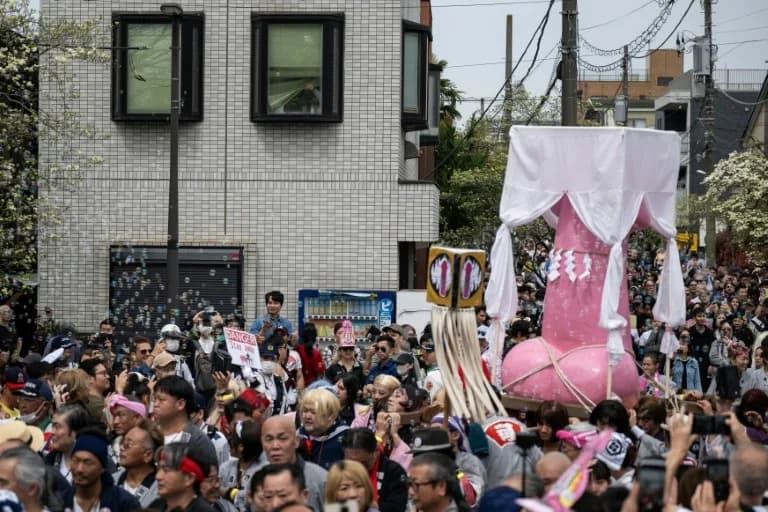
Showcasing phallus-shaped portable shrines and pink penis candies, Japan's annual fertility festival teemed with tourists, couples and families (Andrew CABALLERO-REYNOLDS)(Andrew CABALLERO-REYNOLDS/AFP/AFP)
The annual Kanamara festival, held near Tokyo, brought colourfully dressed devotees, tourists and families into the streets on Sunday to celebrate fertility and challenge stigma around sexuality. The event is best known for parading oversized phallic portable shrines and selling novelty items such as pink phallus-shaped candies and souvenirs.
Origins and Shrine
According to local legend, the festival commemorates a blacksmith from the Edo Period (1603–1868) who forged an iron implement to defeat a sharp‑toothed demon said to have lived inside a woman and harmed newlyweds. Today a three-foot (one-metre) black steel phallus stands in the courtyard of the Kanayama Shrine, which is dedicated to Shinto deities associated with fertility, childbirth and protection from sexually transmitted infections.
Ritual, History And Purpose
Over the centuries, sex workers and others traditionally visited the shrine seeking protection. The festival has since evolved into a broader fertility rite and a public effort to remove shame around sex and reproduction. Organisers and shrine officials say the event aims to promote openness and understanding rather than simple spectacle.
"I hope the festival can help disabuse people of the notion that sex is a bad, dirty thing," said Hiroyuki Nakamura, the chief priest at the shrine.
Context And Attendance
The festival attracts a wide audience — international tourists, families with children and LGBTQ supporters among them — many of whom describe the atmosphere as playful yet meaningful. Visitors noted that, while the imagery is explicit, the overall tone feels wholesome and educational rather than vulgar.
In February, preliminary data from Japan's Health Ministry showed the country's birth count fell for the 10th consecutive year in 2025. A total of 705,809 babies were born that year, a decline of 2.1 percent from 2024. The figures cover births to Japanese nationals in Japan, foreign births in Japan and babies born to Japanese nationals overseas.
Whether seen as a cultural curiosity, a religious observance, or a deliberate attempt to destigmatize sex, the Kanamara festival continues to draw attention both at home and abroad for its frank—and celebratory—approach to issues of fertility, health and community.
Help us improve.