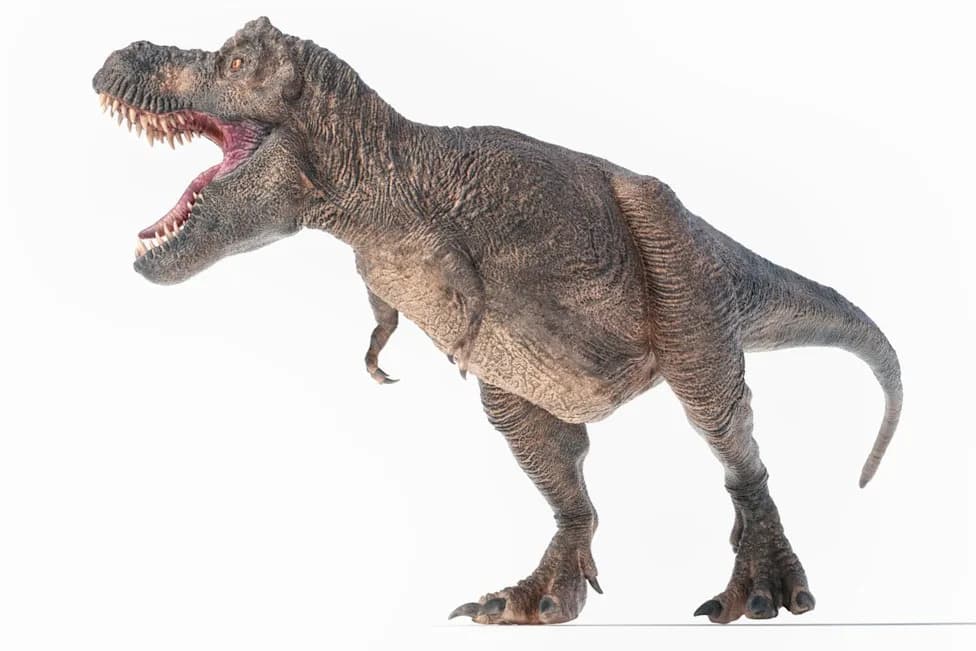
Scientists and designers in Amsterdam revealed a teal handbag made using collagen traced to T. rex fossil fragments to illustrate advances in lab-grown leather. The one-off piece was displayed beneath a replica T. rex at the Art Zoo museum and is due to be auctioned with a reported starting price above $500,000. Project leaders say ancient protein fragments were used to grow collagen in modern cells, while paleontologists warn fossil collagen is fragmented, bone-derived and cannot recreate original dinosaur skin or leather fibre structure.
T. Rex Collagen Handbag Unveiled in Amsterdam — A Provocative Showcase of Lab-Grown Leather

People react near a handbag made with T. rex fossil-derived collagen on display at Museum ArtZoo in Amsterdam, Netherlands, April 2, 2026. REUTERS/Piroschka van de Wouw
AMSTERDAM, April 2 (Reuters) - Scientists and designers on Thursday unveiled a teal handbag produced using collagen traced to Tyrannosaurus rex fossils from the United States, a one-off creation intended to spotlight the possibilities — and limits — of laboratory-grown leather.
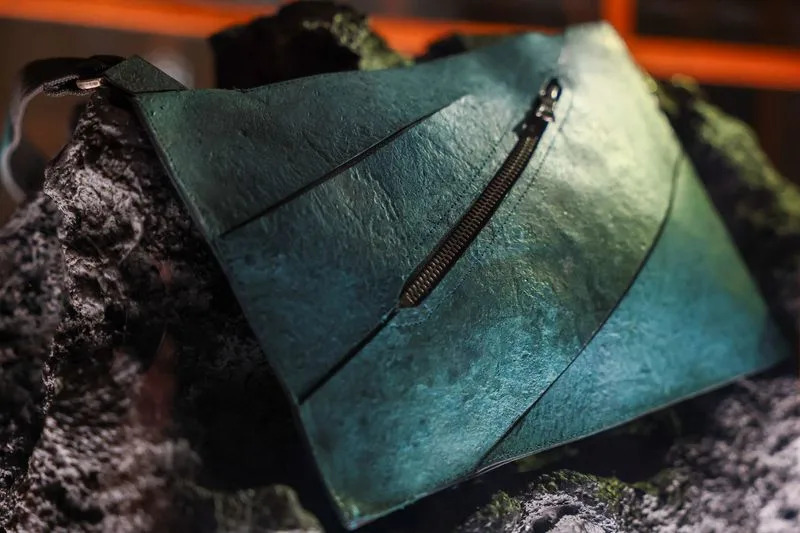
A handbag made using T. rex fossil-derived collagen is on display at Museum ArtZoo in Amsterdam, Netherlands, April 2, 2026. REUTERS/Piroschka van de Wouw
The bag was displayed on a rock inside a cage beneath a replica T. rex at Amsterdam's Art Zoo museum. Organisers say it will be auctioned next month with a reported starting price of more than half a million dollars.
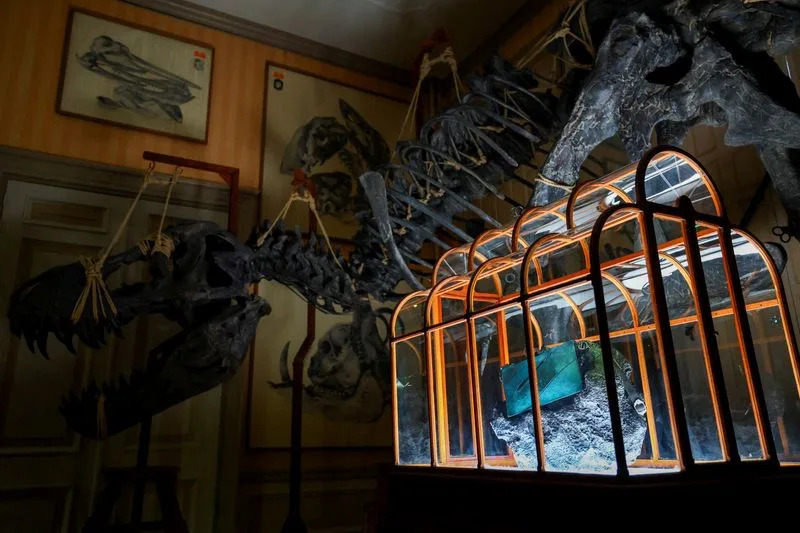
A handbag made using T. rex fossil-derived collagen is on display at Museum ArtZoo in Amsterdam, Netherlands, April 2, 2026. REUTERS/Piroschka van de Wouw
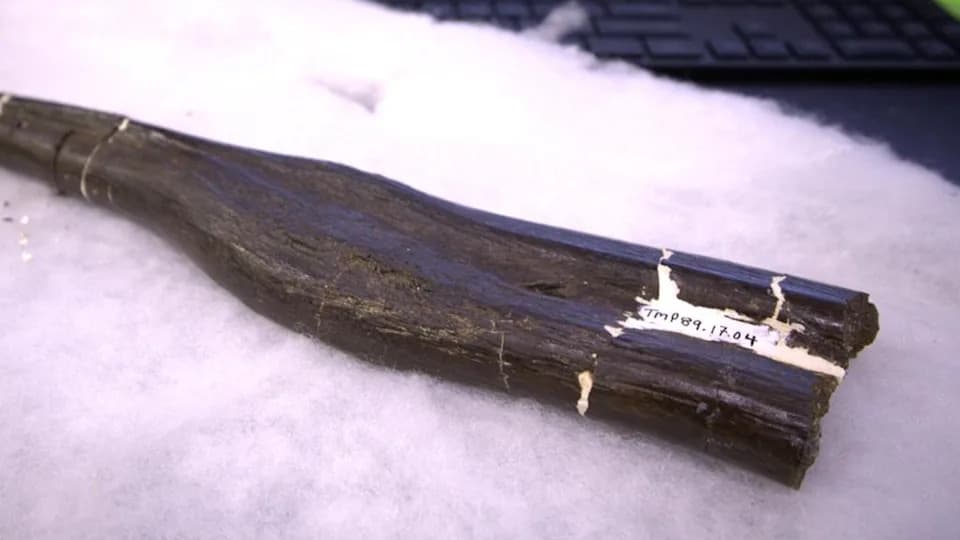
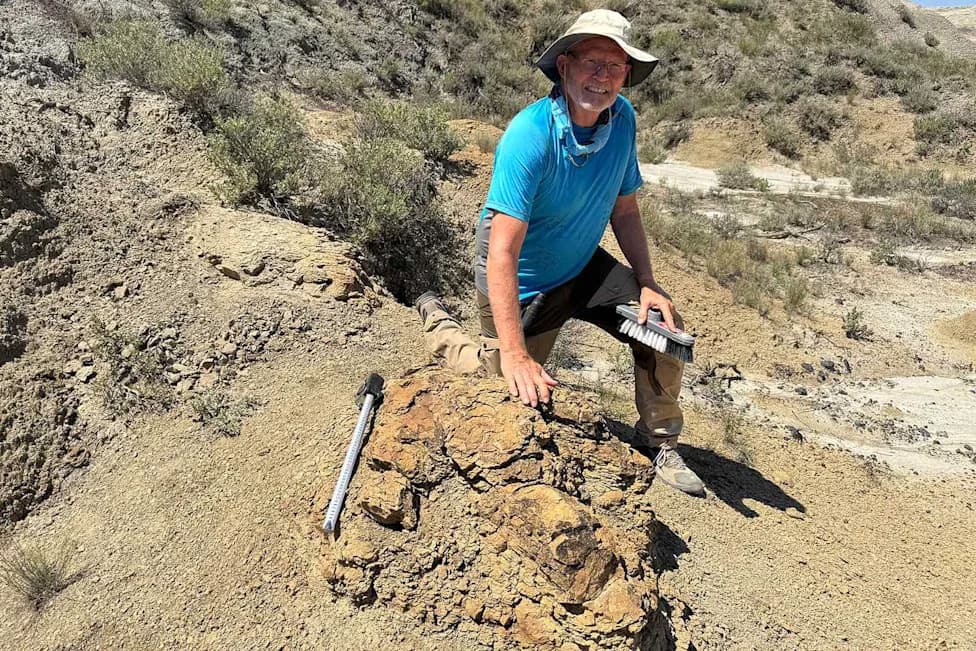
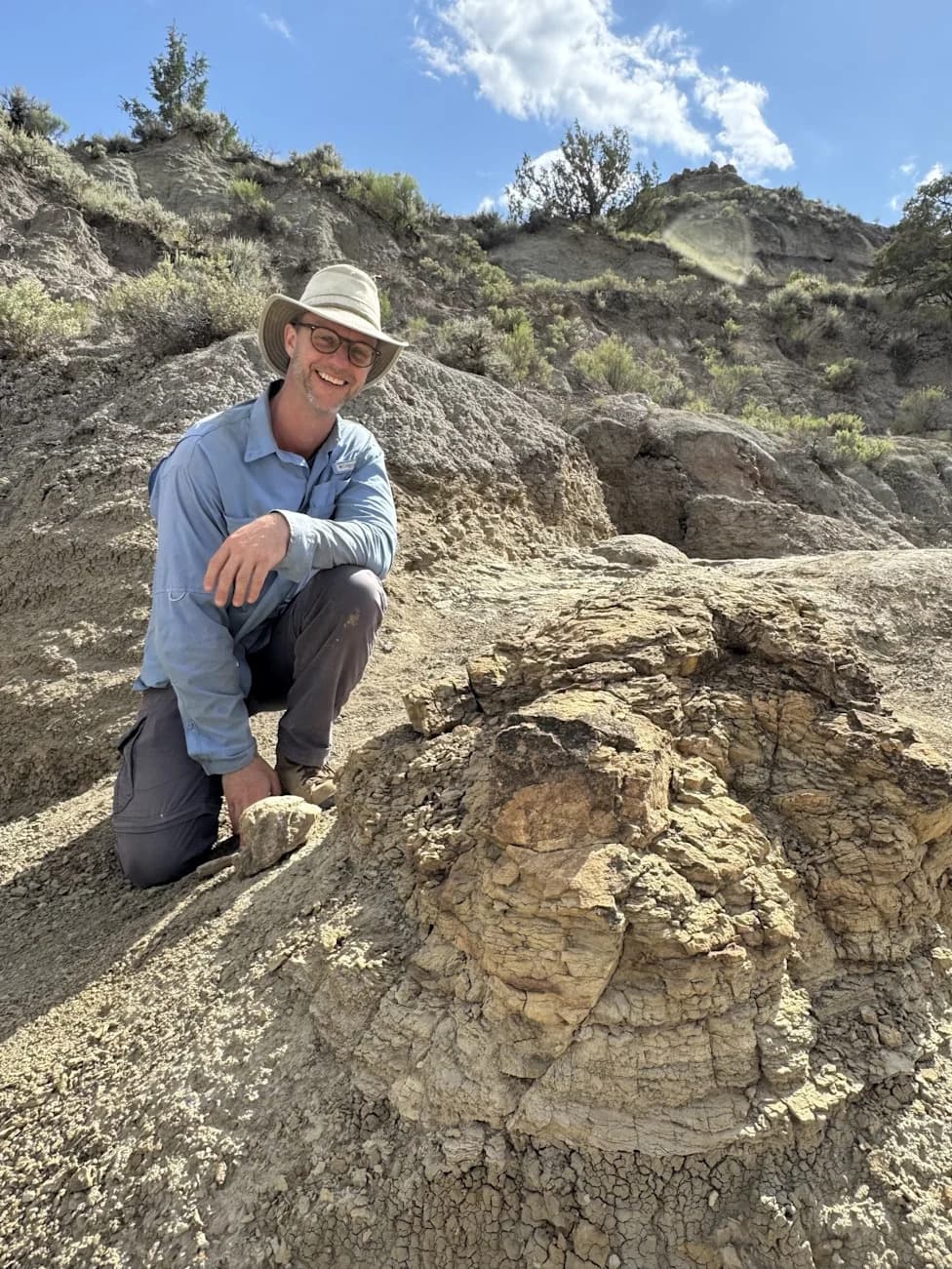
Project leaders say the material began with tiny protein fragments recovered from fossilized T. rex bones. Those ancient fragments were reportedly introduced into the cells of an unidentified modern animal to guide the production of collagen, which was then processed into a leather-like material.
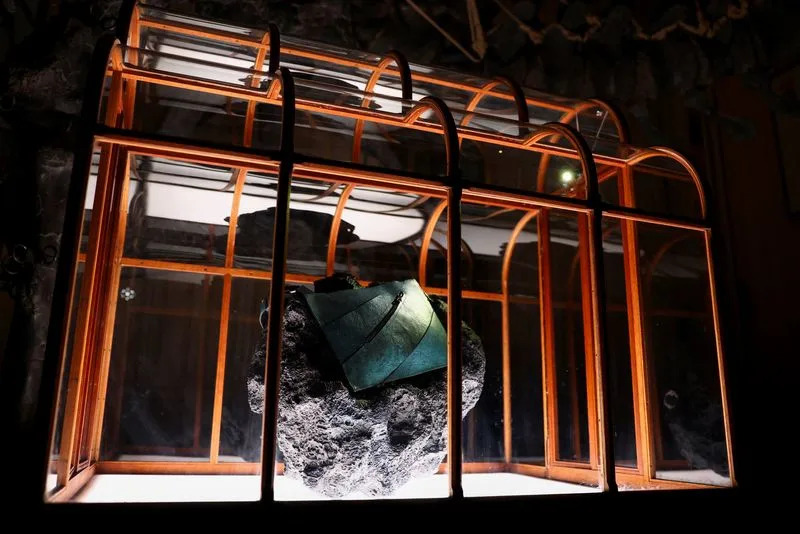
A handbag made using T. rex fossil-derived collagen is on display at Museum ArtZoo in Amsterdam, Netherlands, April 2, 2026. REUTERS/Piroschka van de Wouw
"There were a lot of technical challenges," said Thomas Mitchell, CEO of The Organoid Company, one of three firms involved in making the so-called "T. rex leather" handbag.
Genomic engineering firm Organoid and creative agency VML were among the collaborators; they previously worked together in 2023 on an experiment that combined woolly mammoth DNA with sheep cells. Lab‑Grown Leather Ltd. said it turned the engineered collagen into the finished handbag, and its CEO, Che Connon, said the T. rex connection gave the piece extra "oomph." "It's not just about a green alternative to leather, it's a technological upgrade," Connon said.

A handbag made using T. rex fossil-derived collagen is on display at Museum ArtZoo in Amsterdam, Netherlands, April 2, 2026. REUTERS/Piroschka van de Wouw
Skepticism From Paleontologists
Several independent paleontologists cautioned that calling the material "T. rex leather" is misleading. Dutch vertebrate paleontologist Melanie During of Vrije Universiteit Amsterdam said collagen survives in dinosaur bones only as fragmented traces and cannot be used to recreate original T. rex skin or hide.
Thomas R. Holtz Jr., a paleontologist at the University of Maryland, noted that any collagen identified in T. rex fossils comes from inside bone rather than skin. He added that even if protein sequences matched, they would lack the larger-scale fibre organization that gives animal leather its characteristic properties.
"When you do something new for the first time, there is always criticism," Mitchell responded. "We're grateful for that criticism — it's the bedrock of scientific exploration. I think this is the closest anyone has gotten and will probably ever get to create something that's T. rex."
The project has reignited debate about what constitutes "dinosaur-derived" materials and the scientific and ethical lines around resurrecting ancient biomolecules for modern biotechnology demonstrations. Supporters present the handbag as a striking example of how ancient proteins might inspire sustainable materials; critics urge clearer language and more transparency about methods and limits.
(Reporting by Charlotte Van Campenhout; Editing by Andrew Cawthorne)
Help us improve.