
Iran's long-standing religious prohibition on nuclear weapons — associated with the late Supreme Leader Ayatollah Ali Khamenei — is under fresh scrutiny after his death, which Tehran blames on US and Israeli actions. Hardline factions and parts of public opinion are calling for a reversal of the fatwa as the IRGC consolidates power and Iran's HEU stockpile exceeds 400 kilograms. Analysts say Tehran could technically assemble a crude fission device if leadership authorizes weaponization, but such a weapon would offer limited deterrence against major nuclear powers and would raise the risk of regional proliferation.
Cornered and Wounded: Could Iran Abandon the Nuclear Fatwa and Build a Bomb?
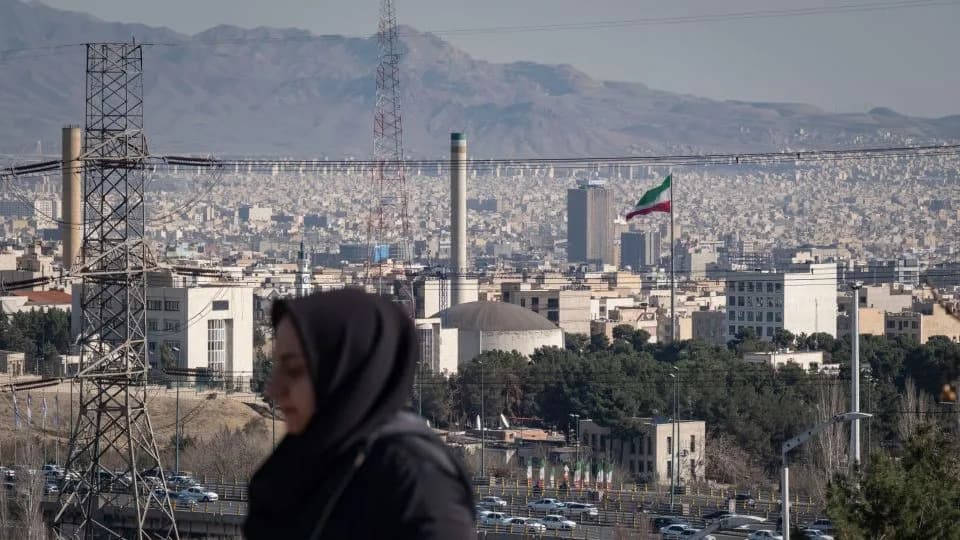
An Iranian woman walks past a view of Tehran's research reactor in Tehran, Iran, on February 26, 2026. - Morteza Nikoubazl/NURPHO/AP
When Iran's covert nuclear activities first drew sustained international attention more than two decades ago, Tehran insisted its program was peaceful and that it had no intention of acquiring nuclear weapons. At the time, Supreme Leader Ayatollah Ali Khamenei issued a religious ruling — commonly described as a fatwa — that reportedly forbade the pursuit of nuclear arms.
In the weeks following Khamenei's death, which the Iranian government has blamed on the United States and Israel, debate inside Iran over that ruling has intensified. Hardline voices and growing sections of public discourse argue the fatwa is effectively dead and that Tehran should consider building a weapon in retaliation and deterrence.
Shifts in Politics and Power
For years, Khamenei resisted internal pressure to authorize an actual weapon, pursuing a policy analysts call "strategic patience" — allowing expansion of uranium enrichment while stopping short of overt weapons production. Since 2018 and the U.S. withdrawal from the nuclear deal, Iran steadily increased enrichment activities. Iran now holds an estimated stockpile of more than 400 kilograms of highly enriched uranium (HEU), a level that—depending on enrichment, processing losses, and weapon design—could be sufficient for several crude fission devices.
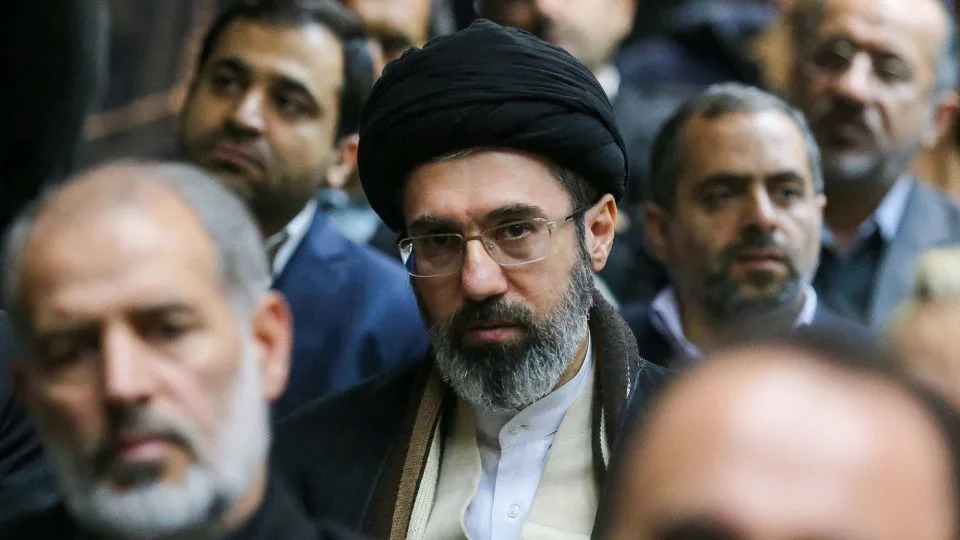
Iran’s new supreme leader, Mojtaba Khamenei, the second son of late Iran's Supreme Leader Ayatollah Ali Khamenei, attends a meeting in Tehran, Iran, on July 18, 2016. - Amir Kholousi/Wana News Agency/Reuters/File
Mojtaba Khamenei, the country's purported new supreme leader, has remained largely out of public view, raising questions about his health and decision-making authority as the Islamic Revolutionary Guard Corps (IRGC) consolidates influence. Senior IRGC figures and hardline commentators have openly signaled willingness to revisit Iran's nuclear doctrine.
"The nuclear fatwa is dead," Trita Parsi of the Quincy Institute for Responsible Statecraft told CNN, summarizing a shift in elite and public sentiment. "Elite opinion as well as public opinion has shifted dramatically on this, which shouldn't be surprising since Iran has been bombed twice in the midst of negotiations by two nuclear-equipped states."
Technical and Strategic Considerations
Experts say three conditions would be needed for Iran to field a nuclear explosive: a political decision to reverse the fatwa and authorize weaponization; access to HEU or other fissile material; and the technical capacity to assemble a functioning device. If Tehran chose to build a weapon, analysts expect it could pursue a relatively simple fission device first — a basic implosion or gun-type bomb — rather than a compact, missile-deliverable warhead.
It is important to distinguish terms: a "crude fission device" is a basic nuclear bomb that produces a true nuclear explosion. A "dirty bomb," by contrast, is a radiological dispersal device that uses conventional explosives to spread radioactive material and does not produce a nuclear detonation. The former and the latter are fundamentally different in design, effect and political implications.
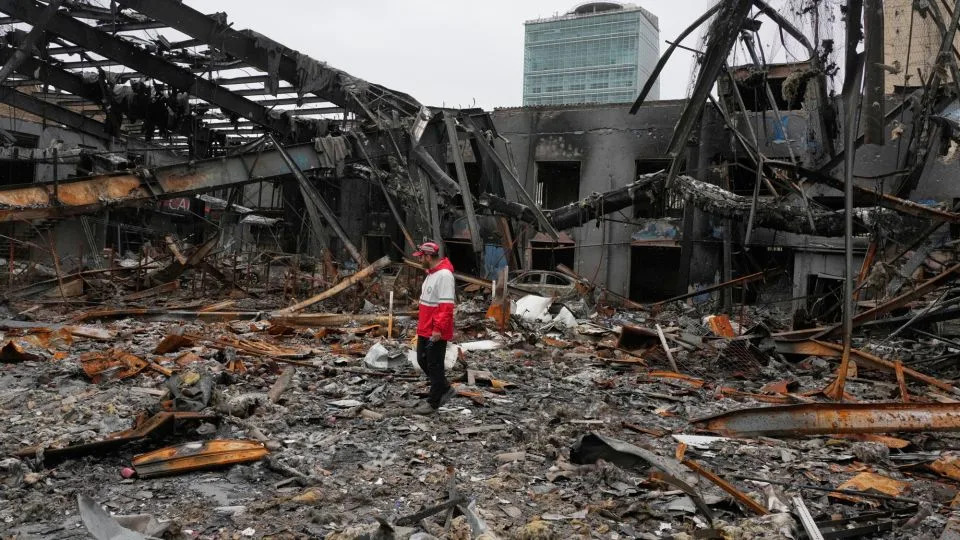
A member of the Iranian Red Crescent Society stands at Hypercar, an auto service center, amid damages which according to the company's officials were caused by strikes on March 1, in Tehran, Iran on March 28, 2026. - Vahid Salemi/AP
Even a successful detonation would not automatically yield reliable deterrence against major nuclear powers. As analyst Sina Azodi notes, Iran lacks the long-range missile arsenal and stockpile size to credibly deter nuclear-armed states with thousands of warheads. Instead, any nuclear capability would likely be aimed at regional deterrence and domestic political signaling.
Regional Risks
Iran's move toward a weapon would likely accelerate proliferation pressures in the Middle East. Saudi leaders have previously warned they would seek similar capabilities if Iran developed nuclear weapons, raising the prospect of a wider regional arms race.
At present, Tehran has not publicly and formally renounced the fatwa or announced a decision to build weapons. But the convergence of a growing HEU stockpile, a more powerful IRGC, elevated public and elite calls for retaliation, and uncertainty around the new supreme leader creates a plausible scenario in which weaponization could be considered.
Ultimately, whether Iran crosses the line into constructing a nuclear weapon remains uncertain and depends on political decisions, technical choices, and the responses of regional and global powers.
Help us improve.





















