ICAN reports nearly 10,000 operational nuclear warheads worldwide, with a combined yield equivalent to about 135,000 Hiroshima bombs. The global stockpile has increased every year since 2017, rising by 141 warheads last year, and just over 40% of warheads are currently deployed. Nearly 2,500 retired warheads await dismantling, and none of the nine nuclear-armed states have joined the 2021 Treaty on the Prohibition of Nuclear Weapons.
Report: Nearly 10,000 Nuclear Warheads Operational — Yield Equals ~135,000 Hiroshima Bombs
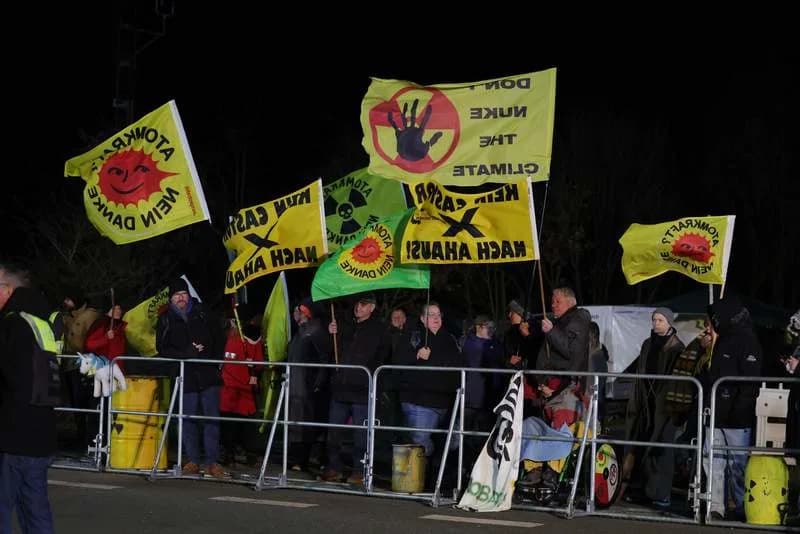
People hold banners during an anti-nuclear demonstration against the Castor transports along the route near Ahaus. Christoph Reichwein/dpa
Nearly 10,000 nuclear warheads are currently operational worldwide, with a combined explosive yield equivalent to roughly 135,000 of the Hiroshima bombs, according to a report released by the International Campaign to Abolish Nuclear Weapons (ICAN).
Key Findings
Rising Stockpile: ICAN found that the global nuclear arsenal has grown each year since 2017, increasing by 141 warheads in the past year alone.
Deployment vs. Reserve: Just over 40% of warheads are deployed — mounted on ballistic missiles in silos, carried on mobile launchers or submarines, or based at bomber airfields — while the remainder are held in reserve.
Awaiting Dismantling: In addition to deployed and reserve warheads, nearly 2,500 retired warheads remain in storage awaiting dismantlement.
Nations And Trends
ICAN identifies China, India, North Korea, Pakistan and Russia as actively expanding their arsenals. The report also indicates that the United States and France have plans to modernize or sustain their stockpiles. The nine countries known to possess nuclear weapons include the United States, Russia, China, France, the United Kingdom, India, Pakistan, North Korea and Israel.
Treaty And Diplomacy
ICAN helped drive the 2021 Treaty on the Prohibition of Nuclear Weapons (TPNW) and was awarded the Nobel Peace Prize in 2017 for its advocacy. By the end of 2025, 99 countries had joined the treaty. However, none of the nine nuclear-armed states — nor several close partners, including Germany and other NATO members — have signed the TPNW. The report highlights that Europe "stands out as a major obstacle to further progress toward universalisation of the TPNW," underscoring political and diplomatic barriers to wider adoption.
Historical Context
An atomic bomb was dropped on Hiroshima on August 6, 1945 — the first use of such a weapon — killing more than 140,000 people.
The ICAN report frames current arsenals and modernization programs against this historical backdrop to stress the humanitarian and security risks posed by continued nuclear proliferation and retention.
Implication: The report signals a worrying reversal of global nuclear reductions and highlights diplomatic challenges to achieving broader bans or disarmament commitments.
Help us improve.