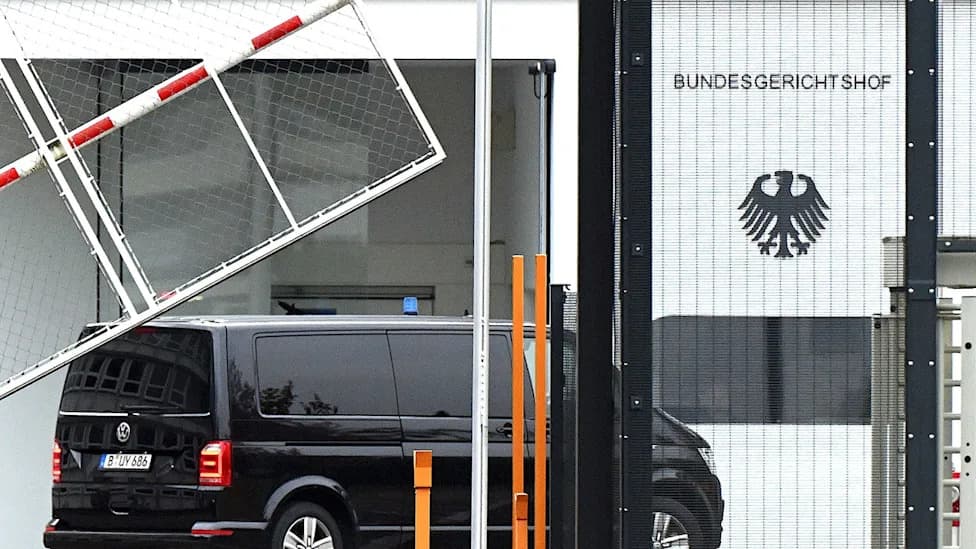
The group Harakat Ashab al-Yamin al-Islamia has claimed a string of antisemitic attacks in Europe and threatened to continue targeting U.S. and Israeli interests. Its Telegram channel and low-budget propaganda emerged recently, and analysts describe it as a possible astroturfed, hybrid network linked to Iran-aligned actors. Authorities in the Netherlands and Belgium have detained minors in connection with incidents, while London police and international agencies investigate. Experts warn amateur attacks can still cause disruption and may escalate.
Shadowy Group Claims Antisemitic Attacks, Threatens U.S. and Israeli Interests Across Europe

A screengrab from a propaganda video posted online by the little-known group Harakat Ashab al-Yamin al-Islamia shows ambulances belonging to the Jewish organization Hatzalah United, which the group said it set on fire in retaliation for the ongoing U.S. and Israeli military operations in the Middle East, early on March 23, 2026. / Credit: Social media(Social media)
A little-known group calling itself Harakat Ashab al-Yamin al-Islamia ("The Islamic Movement of the Companions of the Righteous") has claimed responsibility for a series of antisemitic attacks in Europe and warned it will continue targeting U.S. and Israeli interests worldwide. Security footage showed three men setting ambulances used by the global Jewish medical organization United Hatzalah on fire in London; hours later the group claimed responsibility for a car arson in Antwerp, Belgium.
Who Is Behind the Attacks?
The group first announced itself in early March after heightened tensions between the U.S., Israel and Iran. Its Telegram channel and short propaganda videos appeared only recently. Analysts describe the movement as unusual—low-budget, fast-emerging and potentially "astroturfed," meaning it could be an online brand plugged into existing Iran-aligned networks rather than a traditional, long-established organisation.
What Claims and Messaging Tell Us
The group's messaging, including an exchange with a channel administrator who used the name Asad-Allah, was published in English, Arabic and Hebrew but notably not in Persian. The administrator justified attacks as retaliation for conflicts in Gaza and Iran and warned that tactics used to avoid harming people could change. The account was deleted shortly after communicating with reporters.
Expert Assessments
Security analysts warn the group's videos and claims are amateurish but can still produce significant psychological and operational effects. Lucas Webber of Tech Against Terrorism suggested the group looks like a hybrid model—local clusters possibly guided or inspired from abroad. Sharon Adarlo of Militant Wire said perpetrators may be volunteers or paid recruits solicited via messaging apps. Research from the Royal United Services Institute and other investigations have identified patterns in which young men—sometimes migrants—are recruited via Telegram with promises of cash or cryptocurrency, and where intelligence actors tied to Russia have been involved in similar European cases.
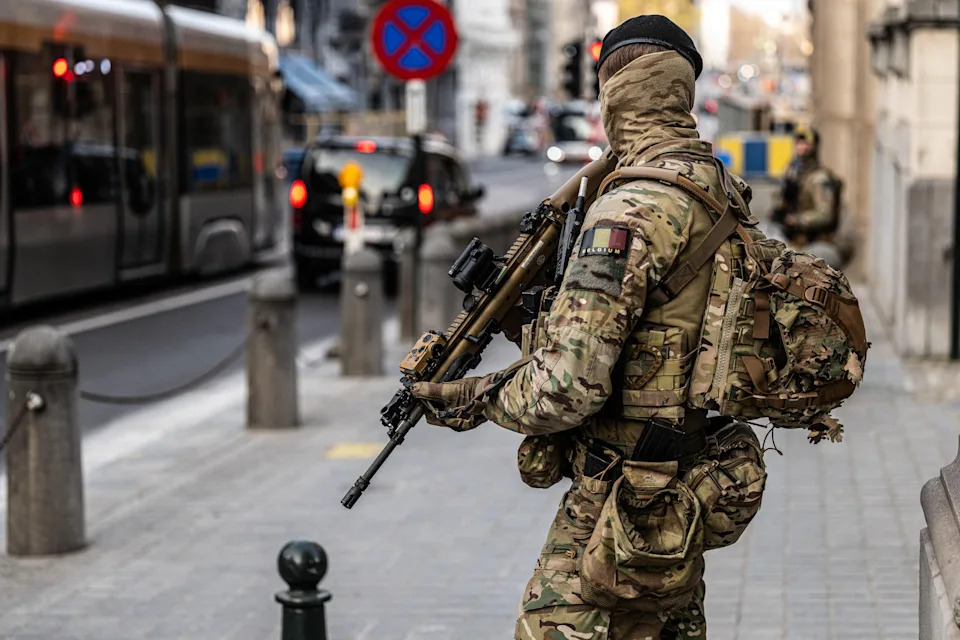
A Belgian Armed Forces soldier stands guard along a street near the Great Synagogue of Europe, formerly known as the Great Synagogue of Brussels, in Brussels on March 23, 2026. / Credit: EMILE WINDAL/Belga /AFP/Getty
"It doesn't matter that it's amateurish," said former U.K. counterterrorism chief Neil Basu. "If it sows chaos and diverts resources it can be useful to a state sponsor exercising plausible deniability."
Law Enforcement and Government Response
Authorities in the Netherlands and Belgium have detained youths in connection with attacks: five teenagers were arrested after an explosion outside a Rotterdam synagogue on March 13, and Belgian prosecutors said two minors were arrested after the Antwerp arson. London Police are analysing footage of the London ambulance arson and have acknowledged an online claim of responsibility; no arrests had been announced in London as of the latest reports.
The U.S. State Department urged Americans abroad to exercise increased caution after warning that groups supportive of Iran may target U.S. interests. European nations have stepped up security: soldiers were deployed in some Belgian cities and Italy has maintained enhanced protection around Jewish institutions. Europol told reporters it supports member-state investigations but does not handle preventative measures directly.
Risks and Outlook
Experts warn that even low-skilled or opportunistic attacks can escalate in scale or frequency, particularly amid ongoing regional conflict. Investigators face the challenge of determining whether the group is a genuine, centrally directed organisation, a loosely connected network, an opportunistic brand taking credit for others' actions, or an appearance created by state-aligned actors seeking to disrupt and avoid direct attribution.
Key developments to watch: further forensic work by national police to establish links and provenance of claims; additional arrests or copycat attacks; and any credible evidence tying the group directly to state sponsors or transnational networks.
Help us improve.