More than a dozen European far-right leaders gathered in Budapest to back Prime Minister Viktor Orbán ahead of Hungary's April 12 election. Orbán, in power since 2010, has built a model of nationalist governance that has inspired parties across Europe and some U.S. conservatives. Polls show him trailing a center-right challenger, and his campaign confronts economic stagnation, social service strains and corruption allegations. The vote will be closely watched for its broader impact on European and transatlantic conservative networks.
European Far-Right Leaders Rally Behind Viktor Orbán as April Vote Tests His Grip
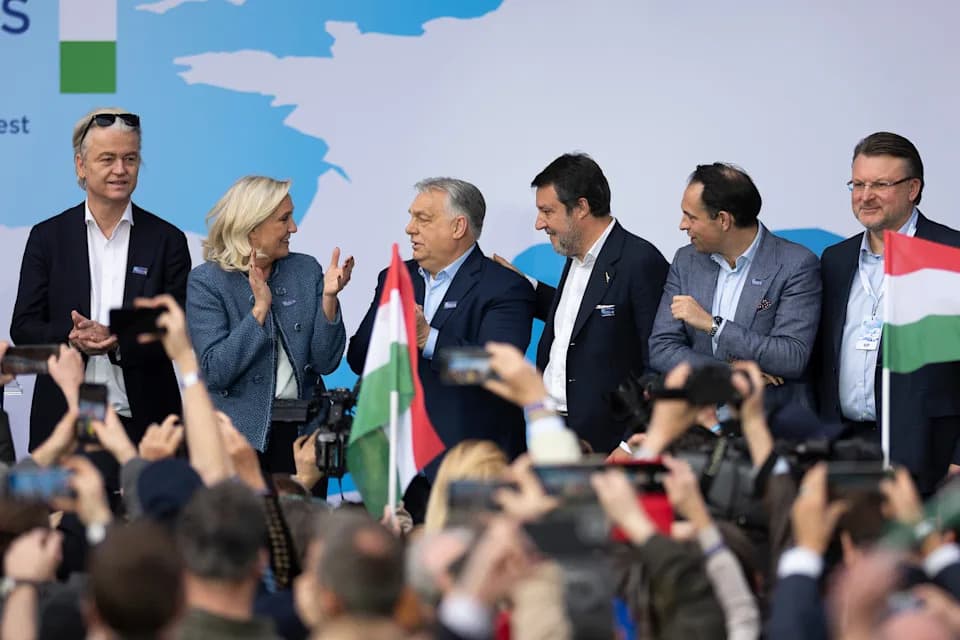
Hungarian Prime Minister Viktor Orbán, third from left, stands with, from left; Geert Wilders of the Netherlands, France's Marine Le Pen, Italy's Matteo Salvini, Belgium's Tom Van Grieken and Latvia's Ainārs Šlesers during an assembly of European far-right parties with Orbán’s Patriots for Europe group, in Budapest, Hungary, Monday, March 23, 2026. (AP Photo/Denes Erdos)(ASSOCIATED PRESS)
Leaders from more than a dozen European far-right parties convened in Budapest to publicly back Hungarian Prime Minister Viktor Orbán ahead of the pivotal April 12 national election. The high-profile gathering was presented as a show of unity for Orbán and the broader nationalist movement across Europe.
Orbán, who returned to power in 2010, has become a central figure for Europe’s far right. His record — four consecutive election victories, broad influence over state institutions, and an emphasis on conservative, pro-family policies — has made Hungary a model for like-minded parties in Europe and a source of inspiration for some U.S. conservatives.
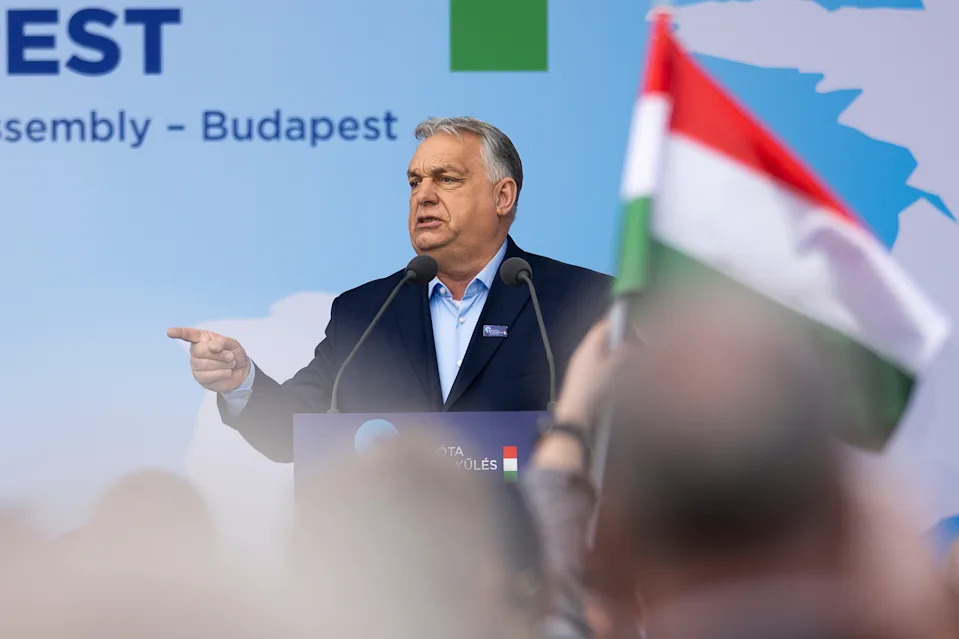
Hungarian Prime Minister Viktor Orbán speaks during an assembly of European far-right parties with Orbán’s Patriots for Europe group, in Budapest, Hungary, Monday, March 23, 2026. (AP Photo/Denes Erdos)(ASSOCIATED PRESS)
Yet with roughly three weeks until the vote, most public opinion polls show Orbán trailing a center-right challenger, raising questions about whether his 16-year hold on power and his role as a standard-bearer for the nationalist movement may be weakening.
Patriots for Europe and High-Profile Support
The event was organized by Patriots for Europe, a bloc formed in 2024 that is now the third-largest group in the European Parliament and includes parties from 13 EU countries. Its members share opposition to immigration, a preference for national sovereignty over deeper EU integration, and conservative social agendas.
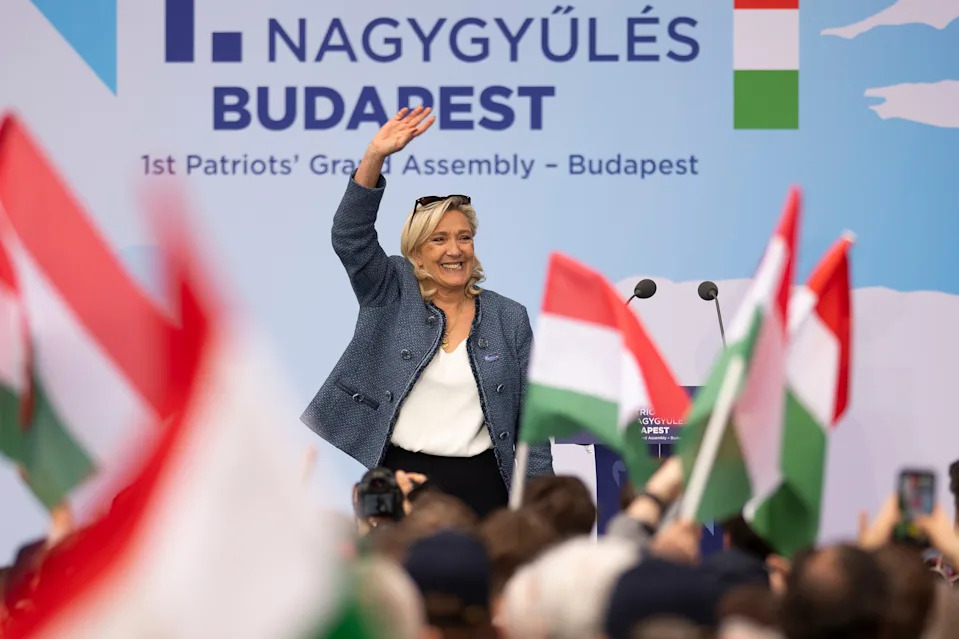
France's Marine Le Pen waves after speaking at an assembly of European far-right parties with Hungarian Prime Minister Viktor Orbán Patriots for Europe group, in Budapest, Hungary, Monday, March 23, 2026. (AP Photo/Denes Erdos)(ASSOCIATED PRESS)
"Hungary is this kind of proof of concept that the MAGA kind of politics can work," said Kim Lane Scheppele, a Princeton professor of sociology and international affairs, noting the election's symbolic importance for transatlantic conservative networks.
Speakers at the Budapest rally included France's Marine Le Pen, Italy's Matteo Salvini and the Netherlands' Geert Wilders. Each of the 13 speakers praised Orbán and urged Hungarians to reelect his Fidesz party on April 12. Le Pen described Hungary as "an emblem of the resistance of a proud and sovereign people to oppression" and urged voters to send a message to "tired old technocrats in Brussels."
Transatlantic Ties and CPAC
Orbán has cultivated strong ties with conservative figures in the United States. Budapest recently hosted the fifth Hungarian edition of the Conservative Political Action Conference (CPAC), where Orbán declared the West is undergoing "the greatest political realignment of the past hundred years" and called Hungary a forward base for that shift in Europe. In a video message, former U.S. President Donald Trump endorsed Orbán’s reelection and praised his defense of borders, culture, heritage and sovereignty.
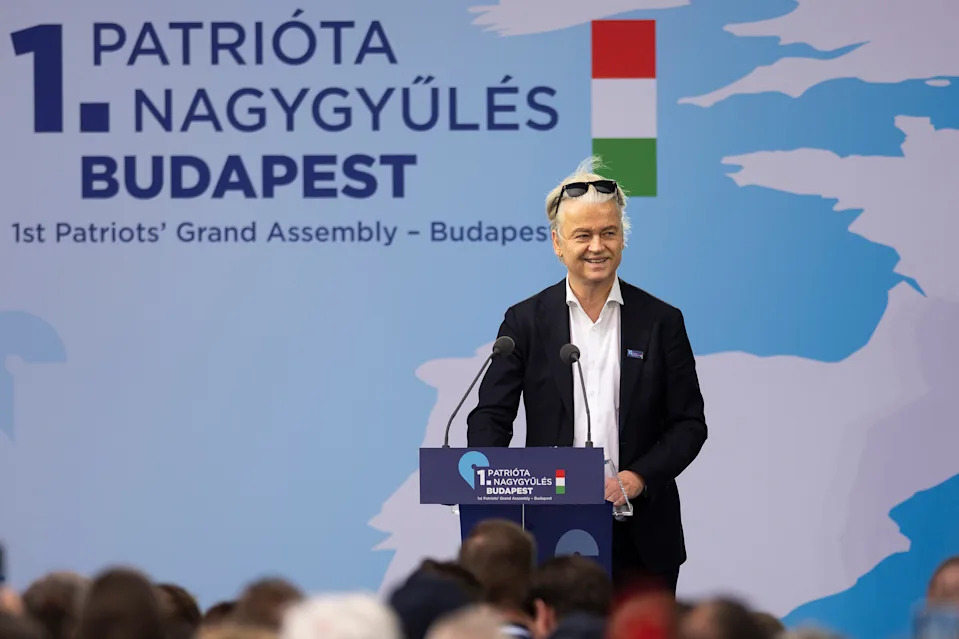
Geert Wilders of the Netherlands speaks during an assembly of European far-right parties with Orbán’s Patriots for Europe group, in Budapest, Hungary, Monday, March 23, 2026. (AP Photo/Denes Erdos)(ASSOCIATED PRESS)
Analysts say Orbán's government has used state resources and sustained political control to support like-minded parties across Europe, helping to finance and coordinate nationalist efforts that other movements lack.
Domestic Challenges
Despite international backing, Orbán faces mounting headwinds at home, including a stagnant economy, strained social services and rising allegations of corruption. Those domestic problems have eroded support and contributed to tighter polls ahead of the April vote.
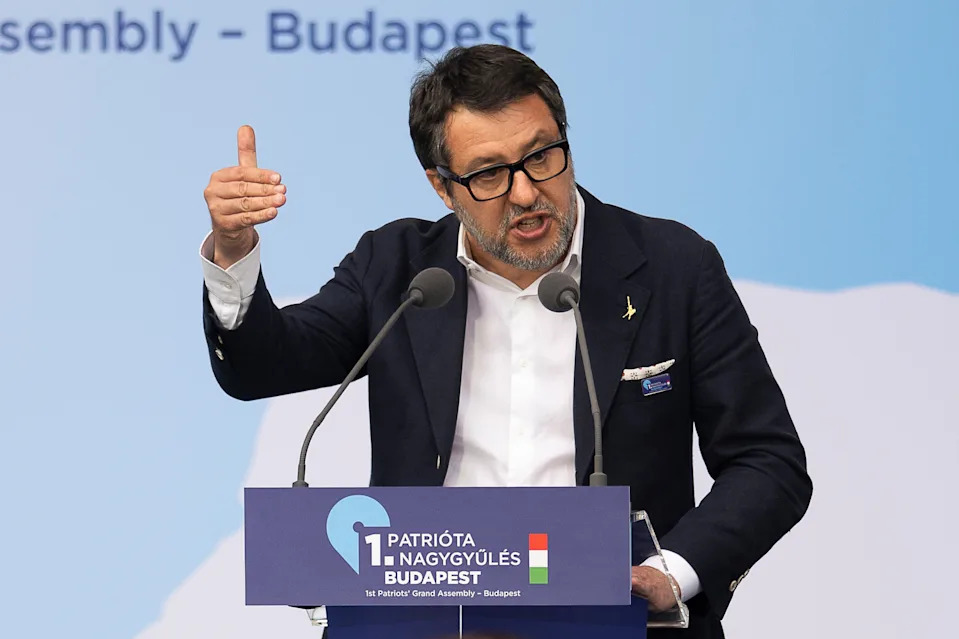
Italy's Matteo Salvini speaks at an assembly of European far-right parties with Hungarian Prime Minister Viktor Orbán Patriots for Europe group, in Budapest, Hungary, Monday, March 23, 2026. (AP Photo/Denes Erdos)(ASSOCIATED PRESS)
As the election approaches, the result will have implications beyond Hungary: a defeat for Orbán could weaken the momentum of far-right networks that view Hungary as a model for consolidating power, while a win would reinforce their strategy across Europe and bolster transatlantic alliances with conservative movements.
Associated Press reporting contributed to this article.
Help us improve.