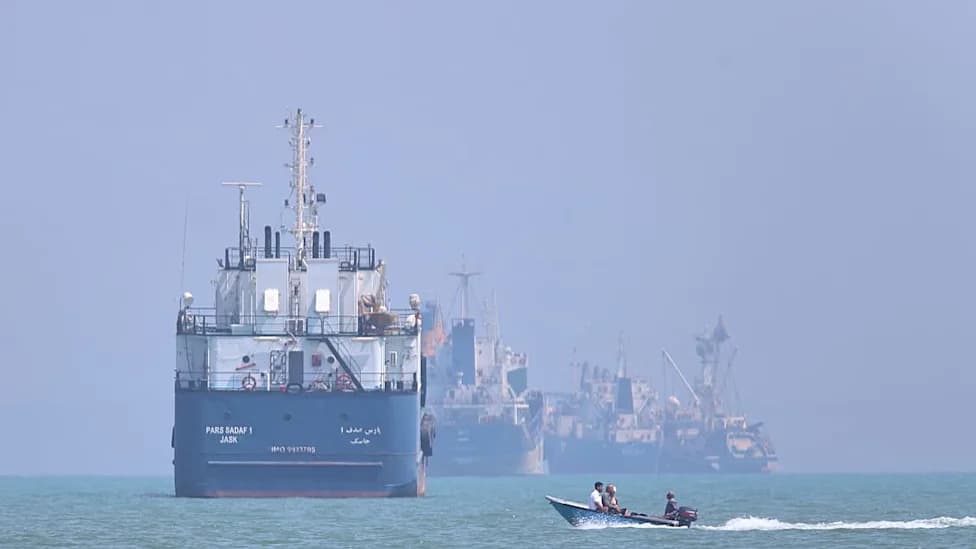
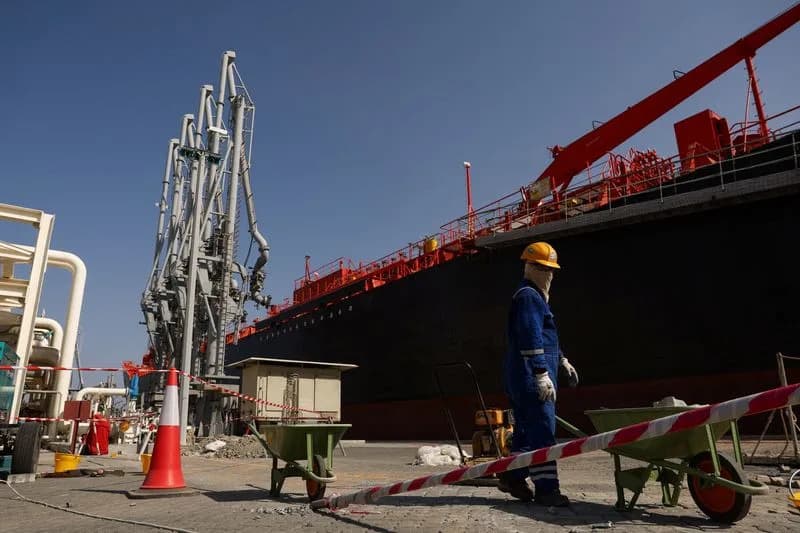
Explainer: Gulf states rely on a network of hosting agreements, defence cooperation pacts and arms sales to bolster defences as attacks linked to Iran increase. Major US bases in Qatar, Saudi Arabia, the UAE, Bahrain and Kuwait underpin regional security, while recent arms deals and the Pakistan‑Saudi mutual defence pact have added capacity. Practical measures—extra missile‑defence munitions, intelligence sharing and possible naval escorts—are available but limited by diplomacy, legal constraints and global stock shortages.
Who Are the Gulf’s Military Allies — And How Are They Supporting the Region As Iran Strikes Rise?
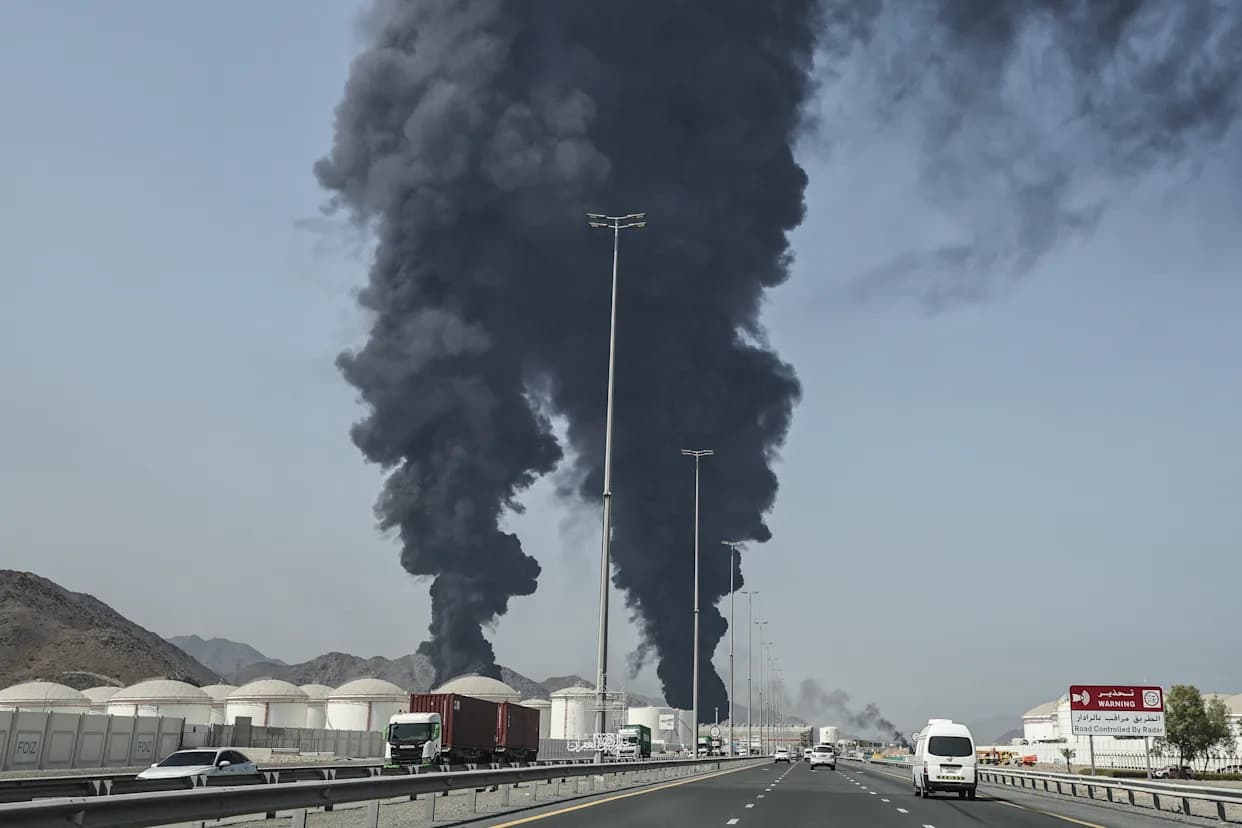
Smoke rises from the direction of an energy installation in the Gulf emirate of Fujairah, United Arab Emirates, on March 14, 2026 [AFP]
Gulf states have faced a growing number of strikes attributed to Iran amid the wider US‑Israeli campaign, raising questions about how regional allies are helping to deter further attacks and protect critical infrastructure.
Overview
Although Gulf governments stress their own defences are capable of repelling many incoming strikes, they also rely on a network of military partnerships, long‑term base access and arms agreements with foreign powers. These relationships provide extra deterrence, intelligence sharing, logistics and—where politically feasible—direct military assets.
Key Bases and Hosting Arrangements
Qatar
Qatar hosts Al Udeid, the region’s largest base supporting US forces (roughly 24 hectares / ~60 acres). Al Udeid serves as a forward headquarters for US Central Command (CENTCOM) and accommodates the Qatar Emiri Air Force, the US Air Force, the UK Royal Air Force and other contingents. Qatar is the US's second‑largest Foreign Military Sales (FMS) partner after Saudi Arabia; recent sales to Qatar include Patriot missiles, NASAMS air‑defence systems, early‑warning radars and attack helicopters.
Qatar also hosts a Turkish presence under bilateral defence cooperation, and has strengthened ties with the UK and France through training, exercises and arms purchases. Earlier this month the UK announced the deployment of four additional Typhoon fighters to Qatar.
Saudi Arabia
Prince Sultan Air Base (PSAB), near Al Kharj, hosts US personnel and assets. Saudi Arabia remains the largest US FMS partner. While there is close defence cooperation with Washington, there is no NATO‑style mutual defence treaty—the relationship relies on bilateral agreements and strategic commitments.
United Arab Emirates
Al‑Dhafra airbase hosts US forces and advanced platforms such as surveillance aircraft, drones and AWACS; reports indicate some advanced fighters have also been deployed there. The US recently announced an $8.4 billion arms package for the UAE covering drones, missiles, radar systems and F‑16s. The UAE has deepened security ties with India under the India‑UAE Comprehensive Strategic Partnership.
Oman
The US has long‑term access to key Omani facilities, including the ports of Duqm and Salalah, which have been targeted in recent strikes. The UK and Oman maintain defence cooperation and regular exercises, and Pakistan conducts joint naval drills with Oman as well.
Bahrain
Bahrain hosts the US Navy’s Fifth Fleet via the Naval Support Activity Bahrain. This base underpins maritime security operations across the region. Bahrain and the UK have a comprehensive security relationship, and the UK has confirmed deployments to bolster Bahrain’s defences.
Kuwait
Kuwait hosts Camp Arifjan, a principal US Army logistics and command hub in the region. The US recently agreed an $8 billion sale for air and missile‑defence radar systems to Kuwait. Kuwait also has defence cooperation agreements with Pakistan focused on training and exercises.
New Pacts and Deployments
In September 2025 Pakistan and Saudi Arabia signed a formal mutual defence pact, reinforcing decades of security cooperation. Estimates indicate some 1,500–2,000 Pakistani troops are stationed in Saudi Arabia. Islamabad’s willingness and ability to act beyond training and basing support remains subject to regional sensitivities and its own strategic calculations.
Operational Limits And What Allies Can Do
Most arrangements across the Gulf are hosting agreements, access deals or bilateral defence cooperation—not blanket mutual‑defence treaties like NATO’s Article 5. That limits the scope of automatic military intervention.
Analysts say practical measures that allies could provide include: additional air‑defence munitions, intelligence and surveillance support, logistical sustainment, and naval escorts for commercial shipping. A coordinated escort or protected shipping corridor—led by regional states such as India, Pakistan or China—could be feasible in principle but would likely require Iran’s acquiescence and complex diplomatic coordination.
Expert view: David Roberts, a senior international security academic at King’s College London, notes that regional naval escorts are possible in theory but would need Iran’s consent and that European militaries are already stretched. He also highlights an urgent need for more missile‑defence munitions, which are in short supply globally.
Recent Strikes, Energy Infrastructure And Economic Impact
Recent attacks have hit Gulf energy facilities, including the Mina al‑Ahmadi refinery in Kuwait and a gas facility at Qatar’s Ras Laffan complex. Iran’s Islamic Revolutionary Guard Corps (IRGC) advisers have at times threatened to close the Strait of Hormuz—a chokepoint through which roughly one‑fifth of global oil and gas passes—contributing to a spike in oil prices above $100 per barrel from pre‑conflict Brent levels near $65.
What To Watch
- Further arms deliveries and resupply of missile‑defence munitions to Gulf partners.
- Any expansion of naval escort arrangements for commercial shipping and whether Iran permits them.
- Political decisions by allied capitals about the use of bases for strikes or increased direct involvement, which remain constrained by legal and political considerations.
In short, Gulf countries benefit from substantial foreign military presence and arms transfers that enhance deterrence and defence, but formal guarantees of collective defence are limited. Practical support is significant but constrained by diplomacy, logistics and munitions availability.
Help us improve.