Scottish parliamentarians will vote on a bill to allow terminally ill adults with six months or less to live to request assisted death, with two doctors required to confirm terminal illness and capacity. A free vote makes the outcome uncertain; a decision is expected after 2200 GMT. Supporters argue it would prevent needless suffering, while opponents — including medical bodies and Deputy First Minister Kate Forbes — warn of risks to vulnerable people. Similar legislation for England and Wales is stalled in Westminster.
Scottish Parliament to Vote on Assisted Dying for Terminally Ill Adults
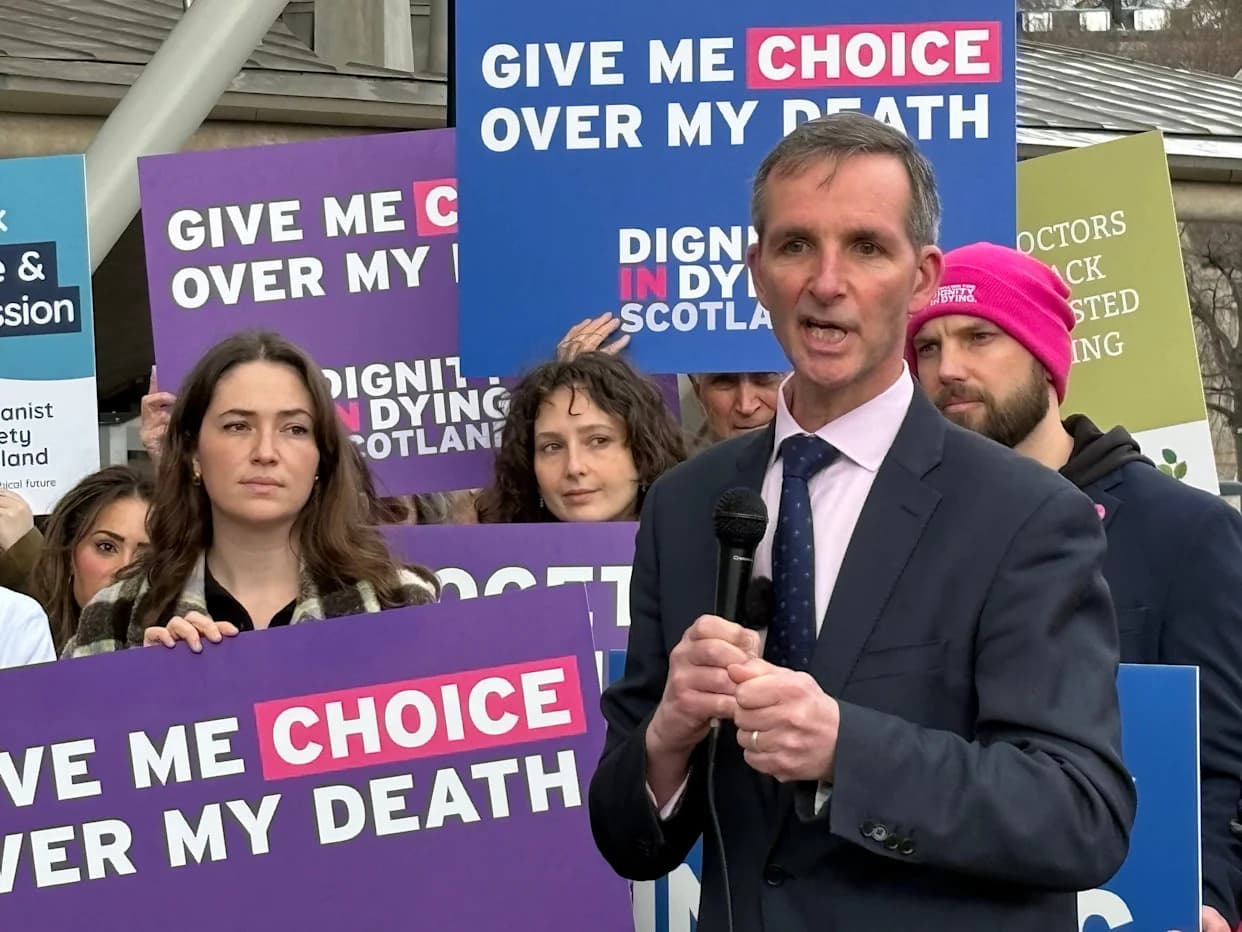
Liberal Democrat lawmaker Liam McArthur joins a rally of supporters ahead of MSPs debating his Assisted Dying for Terminally Ill Adults (Scotland) Bill, in the Scottish Parliament in Edinburgh, Scotland, Tuesday, March 17, 2026. (Neil Pooran/PA via AP)(ASSOCIATED PRESS)
Lawmakers at the Scottish Parliament in Edinburgh will vote Tuesday on whether Scotland should become the first part of the United Kingdom to permit terminally ill adults to seek assisted death with medical help.
Members have been given a free vote on the assisted dying bill, allowing them to decide according to conscience rather than along party lines. That makes the outcome difficult to predict; a decision is expected after 2200 GMT.
Scotland is one of four nations in the U.K. — alongside England, Wales and Northern Ireland — and its devolved government has responsibility for health policy, which is why the Scottish Parliament can consider such legislation independently of Westminster.
What the bill would do
Under the proposed law, adults in Scotland with six months or less to live could request medical assistance to end their lives. Two doctors would need to confirm that the person is terminally ill and has the mental capacity to make the decision. The bill includes eligibility checks and procedural safeguards intended to prevent abuse.
Supporters
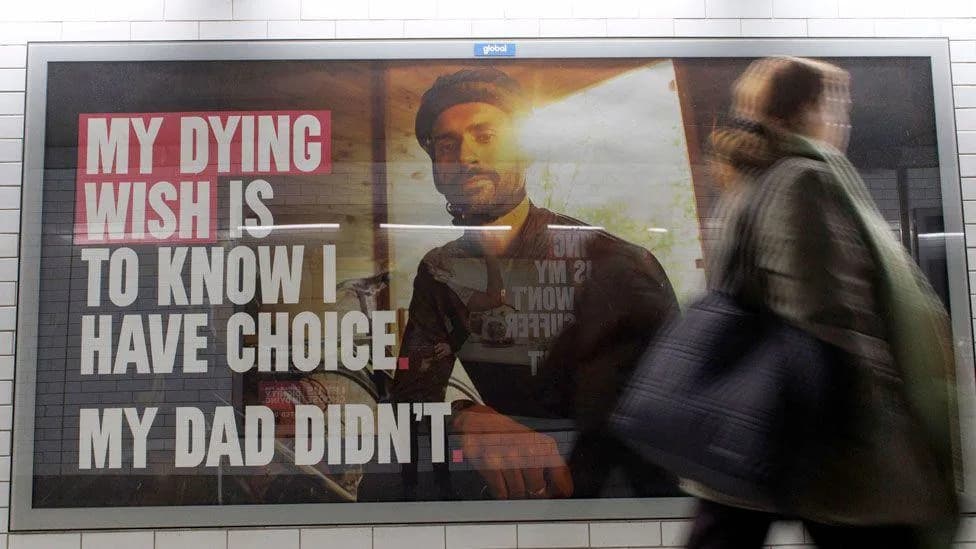
Liam McArthur, the Liberal Democrat MSP who drafted the measure, urged colleagues to back the bill, saying it would spare dying people needless suffering and correct failings in current law.
"If you believe that dying people should not have to suffer against their will... you now have to back this bill," McArthur said.
Opponents and concerns
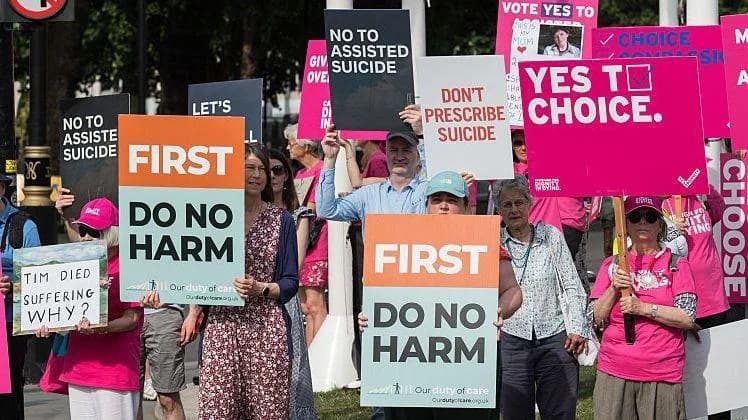
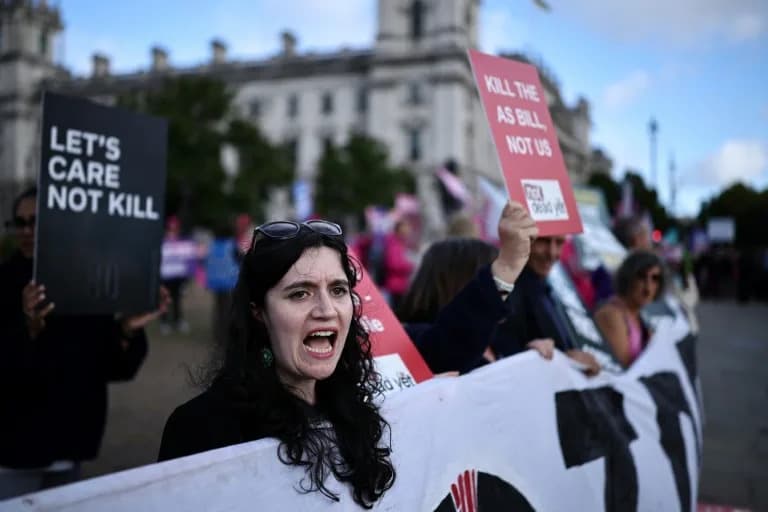
Opponents warn the change could put pressure on disabled, elderly, seriously ill or depressed people to end their lives to avoid being a burden. Deputy First Minister Kate Forbes (Scottish National Party) has said she will vote against the bill, noting that a range of medical professionals have raised safety concerns.
"Doctors, psychiatrists, pharmacists and palliative care specialists — the people who would be tasked with implementing this — are asking us not to do it. They think this bill is unsafe," Forbes said.
Several medical bodies, including the Royal College of Psychiatrists and the Royal Pharmaceutical Society, have publicly opposed the legislation or expressed caution about its safety and practical implementation.
Wider U.K. context
A similar proposal for England and Wales — The Terminally Ill Adults (End of Life) Bill — was approved by the House of Commons in June but has been delayed in the House of Lords by more than 1,000 amendments. Supporters say the volume of amendments is a tactic to stall the bill; others say the scrutiny is needed to strengthen the law. It now appears unlikely that the bill will clear both houses before the current parliamentary session ends, in which case it would lapse and any fresh effort would start again.
Crown dependencies and international context
The Crown dependencies of Jersey and the Isle of Man — self-governing islands that are not part of the U.K. but rely on it for defense and some foreign affairs — have passed comparable assisted-dying laws that are awaiting formal royal assent.
Assisted suicide, commonly involving a physician-prescribed lethal medication, is permitted in a number of countries or jurisdictions, including Australia, Belgium, Canada, Luxembourg, the Netherlands, New Zealand, Portugal, Spain, Switzerland and parts of the United States. Eligibility criteria and safeguards vary widely between places.
What happens next
If the Scottish Parliament approves the bill it would move to the next stages required to become law. If it is rejected, campaigners may continue to press for legislative or policy alternatives. Regardless of the vote, the debate highlights deep ethical, medical and legal questions about end-of-life care and protections for vulnerable people.
Help us improve.