
An internal State Department cable dated March 16, signed by Secretary of State Marco Rubio, asked U.S. diplomats to press allies to blacklist Iran's IRGC and Lebanon-based Hezbollah, citing an "elevated risk" of attack. Diplomats were instructed to raise the matter by March 20 and to coordinate advocacy with Israeli counterparts. The memo argues collective international pressure is more likely than unilateral action to change Tehran's behavior, even as some allies decline requests to send ships to reopen the Strait of Hormuz.
U.S. Cable Urges Allies to Blacklist Iran's IRGC and Hezbollah, Signed by Rubio
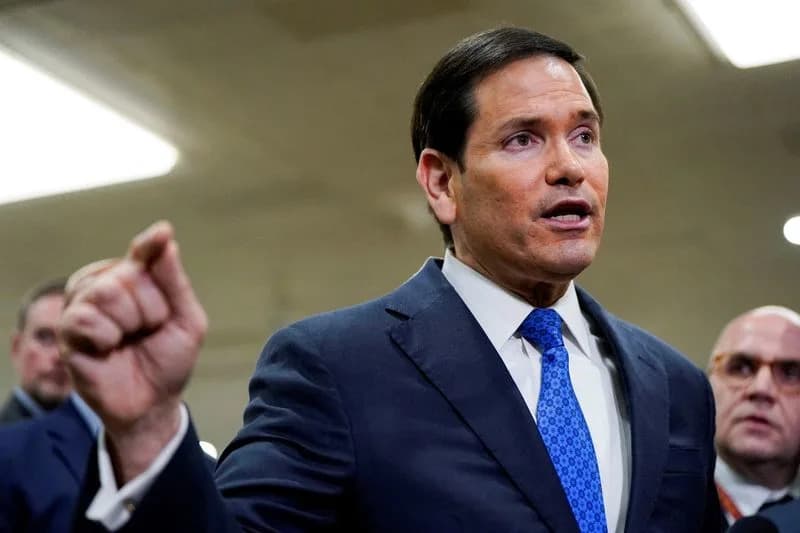
FILE PHOTO: U.S. Secretary of State Marco Rubio speaks to reporters, on the day of classified briefings for the full U.S. Senate and House of Representatives on the situation in Iran, on Capitol Hill in Washington, D.C., U.S., March 3, 2026. REUTERS/Elizabeth Frantz/File Photo
WASHINGTON, March 16 — An internal State Department cable dated March 16 and signed by Secretary of State Marco Rubio instructed U.S. diplomats worldwide to urge allied governments to designate Iran's Islamic Revolutionary Guard Corps (IRGC) and Lebanon-based Hezbollah as terrorist organizations, citing an elevated risk of attack.
The directive was distributed to all U.S. diplomatic and consular posts and asked diplomats to raise the issue with their counterparts "at the highest appropriate level" no later than March 20. It also called for advocacy on the designations to be coordinated with Israeli counterparts.
The memo frames the request as part of an effort to rally reluctant partners after a recent U.S.-Israeli air campaign that began two weeks earlier. Several allies, however, said they were not prepared to send ships to assist in reopening the Strait of Hormuz, rejecting appeals to keep the strategic oil shipping lane open.
"With the elevated risk of attack from Iran and its partners and proxies, all governments must move expeditiously to diminish the capabilities of Iran and Iran-aligned terrorist groups from attacking our respective nations and citizens," one of the cable's talking points states.
The cable describes the IRGC as an elite military force charged with protecting Iran's Shi'ite clerical leadership and notes its significant economic influence in Iran. It adds that both the IRGC and Hezbollah are already designated as terrorist organizations by the United States and by some other countries.
While the memo does not detail the specific intelligence behind the "elevated risk," it points to past Iranian actions across the Middle East and argues that coordinated, multilateral pressure is more likely to change Tehran's behavior than unilateral measures.
"We assess that the Iranian regime is more sensitive to collective action than unilateral action, and that joint pressure is more likely to compel behavior change by the regime than unilateral actions alone," the cable says. It adds that expanded designations would increase pressure on the Islamic Republic and limit its ability "to sponsor terror activities" globally.
A State Department spokesperson said: "President Trump is focused on securing peace in the Middle East. The IRGC, Hezbollah, and other Iranian-backed proxies destabilize governments and undermine regional peace."
(Reporting by Humeyra Pamuk; Editing by Don Durfee and Rosalba O'Brien)
Help us improve.





















