Kaja Kallas told EU foreign ministers she discussed with U.N. Secretary‑General António Guterres the idea of using a Black Sea‑style mechanism to reopen oil and gas transit through the Strait of Hormuz. Recent Iranian attacks in the channel between Iran and Oman have cut roughly a fifth of global oil flows, creating significant risks for energy supplies to Asia. Kallas warned the disruption could also harm fertiliser production and contribute to food shortages next year. Ministers will consider whether to expand the EU naval operation Aspides, but any move requires member‑state backing.
Kaja Kallas Proposes Black Sea‑Style Deal To Reopen Strait Of Hormuz
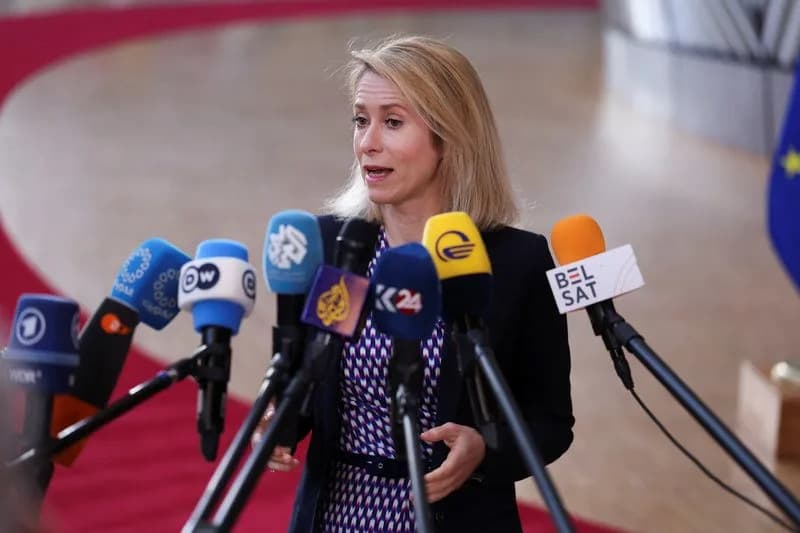
EU High Representative for Foreign Affairs and Security Policy Kaja Kallas speaks to members of the media as she arrives to attend a European Union Energy and Foreign Affairs ministers meeting in Brussels, Belgium March 16, 2026. REUTERS/Omar Havana
EU foreign policy chief Kaja Kallas said on Monday she has discussed with United Nations Secretary‑General António Guterres a proposal to restore shipments of oil and gas through the Strait of Hormuz using a mechanism similar to the wartime Black Sea initiative that enabled grain exports from Ukraine.
Speaking as she arrived for a meeting of EU foreign ministers in Brussels, Kallas said the idea is aimed at relieving the choke point in global energy transit created by recent attacks in the narrow channel between Iran and Oman.
"I had talks with Antonio Guterres about whether it was possible to also have the same kind of initiative like we had (with) the Black Sea Initiative," Kallas said.
Iran has effectively disrupted traffic through the Strait of Hormuz amid an escalating regional confrontation. Iranian forces have attacked vessels in the channel, interrupting roughly a fifth of the world’s oil shipments in what officials describe as the largest disruption on record.
Kallas warned that the closure is "really dangerous" for energy deliveries to Asia and could also hamper fertiliser production — a disruption she said could contribute to food shortages next year if sustained.
"And if there is a lack of fertilisers this year, there's going to be also food deprivation next year," Kallas said, without offering further operational details about how a Black Sea‑style mechanism would be implemented in the Gulf.
Ministers at the Brussels meeting were also due to discuss whether the remit of the EU’s small Middle East naval operation, Aspides, should be broadened. Aspides currently focuses on protecting merchant vessels in the Red Sea from attacks by Yemen's Houthi rebels.
"It is in our interest to keep the Strait of Hormuz open and that's why we are also discussing what we can do in this regard from the European side," Kallas said, stressing that any change would require agreement by EU member states.
Asked about scepticism from German Foreign Minister Johann Wadephul over whether Aspides could be usefully deployed in the Strait of Hormuz, Kallas replied: "Of course we need to also have the member states on board."
She added: "If the member states say that we are not doing anything with this, then of course it's their decision, but we have to discuss how we help to keep the Strait of Hormuz open."
Help us improve.