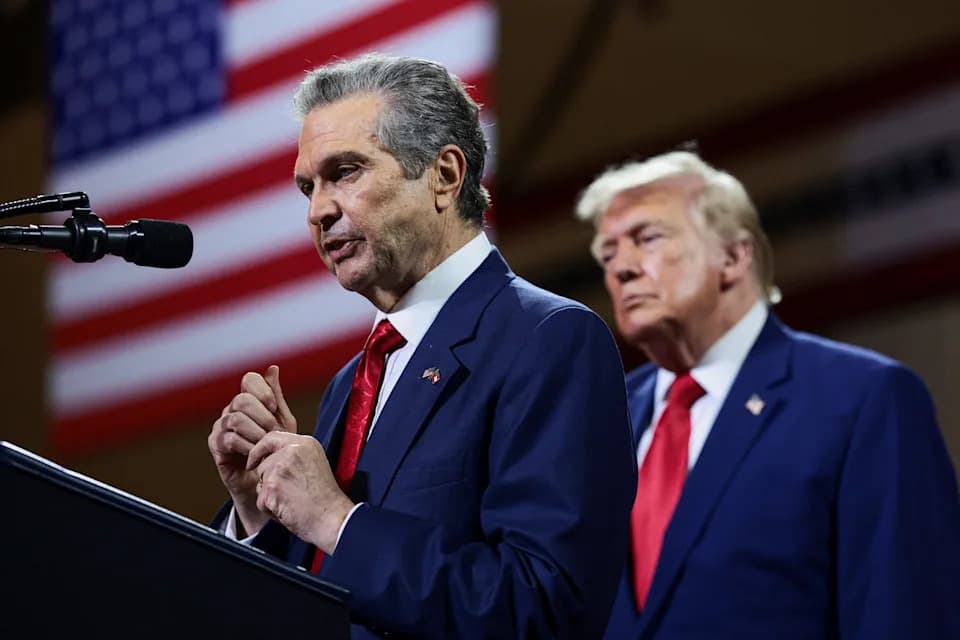
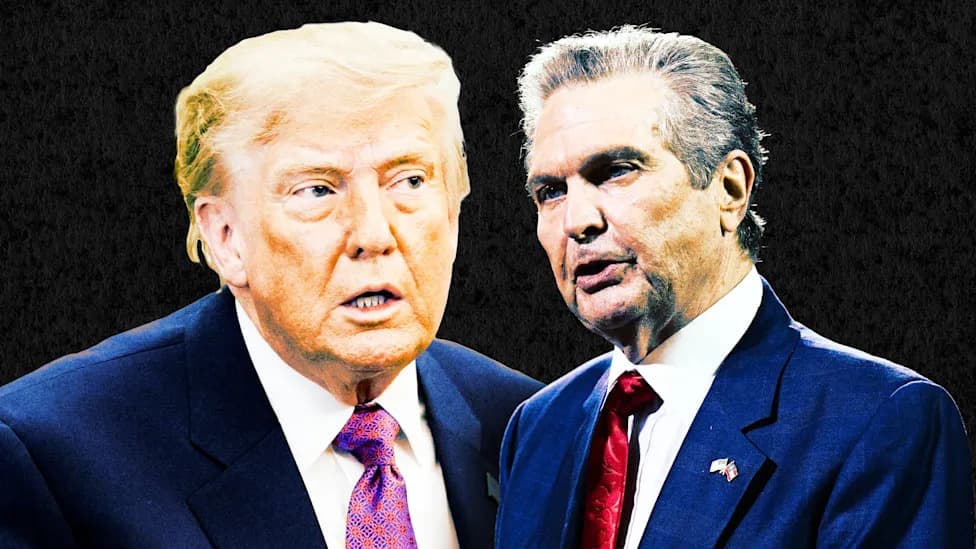
Rick Jackson’s surprise, heavily self-funded GOP bid has disrupted Burt Jones’s presumed path to the Georgia gubernatorial nomination. Jackson has spent over $30 million on television ads and used Trump-style theatrics while Jones leans on Trump’s endorsement and fights back with legal and advertising responses. The contest now tests the limits of endorsements and enormous personal spending in a pivotal battleground state.
Rick Jackson’s Cash Upends Burt Jones’s Seeming Lock On Georgia GOP Governor Nomination
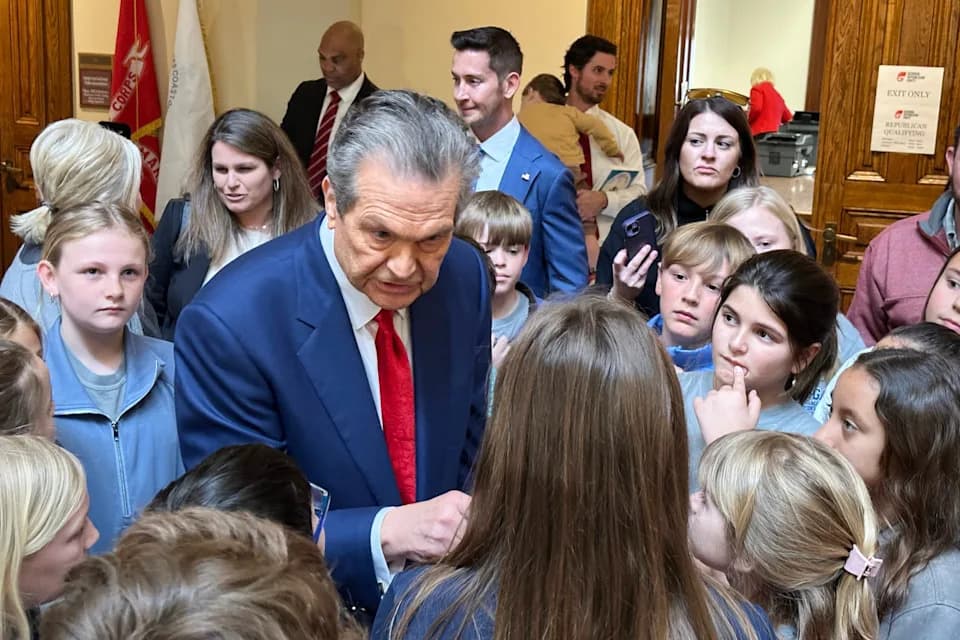
Republican Rick Jackson speaks to schoolchildren after qualifying to run for governor on Friday, March 6, 2026, at the Georgia Capitol in Atlanta (AP Photo/Jeff Amy)(ASSOCIATED PRESS)
Burt Jones had long been viewed as the likely Republican nominee for Georgia governor: the state’s lieutenant governor, backed by family wealth and carrying former President Donald Trump’s endorsement. That perception shifted sharply when health care entrepreneur Rick Jackson unexpectedly entered the GOP primary in February and poured more than $30 million of his own money into television ads — already the largest single-candidate spend in a Georgia gubernatorial primary with weeks to spare before the May 19 contest.
Jackson’s Blitz and Trump-Style Theatrics
Jackson’s ad barrage forced Jones to cling to Trump’s endorsement while Jackson borrowed Trump-like theatricality and rhetoric. Jackson announced his run by descending in a glass elevator at his company headquarters — an obvious echo of Trump’s 2016 escalator entrance — and has framed himself as a businessman-turned-candidate ready to be “Trump’s favorite governor.”
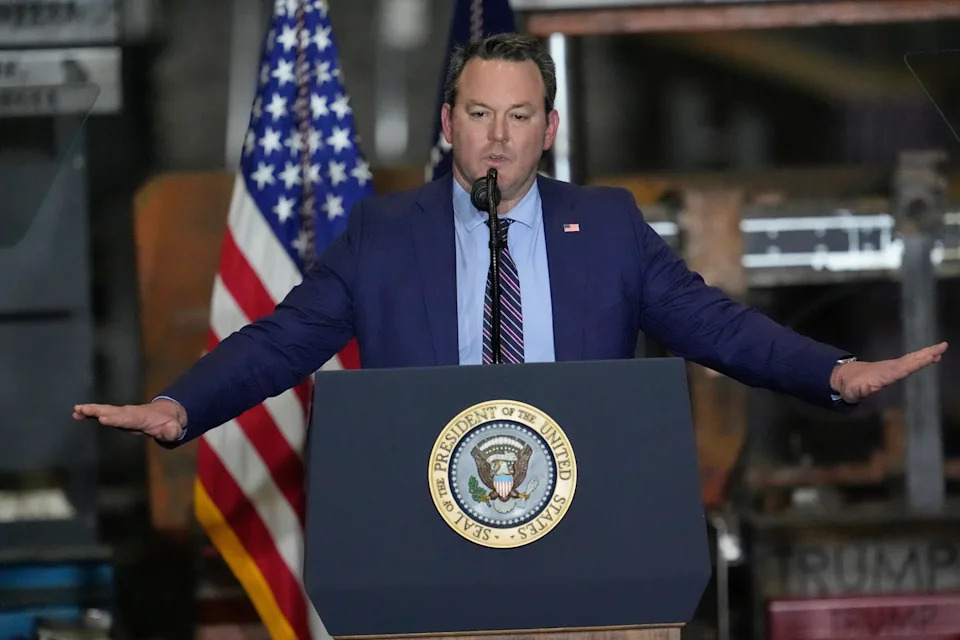
Georgia Lt. Gov. Burt Jones speaks at a rally at Coosa Steel Corporation for President Donald Trump in Rome, Ga., Thursday, Feb. 19, 2026. (AP Photo/George Walker IV)(ASSOCIATED PRESS)
“We’re on a different playing field. It’s like going from Little League to major leagues,”
What This Means For Trump’s Influence
Jackson’s surge presents another test of former President Trump’s sway in a crucial battleground state. Trump’s recent endorsements in Georgia are mixed: he failed to dislodge Gov. Brian Kemp in 2022 and backed Herschel Walker in a losing Senate bid. Political scientists say Jones’s fate will measure how durable a Trump endorsement remains when challenged by enormous self-funding.
“The Trump endorsement is still valuable to get, but it can’t be the be-all and end-all,”
Campaign Dynamics And Legal Battles
Jones has tried to undermine Jackson’s MAGA bona fides by pointing to Jackson’s past donations to non-Trump Republicans, business ties to Planned Parenthood and his company’s involvement with gender-affirming care services. Jackson responded by filing a defamation lawsuit against Jones; Jones answered with a wave of negative ads.
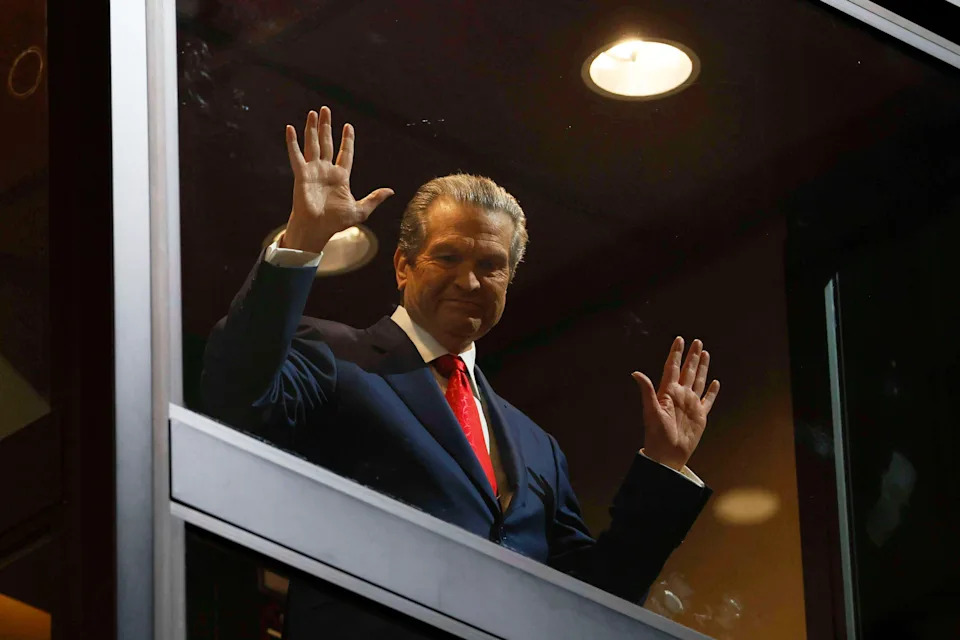
Healthcare business owner Rick Jackson waves to supporters as he comes down in an elevator for his campaign kickoff speech for Georgia governor at Jackson Healthcare, in Alpharetta, Ga., Wednesday, Feb. 4, 2026. (Miguel Martinez/Atlanta Journal-Constitution via AP)(ASSOCIATED PRESS)
The race has also been shaped by outside spending: a roughly $19 million dark-money ad campaign earlier accused Jones of using his office to benefit his family’s interests — allegations reporters say lack strong supporting evidence. Jackson has repeatedly denied funding those ads.
A separate legal development temporarily constrained a key source of Jones’ funds. A federal judge ruled that Jones’ leadership committee — an unusual Georgia vehicle that permitted unlimited contributions to be raised by Jones and associated entities — ran afoul of contribution limits and ordered him not to spend from it. That injunction was then frozen to permit appeal, allowing Jones to continue fundraising and spending from other accounts.
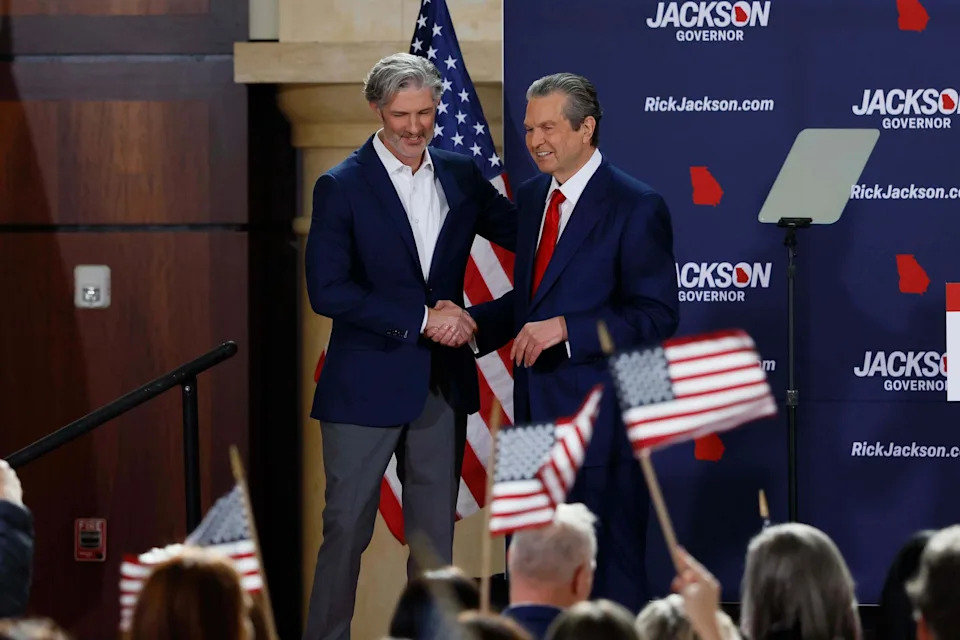
Shane Jackson shakes hands with his father, Rick Jackson, a healthcare business owner, after his campaign kickoff speech for Georgia governor at Jackson Healthcare, in Alpharetta, Ga., Wednesday, Feb. 4, 2026. (Miguel Martinez/Atlanta Journal-Constitution via AP)(ASSOCIATED PRESS)
Jackson’s Background And Political Record
Jackson, a former foster child who now describes himself as a billionaire, built Jackson Healthcare into a major medical staffing firm. His companies have received nearly $1 billion in state contracts in recent years, including pandemic medical staffing. Jackson has long been a Republican megadonor and policy advocate — backing efforts to reform malpractice rules, pushing to privatize foster care in earlier years, and later supporting foster-care improvements.
Jackson’s campaign ads promise tax cuts, tougher immigration enforcement, and bans on gender-affirming care for minors. Supporters portray him as motivated by Christian faith and compassion, while critics question his longstanding ties to establishment Republicans and prior donations to figures who opposed Trump.
Money Isn’t A Guaranteed Path To Victory
Though Jackson’s spending has already made his message nearly inescapable, massive self-funding does not guarantee victory. Kelly Loeffler’s high-dollar 2020 Senate bid failed despite heavy spending, and OpenSecrets reports that of 65 candidates who spent more than $1 million of their own money on federal campaigns in 2024, only 10 won. For now, Jackson’s investment has reshaped a race that seemed settled, forcing rivals to respond and testing the limits of endorsements and outside influence in Georgia politics.
The landscape in Georgia’s Republican primary has changed dramatically in a matter of weeks — and the outcome will be watched closely as a barometer of money, messaging and Trump’s continuing influence.
Help us improve.