Florida’s Republican-led legislature has approved a law requiring citizenship verification for registrants and narrowing acceptable voter IDs, including a ban on most college IDs. The bill passed on strict party-line votes (77–28 in the House) and is headed to Gov. Ron DeSantis, who has backed the measure. Critics warn it could purge thousands from voter rolls and disproportionately affect young voters, while supporters say it enhances election integrity. Litigation is expected and could delay enforcement until after 2026.
Florida Enacts Stricter Voter Verification And ID Limits — Critics Say It Targets Young Voters
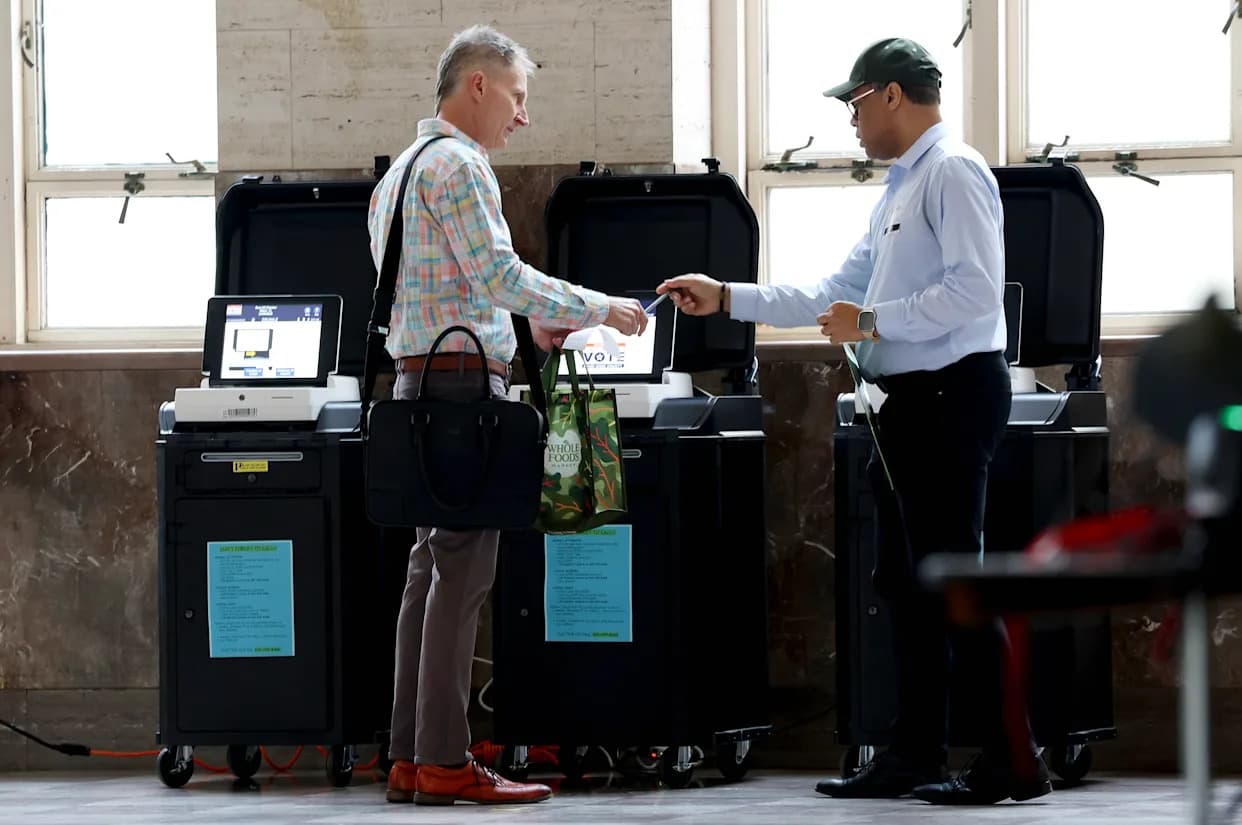
A poll worker helps as a voter casts their ballot at a polling station on election day on Dec. 9, 2025, in Miami.(Joe Raedle / Getty Images)
Florida lawmakers have passed a new law tightening voter registration and identification requirements, drawing criticism that the changes are unnecessary and could disproportionately affect young and minority voters.
Republican legislators approved a bill that requires voters to verify their U.S. citizenship when registering and narrows the list of acceptable forms of identification at the polls. The measure passed the State House 77–28 after clearing the State Senate earlier the same day, with all votes cast along partisan lines.
What changed? Among the notable provisions, the law disallows most college-issued IDs as acceptable voter identification — a move critics say targets young adults who are more likely to vote Democratic. The proposal was framed by supporters as mirroring the federal "Save America Act" championed by former President Donald Trump, and Governor Ron DeSantis has signaled his support.
Supporters say the law strengthens election integrity. Opponents warn it could remove thousands from the rolls and suppress turnout among groups that traditionally favor Democrats.
Florida’s elections ran smoothly in both 2020 and 2024, with audit results and officials reporting no evidence of widespread fraud. That history raises the central question critics keep asking: if the system is functioning well, why add new barriers to voting?
Legislators note the new rules will not apply to the 2026 election cycle; legal challenges are expected and could delay enforcement until 2028 while courts consider suits alleging disenfranchisement or violations of federal law.
Why it matters: The changes come while Republicans hold every statewide office in Florida. Observers argue the law could help preserve GOP dominance by making registration and voting harder for demographic groups that lean Democratic, even as supporters insist they are protecting election security.
Reporting in this article is based on coverage from national outlets and official legislative records.
Help us improve.