Researchers tested captive raccoons with a clear multiaccess puzzle box and found the animals frequently explored alternative entrances even after obtaining a marshmallow. This behavior — termed 'information foraging' — suggests raccoons gather knowledge about multiple solutions, possibly to prepare for future challenges. Trials were filmed at night to reduce stress, and marshmallows were the preferred reward. Authors suggest testing wild raccoons and advise securing garbage so it does not present new puzzles.
Raccoons Solve Puzzles for Pleasure, Study Finds — Not Just for Food
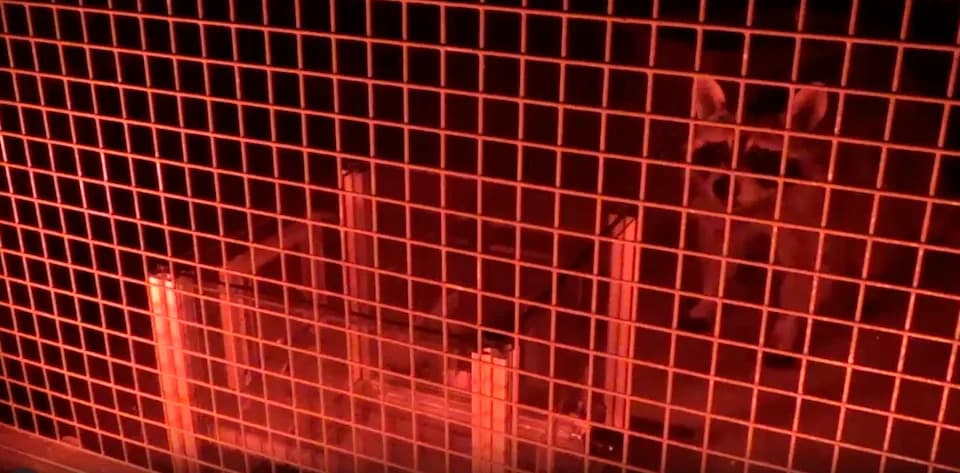
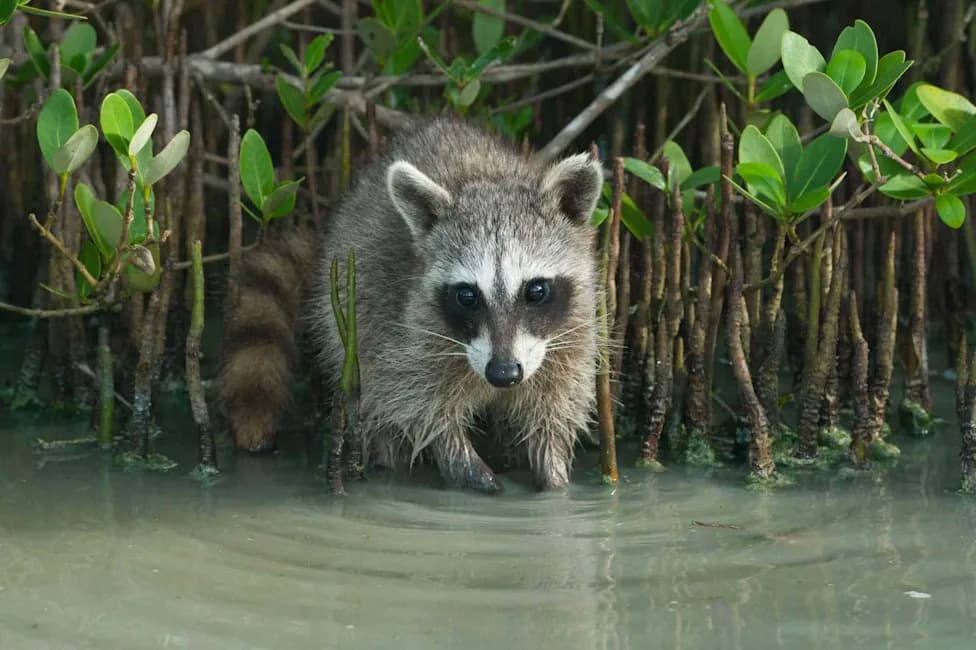
A raccoon taking part in the experiment solves one of the easy levels of the multiaccess puzzle box researchers tested. The experiments took place at night, when raccoons are most active, and researchers watched their exploits via video footage rather than in person to reduce stress on the animals.Hannah Griebling
New research suggests raccoons sometimes investigate puzzles simply for the satisfaction of solving them, not only to reach a snack. These clever 'trash pandas' pair dexterous paws with unusually dense brains, a combination that helps them thrive in human environments and repeatedly outwit attempts to secure garbage bins.
The study, published in the journal Animal Behaviour, used a transparent multiaccess puzzle box fitted with several doors, windows and latches of varying difficulty. Captive raccoons were offered a choice of treats — marshmallows, sardines, or dates dipped in sardine juice — and marshmallows were overwhelmingly preferred.
Instead of disabling the first solution (the usual approach), researchers repeatedly presented the same, refilled box over multiple trials to see whether animals would re-examine other entry points when the original route remained available. The trials were recorded on video at night, when raccoons are most active, to minimize stress from human presence.
Rather than stopping after retrieving a treat, many raccoons immediately poked at alternative access points. The frequency of these extra inspections declined as the remaining solutions became more complex, but never disappeared entirely. Study co-author Hannah Griebling, a Ph.D. candidate in cognitive ecology at the University of British Columbia, and other authors interpret this continuing behavior as 'information foraging' — gathering knowledge about multiple solutions to prepare for future problems.
'We can't know their thoughts; we can only measure behavior,' Griebling notes, but the pattern suggests an intrinsic motivation or curiosity similar to the human satisfaction of solving puzzles. Lauren Stanton, a cognitive ecologist at the University of California, Berkeley, adds that raccoons' dense brains likely contribute to their behavioral flexibility.
The authors recommend repeating the experiments with wild raccoons, who face real-world risks and may balance the cost of time differently. For residents hoping to deter raccoons, Griebling's practical tip is straightforward: ensure containers are truly sealed rather than accidentally offering new challenges that encourage further investigation.
Help us improve.